Dougherty T J, Koller A E, Tomasz A
Antimicrob Agents Chemother. 1980 Nov;18(5):730-7. doi: 10.1128/AAC.18.5.730.
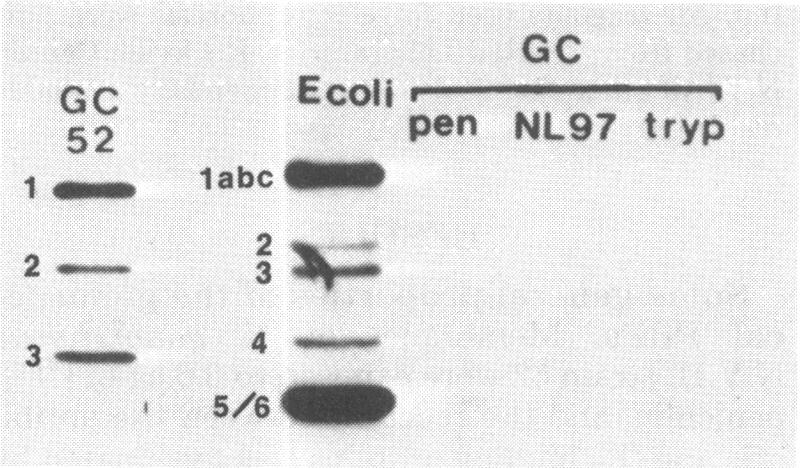
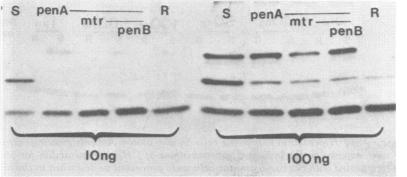
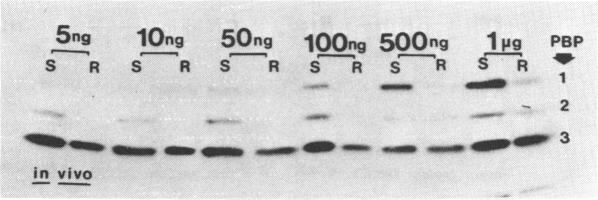
The penicillin-binding proteins (PBPs) of Neisseria gonorrhoeae were investigated by using [3H]benzylpenicillin of high specific activity. This made it possible to label the PBPs both in cytoplasmic membranes and in the membranes of actively growing cells (in vivo labeling). A total of 20 strains isolated from different geographic locales showed the same pattern of three major PBPs, which had molecular weights of approximately 90,000, 63,000, and 48,000. Five clinical isolates of intrinsically penicillin-resistant gonococci each exhibited reduced penicillin binding of PBPs 1 and 2. The construction of an isogenic set of transformants with increasing levels of penicillin resistance indicated that the penA gene was associated with a decrease in penicillin binding fo PBP 2. Decreased binding to PBP 1 is likely to accompany the newly reported pem and tem genes, which govern to highest level of penicillin resistance.
利用高比活性的[3H]苄青霉素对淋病奈瑟菌的青霉素结合蛋白(PBPs)进行了研究。这使得在细胞质膜和活跃生长细胞的膜中标记PBPs成为可能(体内标记)。从不同地理区域分离出的总共20株菌株显示出相同的三种主要PBPs模式,其分子量约为90,000、63,000和48,000。五株固有耐青霉素淋球菌的临床分离株各自表现出PBPs 1和2的青霉素结合减少。构建一组具有逐渐增加的青霉素抗性水平的同基因转化体表明,penA基因与PBP 2的青霉素结合减少有关。与新报道的控制最高水平青霉素抗性的pem和tem基因相关,与PBP 1的结合减少可能随之发生。