Fassett R G, Owen J E, Fairley J, Birch D F, Fairley K F
Br Med J (Clin Res Ed). 1982 Nov 20;285(6353):1455-7. doi: 10.1136/bmj.285.6353.1455.
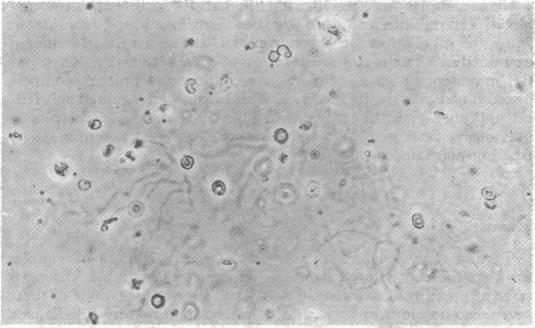
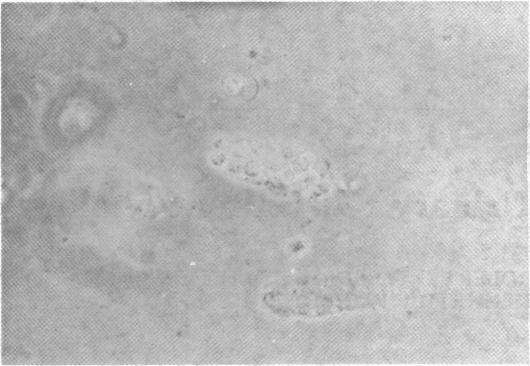
Midstream urine samples were examined by phase-contrast microscopy before and immediately after 48 subjects participated in a long-distance run. Minor abnormalities were found in six samples before exercise. Eighteen subjects developed proteinuria and five haematuria on dipstick testing after exercise. Forty-four subjects had increased urinary red-cell counts after exercise; of these, 33 had counts above the normal range (800/ml). In all subjects urinary red cells were dysmorphic both before and after exercise, indicating a glomerular source. Ten subjects developed red-cell casts and 42 showed an increase in hyaline and hyaline-granular casts after exercise. There were modest increases in urinary white-cell counts in 35 subjects but little change in urine pH or osmolality with exercise. This study confirms that urinary red-cell counts commonly increase appreciably after exercise. The dysmorphic appearance of the red cells together with the presence of red-cell casts indicates a glomerular source for this common form of exercise haematuria.
48名受试者参加长跑前后,均通过相差显微镜对中段尿样本进行检查。运动前在6份样本中发现轻微异常。运动后,18名受试者通过试纸检测出现蛋白尿,5名出现血尿。44名受试者运动后尿红细胞计数增加;其中33名计数高于正常范围(800/毫升)。所有受试者运动前后尿红细胞均为畸形,表明来源于肾小球。10名受试者运动后出现红细胞管型,42名显示透明管型和透明颗粒管型增加。35名受试者尿白细胞计数适度增加,但运动后尿液pH值或渗透压变化不大。本研究证实,运动后尿红细胞计数通常会明显增加。红细胞的畸形外观以及红细胞管型的存在表明,这种常见的运动性血尿来源于肾小球。