Jamjoom G A
J Clin Microbiol. 1983 May;17(5):717-21. doi: 10.1128/jcm.17.5.717-721.1983.
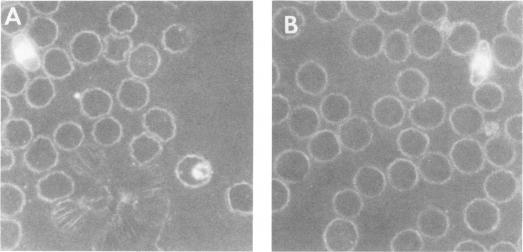
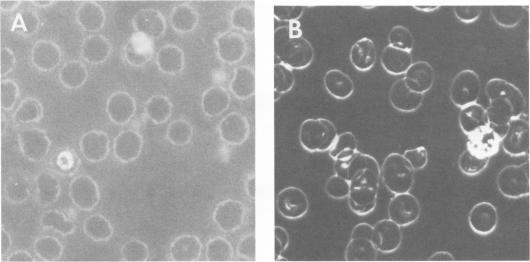
Pigment present in different forms of Plasmodium species infecting humans exhibits light scattering when blood films are viewed by dark-field microscopy. This facilitates the detection of parasite-infected cells owing to their brightly illuminated appearance. The technique was described long ago for the detection of certain highly pigmented forms of malarial parasites such as schizonts and gametocytes but has not found an application in routine diagnosis. Here, modifications are described which allow the detection of all forms of human malarial parasites, including ring forms, in unstained blood films. The technique offers the distinct advantages of rapid diagnosis, increased sensitivity, and adaptability to field work.
当用暗视野显微镜观察血涂片时,感染人类的不同疟原虫物种中存在的色素会呈现光散射现象。由于被寄生虫感染的细胞外观明亮,这有助于检测它们。这项技术早在很久以前就被描述用于检测某些色素高度沉着的疟原虫形式,如裂殖体和配子体,但尚未在常规诊断中得到应用。本文描述了一些改进方法,可在未染色的血涂片中检测包括环状体在内的所有人类疟原虫形式。该技术具有快速诊断、提高灵敏度以及适用于现场工作等明显优势。