Wiggelinkhuizen J, Sinclair-Smith C, Stannard L M, Smuts H
Arch Dis Child. 1983 Jul;58(7):488-96. doi: 10.1136/adc.58.7.488.
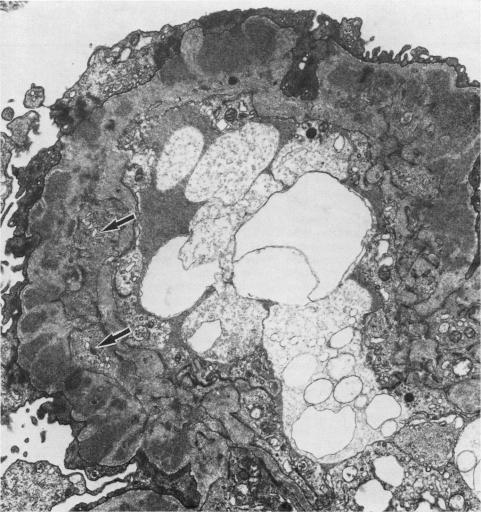
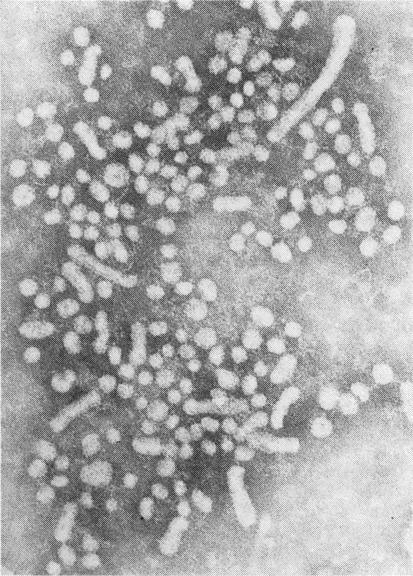
The incidence of persistent hepatitis B surface (HBs) antigenaemia was studied in 114 nephrotic children with glomerulonephritis. Twenty five (24 boys) of 28 cases of membranous glomerulonephritis were HBs antigen (HBsAg) carriers. Only 9 of the remaining 86 patients with nephropathies other than membranous glomerulonephritis were HBsAg positive. HBsAg immune complexes were seen in the sera by electron microscopy. On radioimmunoassay both HBsAg and antibody (anti-HBs), and HBeAg and antibody (anti-HBe) were often detected concurrently, HBsAg was not shown in the glomerular capillary wall. HBs antigenaemia persisted in 80% of patients after recovery from glomerulonephritis but remission of the proteinuria correlated well, although not fully, with seroconversion to anti-HBe. The natural history of hepatitis B virus (HBV) associated glomerulonephritis in childhood is one of slow recovery. A few patients are left with mild asymptomatic proteinuria but progressive renal failure is rare. The 14% incidence of membranous glomerulonephritis in nephrotic children in this area is much higher than that found by the international study of kidney disease in children in well developed countries and is probably related to a high HBV carrier rate. A search for HBV markers should be included in the investigation of persistent glomerulonephritis, particularly in countries with a high prevalence of HBV carriers.
对114名患肾小球肾炎的肾病儿童进行了持续性乙型肝炎表面(HBs)抗原血症发病率的研究。28例膜性肾小球肾炎患者中有25例(24名男孩)为HBs抗原(HBsAg)携带者。其余86例非膜性肾小球肾炎的肾病患者中只有9例HBsAg呈阳性。通过电子显微镜在血清中发现了HBsAg免疫复合物。在放射免疫测定中,经常同时检测到HBsAg和抗体(抗-HBs)以及HBeAg和抗体(抗-HBe),但在肾小球毛细血管壁中未显示HBsAg。80%的患者在肾小球肾炎恢复后仍存在HBs抗原血症,尽管蛋白尿的缓解与抗-HBe血清转化不完全相关,但相关性良好。儿童期乙型肝炎病毒(HBV)相关性肾小球肾炎的自然病程是缓慢恢复。少数患者会遗留轻度无症状蛋白尿,但进展为肾衰竭的情况罕见。该地区肾病儿童中膜性肾小球肾炎的发病率为14%,远高于发达国家儿童肾脏疾病国际研究的结果,这可能与高HBV携带率有关。在对持续性肾小球肾炎的调查中应进行HBV标志物检测,尤其是在HBV携带者患病率高的国家。