Baker P M, Farmer J J
J Clin Microbiol. 1982 Mar;15(3):491-502. doi: 10.1128/jcm.15.3.491-502.1982.
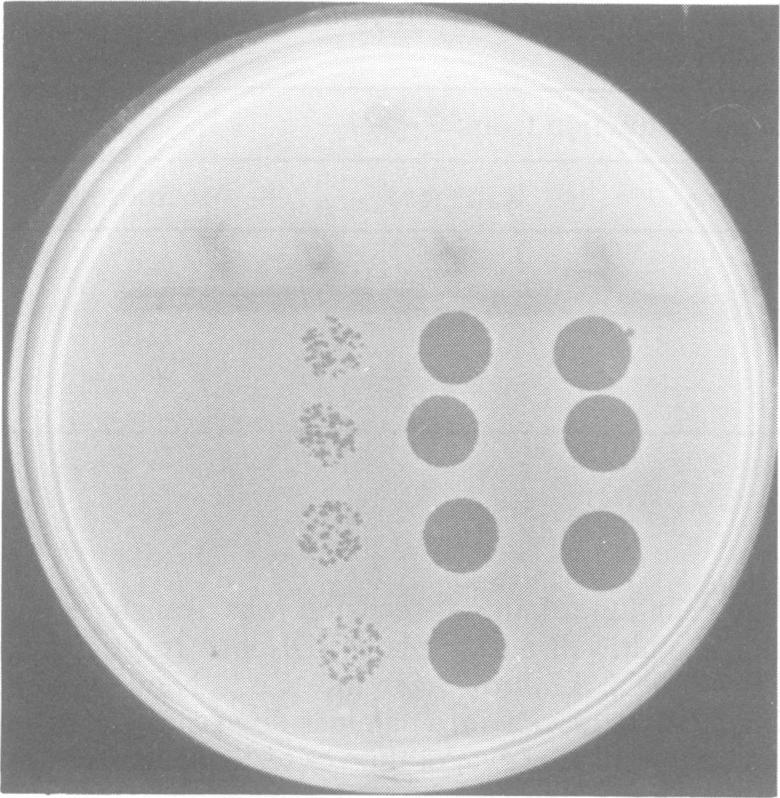
Yersinia enterocolitica is listed as a single species in Bergey's Manual of Determinative Bacteriology, but has recently been split into "true" Y. enterocolitica, Y. kristensenii, Y. intermedia, and Y. frederiksenii. From 48 bacteriophages isolated from raw sewage, 24 were chosen as being the most useful for differentiating strains within the four Yersinia species. The composite set of 24 phages typed 92% of 236 Y. enterocolitica strains, 100% of 16 Y. kristensenii strains, 97% of 29 Y. frederiksenii strains, and 90% of 20 Y. intermedia strains. The most common phage type in any of the groups contained 22% of the strains tested, but most of the phage types contained greater than 5% of the strains. The new typing schema was tested in three outbreaks of Y. enterocolitica, and the results agreed well with serotyping and epidemiological findings. In the same outbreaks, biotyping (API 20E profiles; Analytab Products, Plainview, N.Y.) and antibiograms were less reliable markers and probably should be used only in conjunction with serotyping or phage typing or both. Caution should be used in identifying cultures of Y. frederiksenii and Y. intermedia with the API 20E system, since the tests at 37 degrees C for L-rhamnose and melibiose fermentation are often delayed past 24 h, which is the cut-off point for the final reading in the API system. There were distinct differences in the susceptibilities of Y. enterocolitica and Y. kristensenii to ampicillin, carbenicillin, and cephalothin, which adds further support for classifying the latter as a separate species.
小肠结肠炎耶尔森菌在《伯杰氏鉴定细菌学手册》中被列为单一物种,但最近已被分为“真正的”小肠结肠炎耶尔森菌、克里斯滕森耶尔森菌、中间型耶尔森菌和费氏耶尔森菌。从48株从未经处理的污水中分离出的噬菌体中,选择了24株对区分这四种耶尔森菌属内的菌株最有用的噬菌体。这24种噬菌体的组合对236株小肠结肠炎耶尔森菌菌株中的92%、16株克里斯滕森耶尔森菌菌株中的100%、29株费氏耶尔森菌菌株中的97%以及20株中间型耶尔森菌菌株中的90%进行了分型。任何一组中最常见的噬菌体类型包含所检测菌株的22%,但大多数噬菌体类型包含超过5%的菌株。这种新的分型方案在三次小肠结肠炎耶尔森菌暴发中进行了测试,结果与血清分型和流行病学结果吻合良好。在相同的暴发中,生物分型(API 20E谱;Analytab Products公司,纽约州普莱恩维尤)和抗菌谱是不太可靠的标记,可能仅应与血清分型或噬菌体分型或两者结合使用。使用API 20E系统鉴定费氏耶尔森菌和中间型耶尔森菌培养物时应谨慎,因为在37℃下检测L-鼠李糖和蜜二糖发酵的试验结果往往会延迟超过24小时,这是API系统最终读数的截止时间。小肠结肠炎耶尔森菌和克里斯滕森耶尔森菌对氨苄西林、羧苄西林和头孢噻吩的敏感性存在明显差异,这进一步支持将后者分类为一个单独的物种。