Ellman C, Corbett J A, Misko T P, McDaniel M, Beckerman K P
Department of Obstetrics and Gynecology, Washington University School of Medicine, St. Louis, Missouri 63110.
J Clin Invest. 1993 Dec;92(6):3053-6. doi: 10.1172/JCI116930.
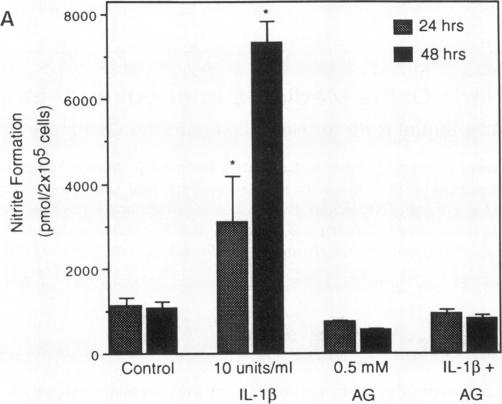
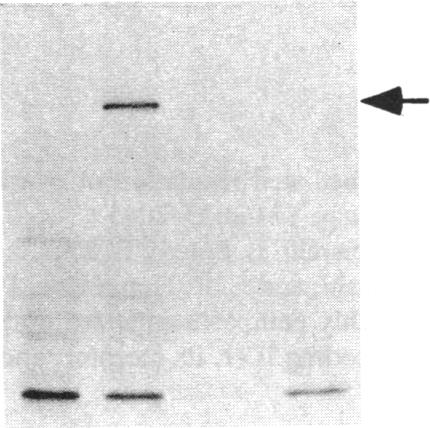
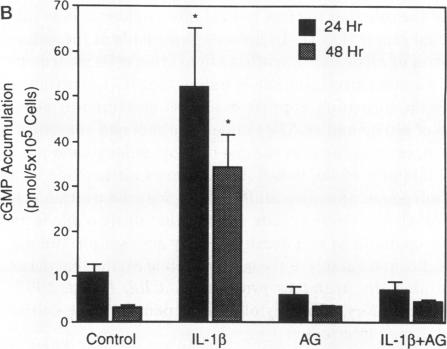
Treatment of primary cultures of rat ovarian dispersates with IL-1 beta results in morphologic and cytotoxic changes, thought to reflect tissue remodeling events associated with ovulation. We examined the role that the free radical nitric oxide plays in this process and report that IL-1 beta induces expression of the inducible isoform of nitric oxide synthase in ovarian cells as demonstrated by immunoprecipitation. We show that IL-1 beta treatment results in the formation of nitric oxide (as measured by accumulation of nitrite and cGMP) in both a time- and concentration-dependent manner that is prevented by aminoguanidine, a selective inhibitor of the inducible isoform of nitric oxide synthase. Aminoguanidine also inhibits IL-1-induced ovarian cellular cytotoxicity. These results suggest that nitric oxide is an important mediator of cell death and may act as a physiologically significant mediator of tissue remodeling events that occur in vivo during the ovulatory process.
用白细胞介素-1β处理大鼠卵巢分散细胞的原代培养物会导致形态学和细胞毒性变化,这些变化被认为反映了与排卵相关的组织重塑事件。我们研究了自由基一氧化氮在这一过程中所起的作用,并报告白细胞介素-1β可诱导卵巢细胞中诱导型一氧化氮合酶的表达,这通过免疫沉淀得以证实。我们发现,白细胞介素-1β处理会导致一氧化氮的形成(通过亚硝酸盐和环鸟苷酸的积累来测量),其形成呈时间和浓度依赖性,而一氧化氮合酶诱导型的选择性抑制剂氨基胍可阻止这种形成。氨基胍还能抑制白细胞介素-1诱导的卵巢细胞毒性。这些结果表明,一氧化氮是细胞死亡的重要介质,并且可能在排卵过程中作为体内发生的组织重塑事件的生理重要介质发挥作用。