Downing J E
Biology Department, Imperial College, London, U.K.
Immunology. 1994 Aug;82(4):659-64.
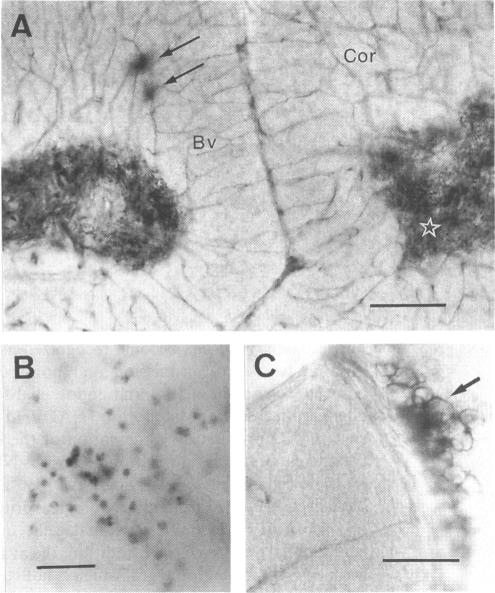
Nitric oxide (NO) has become recognized as a multifunctional mediator, with roles in vascular physiology, neurotransmission and non-specific immune defense. The histochemical marker associated with the neural and endothelial form of NO synthase (NOS), reduced nicotinamide adenine dinucleotide diaphorase (NADPHd), has enabled the indirect localization of potential sites of NO production. Innervation of the thymus and its immunological functions made this tissue a candidate for utilization of various NO systems. In the present study on adult rat thymus, multiple cellular sites expressing NADPHd activity, thereby implicated as sites of NOS activity, have been identified using morphological criteria alone: blood vessel endothelium, dendritic cells, deep cortical or medullary stromal cells, intrinsic neuron-like profiles, granulocytes (possibly neutrophils) and fat cells. In addition, the availability to the thymic microenvironment of another form of NOS in macrophages, which is not stained by the diaphorase technique, was supported by the observation of these cells at corticomedullary and cortical locations. These results indicate that a wide variety of possible immunomodulatory roles can be expected for NO in the thymus including the induction of tolerance, major histocompatibility complex (MHC) restriction, lymphocyte trafficking and regulation of thymic endocrine output.
一氧化氮(NO)已被公认为一种多功能介质,在血管生理、神经传递和非特异性免疫防御中发挥作用。与一氧化氮合酶(NOS)的神经和内皮形式相关的组织化学标志物,即还原型烟酰胺腺嘌呤二核苷酸黄递酶(NADPHd),使得能够间接定位NO产生的潜在部位。胸腺的神经支配及其免疫功能使该组织成为利用各种NO系统的候选对象。在本项针对成年大鼠胸腺的研究中,仅使用形态学标准就已鉴定出多个表达NADPHd活性的细胞部位,因此这些部位被认为是NOS活性部位:血管内皮、树突状细胞、深层皮质或髓质基质细胞、内在神经元样细胞、粒细胞(可能是中性粒细胞)和脂肪细胞。此外,在皮质髓质和皮质部位观察到巨噬细胞中另一种形式的NOS(该形式不会被黄递酶技术染色)可进入胸腺微环境,这一观察结果支持了上述观点。这些结果表明,NO在胸腺中可能具有多种免疫调节作用,包括诱导耐受性、主要组织相容性复合体(MHC)限制、淋巴细胞迁移以及胸腺内分泌输出的调节。