Clària J, Serhan C N
Department of Medicine, Brigham and Women's Hospital, Boston, MA, USA.
Proc Natl Acad Sci U S A. 1995 Oct 10;92(21):9475-9. doi: 10.1073/pnas.92.21.9475.
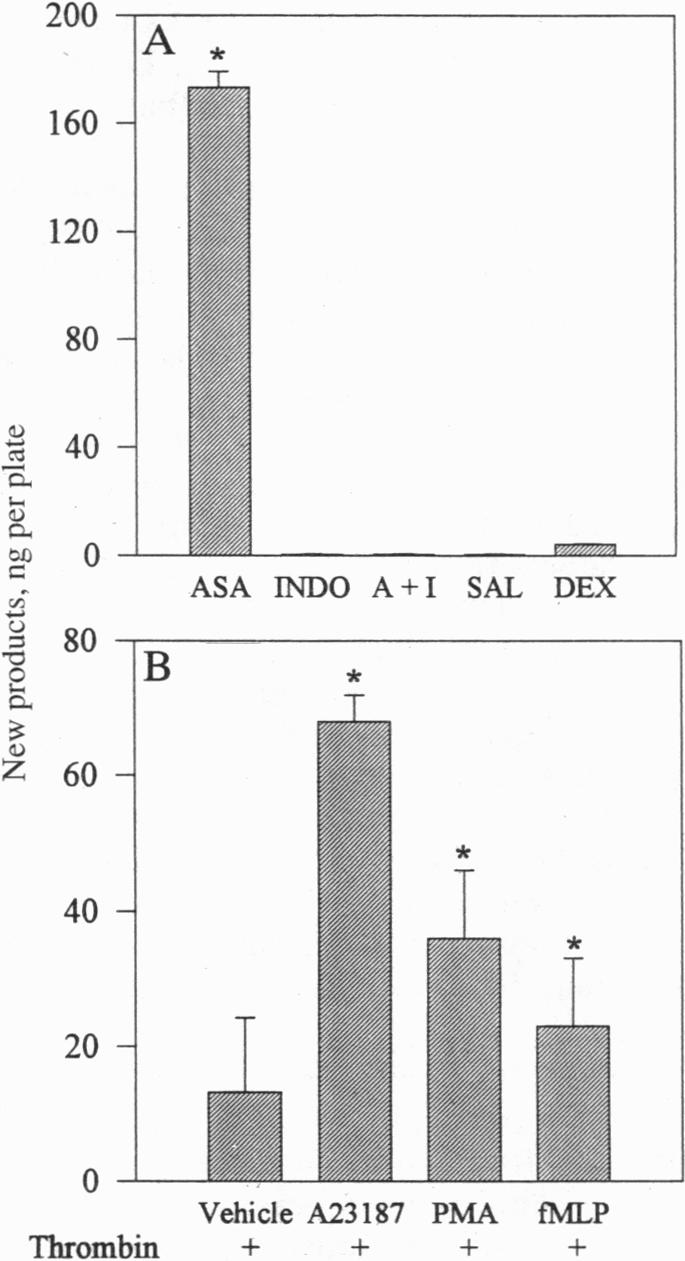
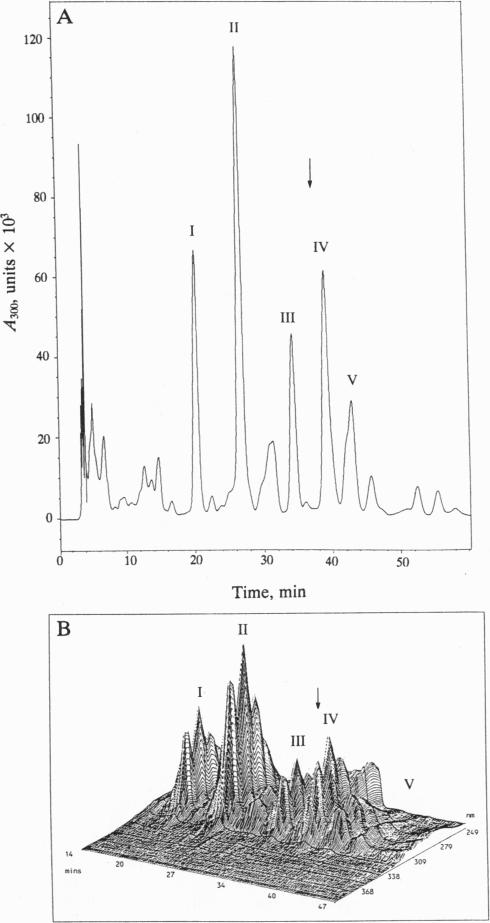
Aspirin [acetylsalicylic acid (ASA)], along with its analgesic-antipyretic uses, is now also being considered for cardiovascular protection and treatments in cancer and human immunodeficiency virus infection. Although many of ASA's pharmacological actions are related to its ability to inhibit prostaglandin and thromboxane biosynthesis, some of its beneficial therapeutic effects are not completely understood. Here, ASA triggered transcellular biosynthesis of a previously unrecognized class of eicosanoids during coincubations of human umbilical vein endothelial cells (HUVEC) and neutrophils [polymorphonuclear leukocytes (PMN)]. These eicosanoids were generated with ASA but not by indomethacin, salicylate, or dexamethasone. Formation was enhanced by cytokines (interleukin 1 beta) that induced the appearance of prostaglandin G/H synthase 2 (PGHS-2) but not 15-lipoxygenase, which initiates their biosynthesis from arachidonic acid in HUVEC. Costimulation of HUVEC/PMN by either thrombin plus the chemotactic peptide fMet-Leu-Phe or phorbol 12-myristate 13-acetate or ionophore A23187 leads to the production of these eicosanoids from endogenous sources. Four of these eicosanoids were also produced when PMN were exposed to 15R-HETE [(15R)-15-hydroxy-5,8,11-cis-13-trans-eicosatetraenoic acid] and an agonist. Physical methods showed that the class consists of four tetraene-containing products from arachidonic acid that proved to be 15R-epimers of lipoxins. Two of these compounds (III and IV) were potent inhibitors of leukotriene B4-mediated PMN adhesion to HUVEC, with compound IV [(5S,6R,15R)-5,6,15-trihydroxy-7,9,13-trans-11-cis-eicosatetraenoi c acid; 15-epilipoxin A4] active in the nanomolar range. These results demonstrate that ASA evokes a unique class of eicosanoids formed by acetylated PGHS-2 and 5-lipoxygenase interactions, which may contribute to the therapeutic impact of this drug. Moreover, they provide an example of a drug's ability to pirate endogenous biosynthetic mechanisms to trigger new mediators.
阿司匹林[乙酰水杨酸(ASA)],除了其镇痛和解热用途外,目前还被考虑用于心血管保护以及癌症和人类免疫缺陷病毒感染的治疗。尽管ASA的许多药理作用与其抑制前列腺素和血栓素生物合成的能力有关,但其一些有益的治疗效果尚未完全明确。在此,在人脐静脉内皮细胞(HUVEC)与中性粒细胞[多形核白细胞(PMN)]共孵育期间,ASA引发了一类先前未被识别的类二十烷酸的跨细胞生物合成。这些类二十烷酸由ASA生成,但吲哚美辛、水杨酸盐或地塞米松则不能生成。细胞因子(白细胞介素1β)可增强其生成,该细胞因子可诱导前列腺素G/H合酶2(PGHS-2)而非15-脂氧合酶的出现,而15-脂氧合酶可启动其从HUVEC中的花生四烯酸生物合成。凝血酶与趋化肽fMet-Leu-Phe或佛波醇12-肉豆蔻酸酯13-乙酸酯或离子载体A23187对HUVEC/PMN的共刺激会导致这些类二十烷酸从内源性来源产生。当PMN暴露于15R-HETE[(15R)-15-羟基-5,8,11-顺式-13-反式-二十碳四烯酸]和一种激动剂时,也会产生其中四种类二十烷酸。物理方法表明,该类由来自花生四烯酸的四种含四烯产物组成,经证明是脂氧素的15R-差向异构体。其中两种化合物(III和IV)是白三烯B4介导的PMN与HUVEC黏附的有效抑制剂,化合物IV[(5S,6R,15R)-5,6,15-三羟基-7,9,13-反式-11-顺式-二十碳四烯酸;15-表-脂氧素A4]在纳摩尔范围内具有活性。这些结果表明,ASA引发了一类由乙酰化的PGHS-2和5-脂氧合酶相互作用形成的独特类二十烷酸,这可能有助于该药物的治疗作用。此外,它们提供了一个药物利用内源性生物合成机制触发新介质的能力的例子。