Wallace W A, Ramage E A, Lamb D, Howie S E
Department of Pathology, Edinburgh University Medical School, UK.
Clin Exp Immunol. 1995 Sep;101(3):436-41. doi: 10.1111/j.1365-2249.1995.tb03131.x.
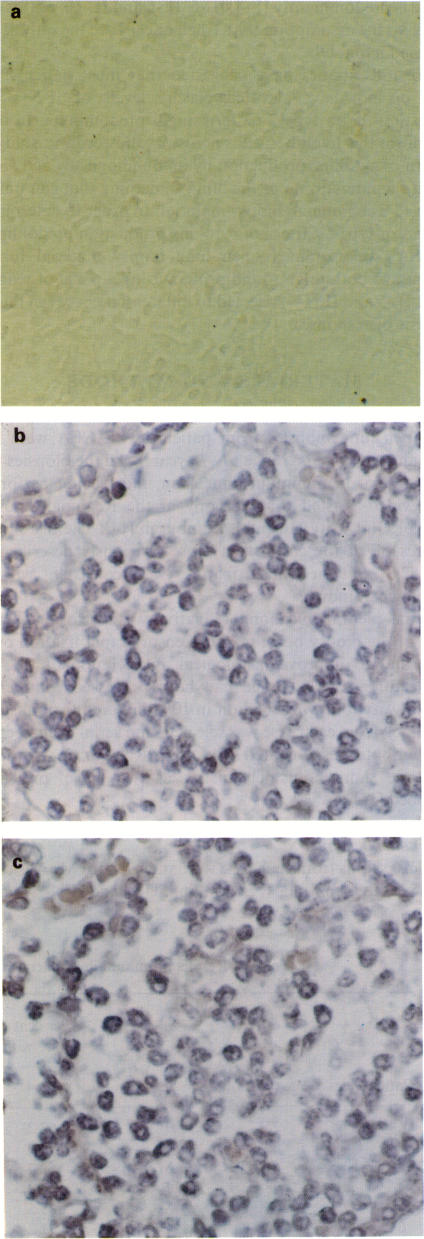
CFA is an inflammatory condition of the lungs resulting in scarring, pulmonary failure and death. The etiology of the disease is unknown, but the pathogenesis is believed to involve a persistent immunological reaction to unidentified antigen in the lung resulting in tissue damage. Recent advances in our understanding of the immune system have shown that different patterns of stimulatory cytokines are produced at sites of inflammation by a range of cell types. Patterns of cytokine reproduction by inflammatory cells are recognized to be associated with different patterns of immunological response, and these have been described as type 1 (or Th1-like) and type 2 (or Th2-like) on this basis. We have studied cytokine expression in the intestinal inflammatory cell infiltrate in lung tissue from patients with CFA using mRNA in situ hybridization and immunohistochemistry. Our results show that while there is evidence for both a type 1 (characterized by interferon-gamma (IFN-gamma) and type 2 (characterized by IL-4 and IL-5) response present in CFA, the type 2 (or Th2) pattern of cytokines appears to predominate. This would be consistent with a possible role for the humoral immune response in the pathogenesis of this condition. In addition, recent evidence suggests that IL-4 and IFN-gamma may be important regulatory factors for pulmonary fibroblasts. The relative paucity of IFN-gamma may contribute to the excessive fibroblast activation, deposition of collagen and scar formation that occurs in CFA.
慢性纤维性肺泡炎是一种肺部炎症性疾病,可导致肺组织瘢痕形成、肺功能衰竭甚至死亡。该疾病的病因尚不清楚,但据信其发病机制涉及肺部对未知抗原的持续免疫反应,进而导致组织损伤。近年来,我们对免疫系统的认识取得了进展,研究表明,多种细胞类型在炎症部位会产生不同模式的刺激性细胞因子。炎症细胞产生细胞因子的模式被认为与不同的免疫反应模式相关,基于此,这些模式被描述为1型(或Th1样)和2型(或Th2样)。我们使用mRNA原位杂交和免疫组化技术,研究了慢性纤维性肺泡炎患者肺组织中肠道炎性细胞浸润中的细胞因子表达。我们的结果显示,虽然有证据表明慢性纤维性肺泡炎中同时存在1型反应(以干扰素-γ(IFN-γ)为特征)和2型反应(以白细胞介素-4和白细胞介素-5为特征),但细胞因子的2型(或Th2)模式似乎占主导地位。这与体液免疫反应在该疾病发病机制中可能发挥的作用相一致。此外,最近的证据表明,白细胞介素-4和干扰素-γ可能是肺成纤维细胞的重要调节因子。干扰素-γ相对缺乏可能导致慢性纤维性肺泡炎中出现的成纤维细胞过度活化、胶原蛋白沉积和瘢痕形成。