Sagawa K, Mochizuki M, Masuoka K, Katagiri K, Katayama T, Maeda T, Tanimoto A, Sugita S, Watanabe T, Itoh K
Department of Immunology, Kurume University School of Medicine, Japan.
J Clin Invest. 1995 Feb;95(2):852-8. doi: 10.1172/JCI117735.
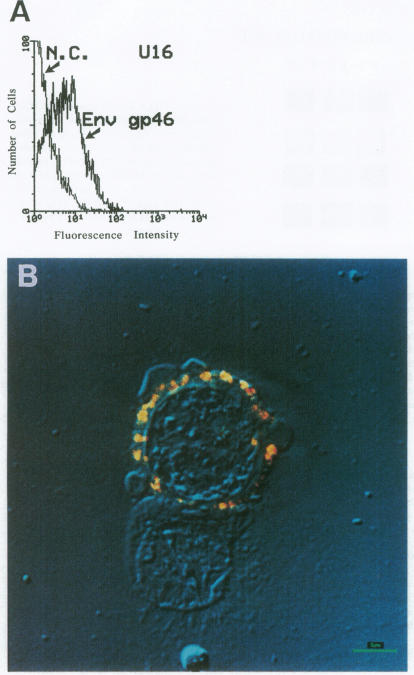
The immunopathology of human T cell lymphotropic virus type 1 (HTLV-I) uveitis was addressed by using T cell clones (TCC) established from the intraocular fluid of patients with HTLV-I uveitis. Proviral DNA of HTLV-I was identified in 55 out of 94 (59%) or 13 out of 36 (36%) TCC from the ocular fluid or the peripheral blood of these patients, respectively. Most of HTLV-I-infected TCC had a CD3+ CD4+ CD8- phenotype. HTLV-I infection on TCC was confirmed by analysis of the viral mRNA, nucleotide sequence, virus-associated proteins, and virus particles. HTLV-I-infected TCC, but not HTLV-I negative TCC, constitutively produced high amounts of IL-6 (1,336 +/- 1,050 pg/ml) and TNF-alpha (289 +/- 237 pg/ml) in the absence of any stimuli. HTLV-I-infected TCC from the ocular lesion also constitutively produced high amounts of IL-1 alpha (12,699 pg/ml), IL-2 (61 pg/ml), IL-3 (428 pg/ml), IL-8 (1,268 pg/ml), IL-10 (28 pg/ml), IFN-gamma (5,095 pg/ml), and GM-CSF (2,886 pg/ml). Hydrocortisone, a drug effective in vivo for the treatment of HTLV-I uveitis, severely depressed cytokine production in vitro in most cases. In summary, the results demonstrated direct evidence of HTLV-I infection of the eye and suggest that cytokines produced by HTLV-I-infected T cells are responsible for the intraocular inflammation in patients with HTLV-I uveitis.
通过使用从人类嗜T淋巴细胞病毒1型(HTLV-I)葡萄膜炎患者眼内液中建立的T细胞克隆(TCC),对HTLV-I葡萄膜炎的免疫病理学进行了研究。在这些患者眼内液或外周血的94个TCC中的55个(59%)或36个TCC中的13个(36%)中分别鉴定出HTLV-I的前病毒DNA。大多数受HTLV-I感染的TCC具有CD3 + CD4 + CD8-表型。通过对病毒mRNA、核苷酸序列、病毒相关蛋白和病毒颗粒的分析,证实了TCC上的HTLV-I感染。受HTLV-I感染的TCC,而非HTLV-I阴性TCC,在没有任何刺激的情况下持续产生大量的IL-6(1336±1050 pg/ml)和TNF-α(289±237 pg/ml)。来自眼部病变的受HTLV-I感染的TCC也持续产生大量的IL-1α(12699 pg/ml)、IL-2(61 pg/ml)、IL-3(428 pg/ml)、IL-8(1268 pg/ml)、IL-10(28 pg/ml)、IFN-γ(5095 pg/ml)和GM-CSF(2886 pg/ml)。氢化可的松是一种在体内对治疗HTLV-I葡萄膜炎有效的药物,在大多数情况下,它在体外能严重抑制细胞因子的产生。总之,结果证明了眼睛受到HTLV-I感染的直接证据,并表明受HTLV-I感染的T细胞产生的细胞因子是HTLV-I葡萄膜炎患者眼内炎症的原因。