DiRienzo J M, McKay T L
Department of Microbiology, School of Dental Medicine, University of Pennsylvania, Philadelphia 19104-6002.
J Clin Microbiol. 1994 Jan;32(1):75-81. doi: 10.1128/jcm.32.1.75-81.1994.
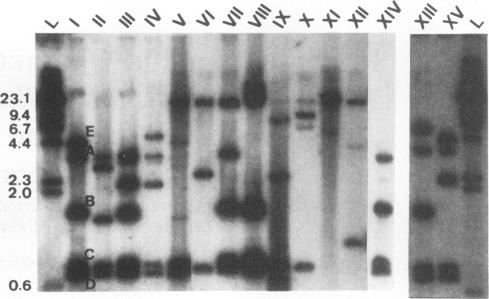
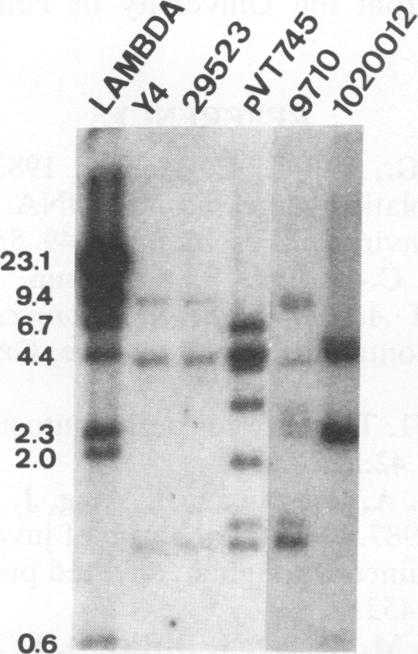
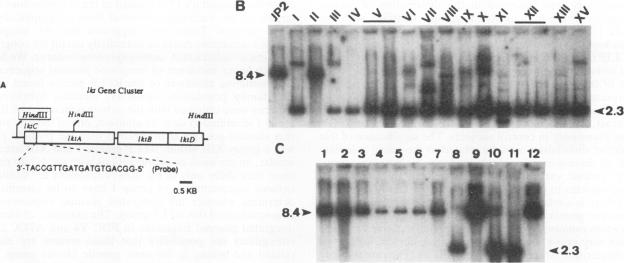
Actinobacillus actinomycetemcomitans is recognized as a primary pathogen in localized juvenile periodontitis (LJP). Restriction fragment length polymorphisms (RFLP) within a collection of subgingival plaque isolates of this bacterium were identified and characterized as the first step in understanding the pathogenesis of LJP. Over 800 isolates, from members of 18 families (LJP families) with at least one member with active LJP or a documented history of the disease and one or more siblings, less than 13 years of age, having no clinical evidence of LJP and 32 healthy control subjects, were assigned to one of 13 distinct RFLP groups (II to XIV) by using a previously characterized 4.7-kb DNA probe cloned from the reference strain FDC Y4. Isolates belonging to RFLP groups II, IV, V, and XIII predominated subgingival sites in the subjects. Members of RFLP groups II, IV, VII, VIII, X, and XI were recovered only from LJP family subjects, while group XIII and XIV variants were found exclusively in healthy controls. A synthetic oligonucleotide, homologous to the 5' end of the leukotoxin gene (lktA), and the A. actinomycetemcomitans plasmid, pVT745, were tested for their abilities to subdivide the 13 RFLP groups. The leukotoxin probe specifically identified all RFLP group II variants because of the absence of a HindIII site in the upstream noncoding region of the lkt gene complex. The plasmid probe was not as selective but may be useful for identifying clinical isolates belonging to RFLP group I. The use of these probes for the identification of genetic variants of A. actinomycetemcomitans that may be preferentially colonize diseased and healthy subjects will facilitate the study of the role of this important pathogen in periodontal diseases.
伴放线放线杆菌被认为是局限性青少年牙周炎(LJP)的主要病原体。作为了解LJP发病机制的第一步,对该细菌龈下菌斑分离株的限制性片段长度多态性(RFLP)进行了鉴定和表征。从18个家庭(LJP家庭)的成员中分离出800多个菌株,这些家庭中至少有一名成员患有活动性LJP或有该疾病的记录病史,以及一名或多名年龄小于13岁、无LJP临床证据的兄弟姐妹,还有32名健康对照受试者。使用先前从参考菌株FDC Y4克隆的4.7kb DNA探针,将这些菌株分为13个不同的RFLP组(II至XIV)之一。属于RFLP组II、IV、V和XIII的分离株在受试者的龈下部位占主导地位。RFLP组II、IV、VII、VIII、X和XI的成员仅从LJP家庭受试者中分离得到,而XIII组和XIV组变体仅在健康对照中发现。测试了一种与白细胞毒素基因(lktA)5'端同源的合成寡核苷酸和伴放线放线杆菌质粒pVT745对13个RFLP组进行细分的能力。白细胞毒素探针特异性鉴定了所有RFLP组II变体,因为lkt基因复合体上游非编码区没有HindIII位点。质粒探针的选择性不如前者,但可能有助于鉴定属于RFLP组I的临床分离株。使用这些探针鉴定可能优先定殖于患病和健康受试者的伴放线放线杆菌遗传变体,将有助于研究这种重要病原体在牙周疾病中的作用。