Rossmann M G, Olson N H, Kolatkar P R, Oliveira M A, Cheng R H, Greve J M, McClelland A, Baker T S
Department of Biological Sciences, Purdue University, West Lafayette, Indiana.
Arch Virol Suppl. 1994;9:531-41. doi: 10.1007/978-3-7091-9326-6_51.
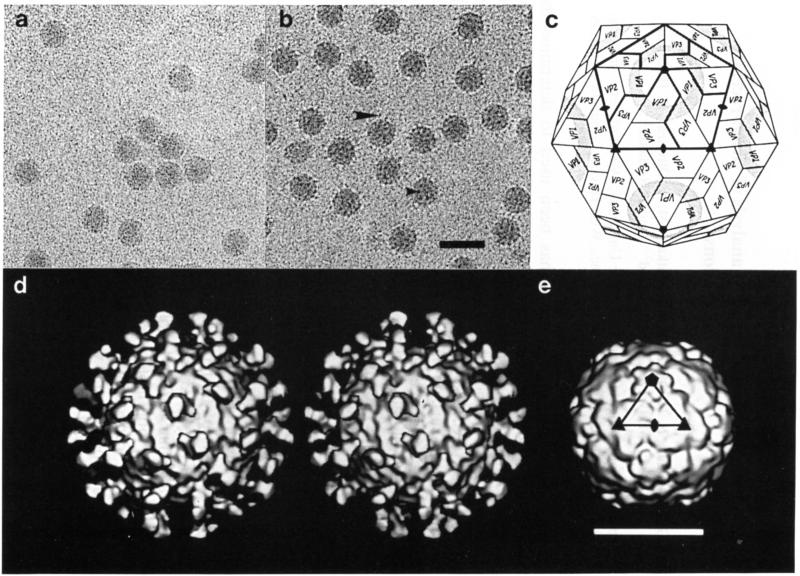
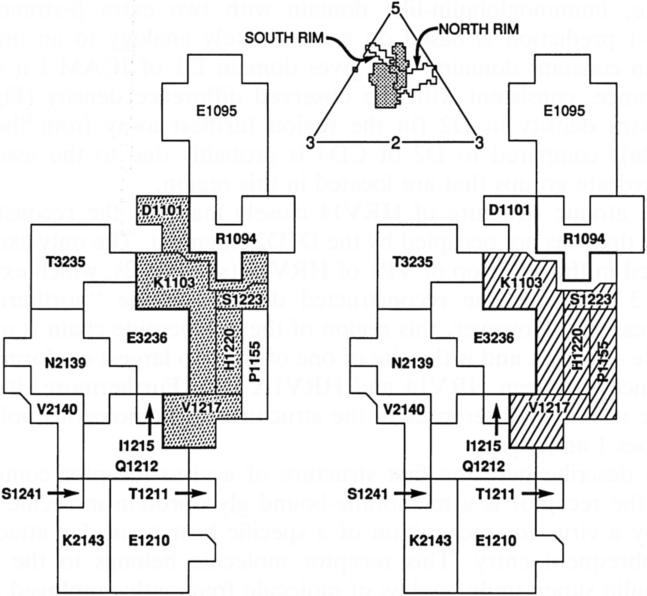
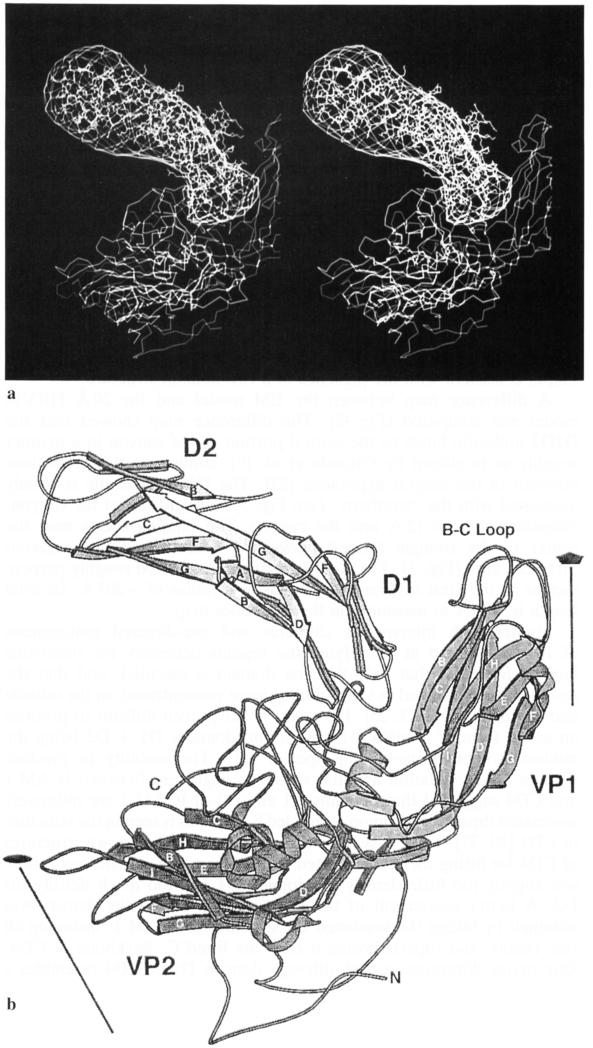
Cryoelectron microscopy has been used to determine the first structure of a virus when complexed with its glycoprotein cellular receptor. Human rhinovirus 16 (HRV16) complexed with the two amino-terminal, immunoglobulin-like domains of the intercellular adhesion molecule-1 (ICAM-1) shows that ICAM-1 binds into the 12 A deep "canyon" on the surface of the virus. This is consistent with the prediction that the viral receptor attachment site lies in a cavity inaccessible to the host's antibodies. The atomic structures of HRV14 and CD4, homologous to HRV16 and ICAM-1, showed excellent correspondence with observed density, thus establishing the virus-receptor interactions.
冷冻电子显微镜已被用于确定病毒与糖蛋白细胞受体结合时的首个结构。与细胞间黏附分子-1(ICAM-1)的两个氨基末端免疫球蛋白样结构域结合的人鼻病毒16型(HRV16)表明,ICAM-1结合到病毒表面12埃深的“峡谷”中。这与病毒受体附着位点位于宿主抗体无法接近的腔内的预测一致。与HRV16和ICAM-1同源的HRV14和CD4的原子结构与观察到的密度显示出极好的对应关系,从而确定了病毒与受体的相互作用。