Aagaard C, Phan H, Trevisanato S, Garrett R A
Institute of Molecular Biology, Copenhagen University, Denmark.
J Bacteriol. 1994 Dec;176(24):7744-7. doi: 10.1128/jb.176.24.7744-7747.1994.
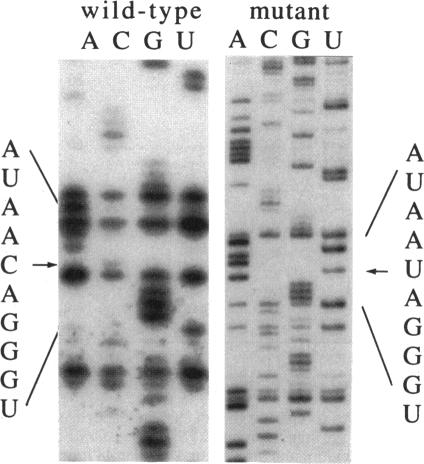
Development of transformable vectors for thermophilic archaea requires the characterization of appropriate selectable marker genes. Many antibiotic inhibitors of protein biosynthesis are known to bind to rRNA; therefore, we screened 14 for their capacity to inhibit growth of the thermophilic archaeon Sulfolobus acidocaldarius. Carbomycin, celesticetin, chloramphenicol, puromycin, sparsomycin, tetracycline, and thiostrepton all inhibited growth by different degrees. Spontaneous drug-resistant mutants were isolated from plates containing celesticetin or chloramphenicol. Six mutants from each plate exhibited a C-2585-to-U transition in the peptidyl transferase loop of 23S rRNA (corresponding to C-2452 in Escherichia coli 23S rRNA). The single-site mutation also conferred resistance to carbomycin. The mutated 23S rRNA gene provides a potentially useful and dominant marker for a thermophilic archael vector.
开发用于嗜热古菌的可转化载体需要对合适的选择标记基因进行表征。已知许多蛋白质生物合成的抗生素抑制剂会与rRNA结合;因此,我们筛选了14种抗生素,以研究它们抑制嗜热古菌嗜酸热硫化叶菌生长的能力。碳霉素、天青菌素、氯霉素、嘌呤霉素、稀疏霉素、四环素和硫链丝菌素均不同程度地抑制了生长。从含有天青菌素或氯霉素的平板中分离出自发性抗药突变体。每个平板上的六个突变体在23S rRNA的肽基转移酶环中表现出C-2585到U的转变(相当于大肠杆菌23S rRNA中的C-2452)。单点突变也赋予了对碳霉素的抗性。突变的23S rRNA基因可为嗜热古菌载体提供一个潜在有用的显性标记。