Squier M V, Lehr R P
Department of Neuropathology, Radcliffe Infirmary, Oxford, UK.
J Neurol Neurosurg Psychiatry. 1994 Sep;57(9):1095-8. doi: 10.1136/jnnp.57.9.1095.
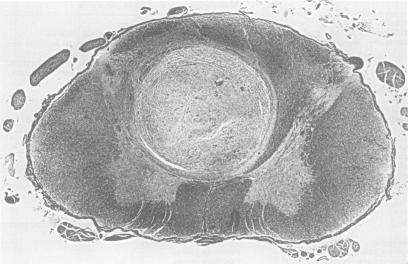
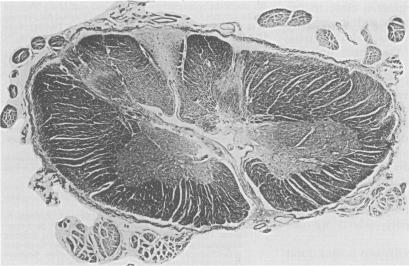
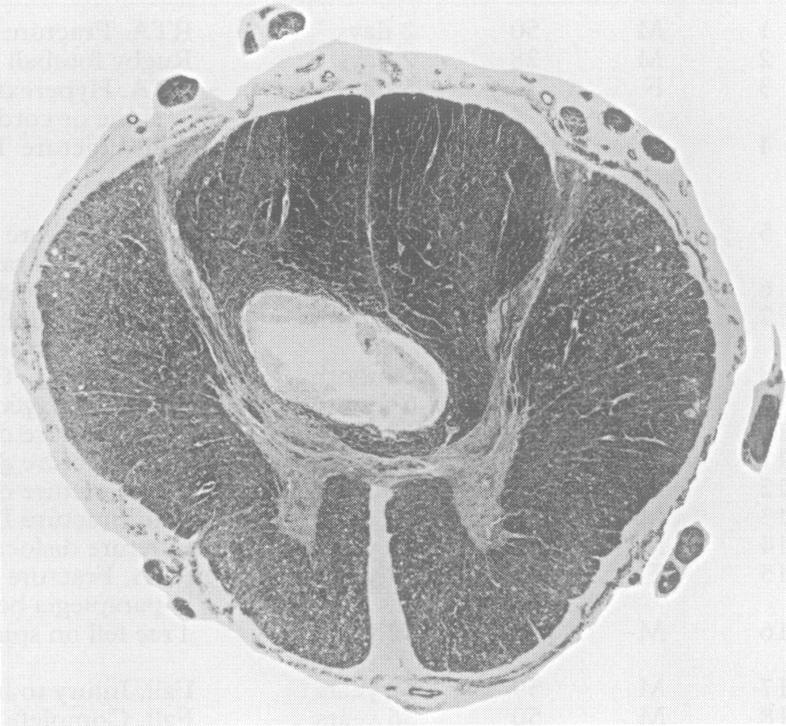
Post-traumatic syringomyelia was previously thought to be an infrequent but serious sequel to spinal cord injury. Clinical and CT studies have shown an incidence of between 1% and 5%, but more recently MRI has suggested an incidence of up to 22%. Twenty spinal cords have been examined after death from two days to 43 years after injury. Four had syrinxes, 20% of the series, approaching the incidence found by MRI. The acute and chronic pathological changes after trauma are described. Post-traumatic syringomyelia seems to develop from cores of necrotic tissue (myelomalacic cores) rather than lysis of haematoma. The mechanism of extension of syrinxes remains unexplained.
创伤后脊髓空洞症曾被认为是脊髓损伤后一种罕见但严重的后遗症。临床和CT研究显示其发病率在1%至5%之间,但最近MRI提示发病率高达22%。对20例在受伤后2天至43年死亡的脊髓进行了尸检。其中4例有脊髓空洞,占该系列的20%,接近MRI所发现的发病率。本文描述了创伤后的急性和慢性病理变化。创伤后脊髓空洞症似乎是由坏死组织核心(脊髓软化核心)发展而来,而非血肿溶解。脊髓空洞扩展的机制尚不清楚。