Schurch B, Wichmann W, Rossier A B
Swiss Paraplegic Centre, Clinic Balgrist, Zurich University, Switzerland.
J Neurol Neurosurg Psychiatry. 1996 Jan;60(1):61-7. doi: 10.1136/jnnp.60.1.61.
To assess the incidence of post-traumatic syringomyelia (PTS), to correlate the presence of PTS with its most common signs and symptoms, and to compare results from the Swiss Paraplegic Centre with those reported in the medical literature.
A total of 449 recent traumatic paraplegic and tetraplegic patients admitted to the Swiss Paraplegic Centre in Zurich between 1 January 1987 and 31 December 1993 were prospectively analysed. Yearly clinical tests with conventional radiographs and additional T1 and T2 weighted images were performed as soon as PTS was diagnosed.
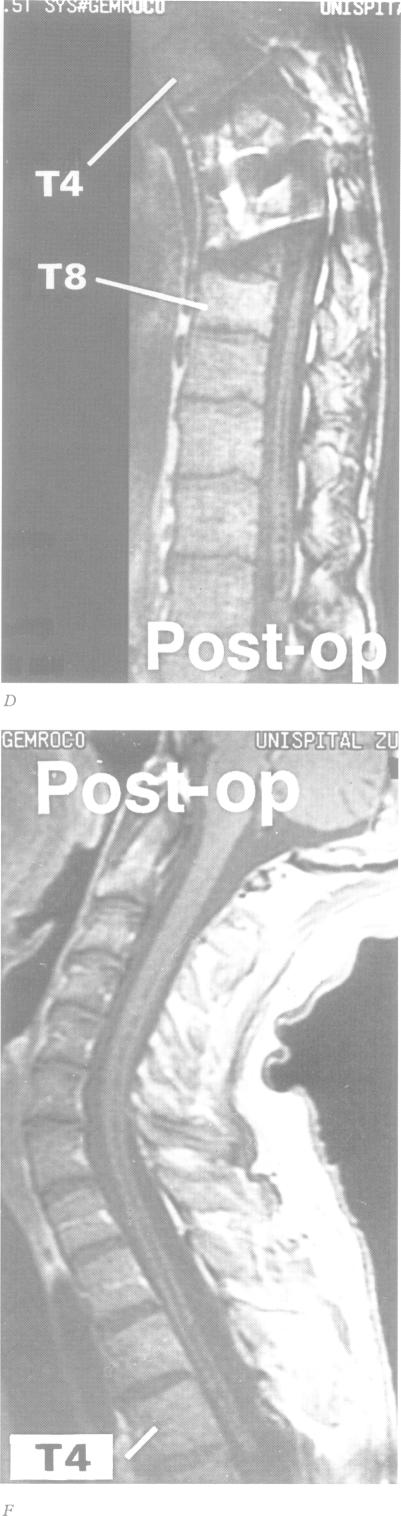
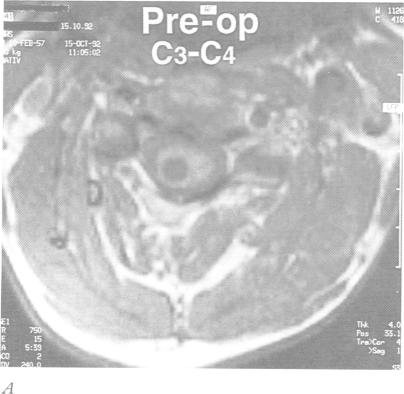
Of these 449 patients 20 patients displayed symptoms of PTS (4.45%). Ten non-operated patients remained clinically stable (average time: 37 months). Ten worsened--three refused operation, seven were operated on. Mean worsening time was 97 months. Deterioration was closely related to the enlargement of the cyst whereas in operated patients neurological improvement or stabilisation correlated with collapse of the cyst.
Delay between appearance of the first symptoms of PTS and deterioration making surgery necessary may be long (mean five years in the seven operated patients) underlining the need for regular tests. "Slosh" and "suck" mechanisms could explain cyst enlargement as surgical realignment of the spine resulted in a complete cyst collapse in two of the operated patients (normalisation of CSF flow? ). Cord compression, tense syrinx at the fracture site, and kyphosis seemed to be closely linked to the enlargement of the cyst with subsequent further neurological deterioration.
评估创伤后脊髓空洞症(PTS)的发病率,将PTS的存在与其最常见的体征和症状相关联,并将瑞士截瘫中心的结果与医学文献中报道的结果进行比较。
对1987年1月1日至1993年12月31日期间入住苏黎世瑞士截瘫中心的449例近期创伤性截瘫和四肢瘫患者进行前瞻性分析。一旦诊断出PTS,就每年进行常规X线片以及额外的T1和T2加权图像的临床检查。
在这449例患者中,20例出现了PTS症状(4.45%)。10例未手术的患者临床症状保持稳定(平均时间:37个月)。10例病情恶化——3例拒绝手术,7例接受了手术。平均恶化时间为97个月。病情恶化与囊肿增大密切相关,而在接受手术的患者中,神经功能改善或稳定与囊肿塌陷相关。
PTS首次症状出现至病情恶化到必须进行手术之间的间隔可能很长(7例接受手术的患者平均为5年),这突出了定期检查的必要性。“晃动”和“抽吸”机制可以解释囊肿增大,因为脊柱手术复位导致2例接受手术的患者囊肿完全塌陷(脑脊液流动正常化?)。脊髓受压、骨折部位的紧张性脊髓空洞症和脊柱后凸似乎与囊肿增大以及随后进一步的神经功能恶化密切相关。