Fognani C, Della Valle G, Babiss L E
Department of Molecular Cell Biology, Rockefeller University, New York, NY 10021.
EMBO J. 1993 Dec 15;12(13):4985-92. doi: 10.1002/j.1460-2075.1993.tb06192.x.
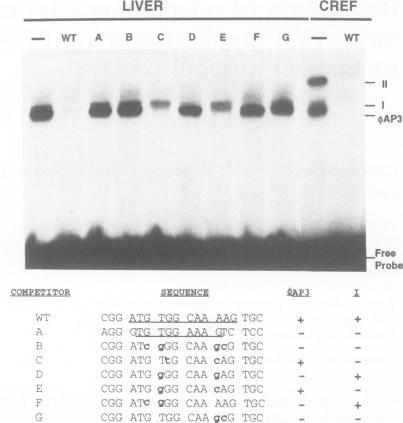
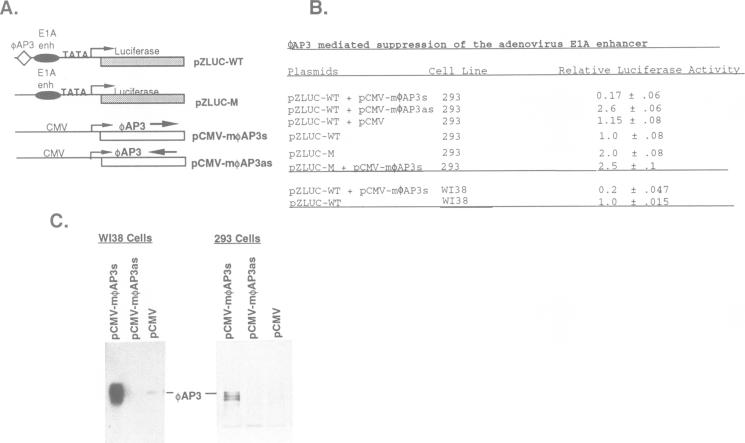
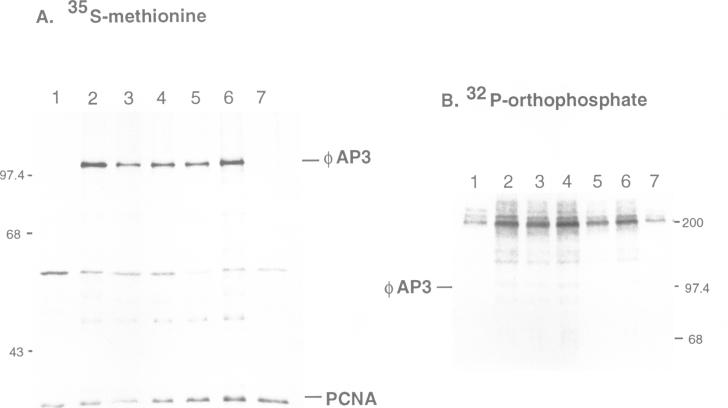
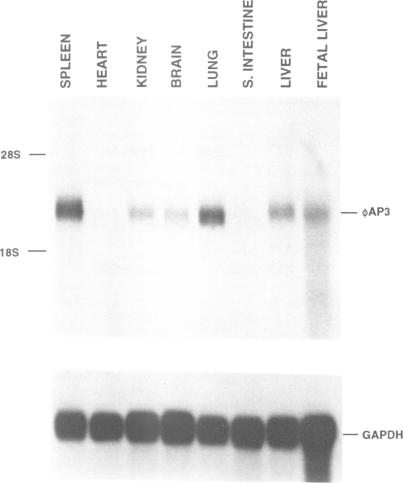
We have previously shown that expression of the E1A oncogene is negatively regulated in rodent fibroblast cells by a nuclear factor (phi AP3) that binds to the E1A promoter region just upstream of the canonical enhancer element. To understand how phi AP3 can regulate E1A gene transcription by inactivation of the enhancer function, we have used an oligonucleotide probe containing a binding site for this protein to clone the mouse phi AP3 gene. DNA sequence analysis of the 2.3 kb cDNA revealed the presence of six well-conserved zinc finger DNA-binding motifs, which were highly related to those found in the GLI-Kruppel family of human zinc finger proteins. Analysis of the tissue distribution of the phi AP3 mRNA suggested that its expression was ubiquitous but at variable levels, most likely as a result of post-transcriptional regulation of mRNA stability. The phi AP3 factor is a nuclear phosphoprotein; the extent of its phosphorylation is regulated during the cell cycle. Preferential binding of the hyperphosphorylated form of this protein to DNA was observed. Co-expression of the phi AP3 cDNA and a luciferase reporter gene under the control of the E1A promoter/enhancer in several human cell lines resulted in repression of E1A enhancer activity. In contrast, when the phi AP3 binding site upstream of the enhancer was mutated, no inhibition of enhancer function was observed. Based on these observations we conclude that we have cloned the cellular phi AP3 gene, and that the DNA-binding activity of this protein is regulated during the cell cycle.
我们之前已经表明,在啮齿动物成纤维细胞中,E1A癌基因的表达受到一种核因子(φAP3)的负调控,该核因子与经典增强子元件上游的E1A启动子区域结合。为了了解φAP3如何通过使增强子功能失活来调节E1A基因转录,我们使用了一种含有该蛋白结合位点的寡核苷酸探针来克隆小鼠φAP3基因。对2.3 kb cDNA的DNA序列分析揭示了六个高度保守的锌指DNA结合基序的存在,这些基序与人类锌指蛋白的GLI-Kruppel家族中发现的基序高度相关。对φAP3 mRNA的组织分布分析表明,其表达普遍存在但水平各异,很可能是mRNA稳定性的转录后调控所致。φAP3因子是一种核磷蛋白;其磷酸化程度在细胞周期中受到调控。观察到该蛋白的高磷酸化形式与DNA的优先结合。在几种人类细胞系中,φAP3 cDNA与E1A启动子/增强子控制下的荧光素酶报告基因共表达导致E1A增强子活性受到抑制。相反,当增强子上游的φAP3结合位点发生突变时,未观察到增强子功能受到抑制。基于这些观察结果,我们得出结论,我们已经克隆了细胞φAP3基因,并且该蛋白的DNA结合活性在细胞周期中受到调控。