Chan A M, Fleming T P, McGovern E S, Chedid M, Miki T, Aaronson S A
Laboratory of Cellular and Molecular Biology, National Cancer Institute, Bethesda, Maryland 20892.
Mol Cell Biol. 1993 Feb;13(2):762-8. doi: 10.1128/mcb.13.2.762-768.1993.
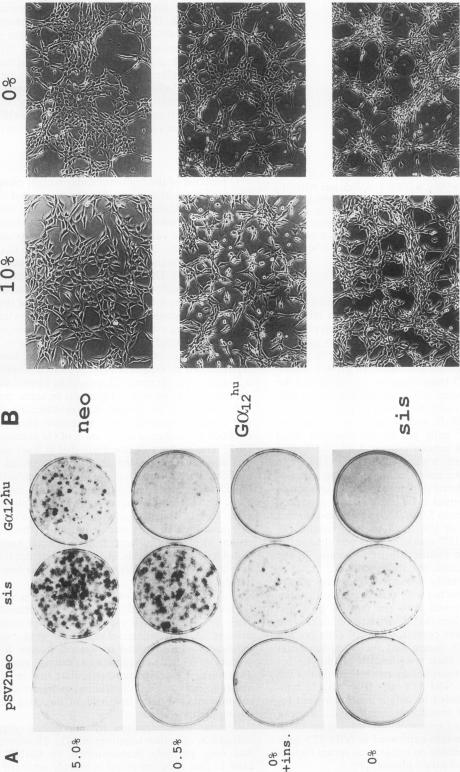
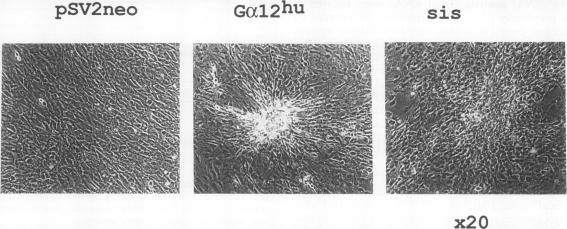
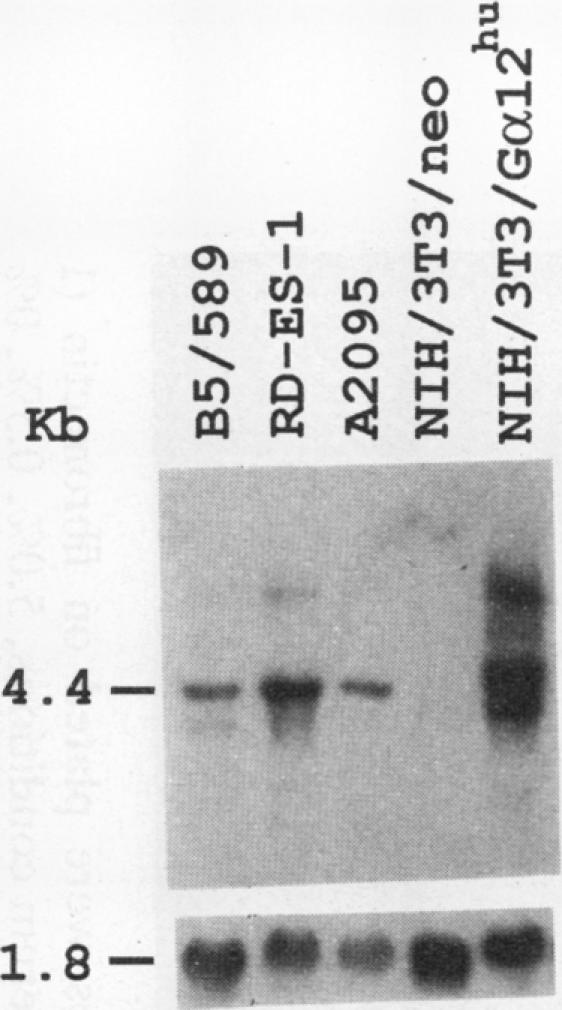
Using an expression cDNA cloning approach, we examined human tumor cell lines for novel oncogenes that might evade detection by conventional techniques. We isolated a transforming sequence that was highly efficient in transforming NIH 3T3 mouse fibroblasts. DNA sequence analysis identified the gene as the human homolog of a recently cloned alpha subunit of mouse GTP-binding protein G alpha 12. NIH 3T3 cells transfected with G alpha 12 cDNA grew in soft agar and were tumorigenic in nude mice. There were no apparent mutations in the cloned cDNA in comparison with a G alpha 12 cDNA clone isolated from a normal human epithelial cell library, implying that overexpression alone was sufficient to cause NIH 3T3 cell transformation. The observed altered growth properties mediated by G alpha 12 showed a certain degree of dependency on serum factors, and its mitogenic potential was also potently inhibited by suramin treatment.
我们采用表达性cDNA克隆方法,检测了人类肿瘤细胞系中可能逃避传统技术检测的新型癌基因。我们分离出一个转化序列,它在转化NIH 3T3小鼠成纤维细胞方面效率很高。DNA序列分析确定该基因为最近克隆的小鼠GTP结合蛋白Gα12的α亚基的人类同源物。用Gα12 cDNA转染的NIH 3T3细胞在软琼脂中生长,并在裸鼠中具有致瘤性。与从正常人上皮细胞文库中分离的Gα12 cDNA克隆相比,克隆的cDNA中没有明显的突变,这意味着仅过表达就足以导致NIH 3T3细胞转化。观察到的由Gα12介导的生长特性改变显示出对血清因子有一定程度的依赖性,并且苏拉明处理也能有效抑制其促有丝分裂潜力。