Cardenas M E, Heitman J
Department of Genetics, Durham, NC 27710, USA.
EMBO J. 1995 Dec 1;14(23):5892-907. doi: 10.1002/j.1460-2075.1995.tb00277.x.
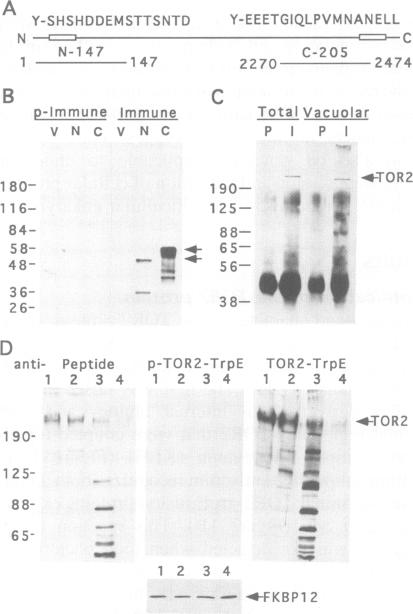
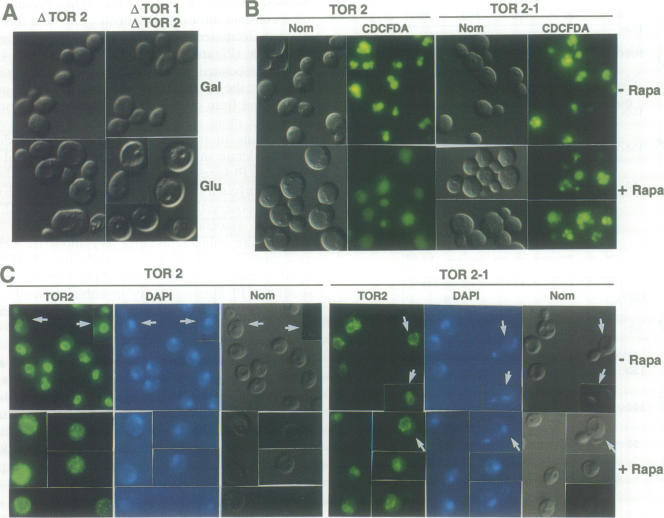
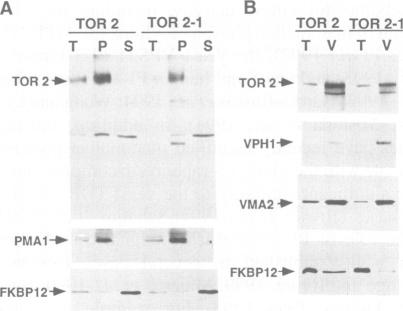
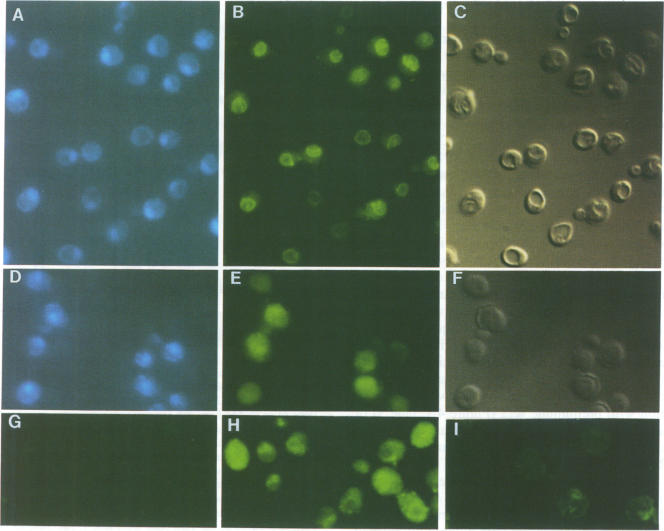
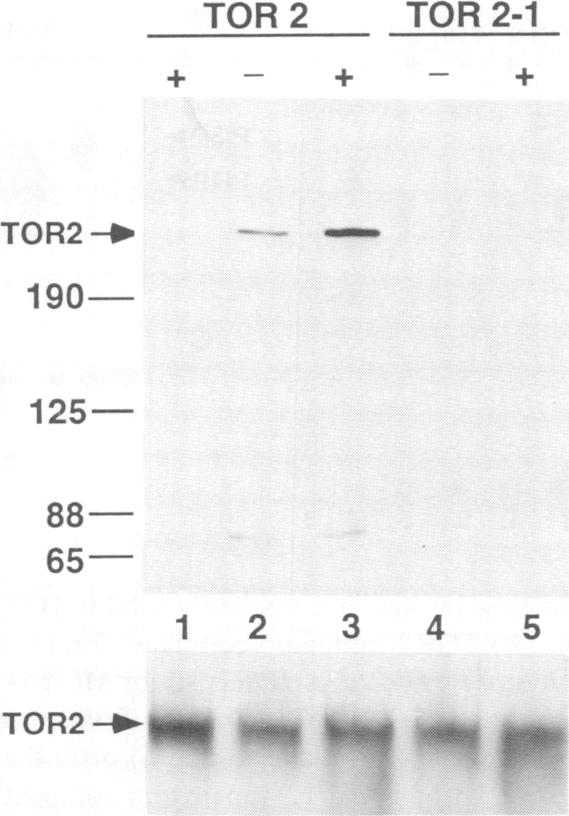
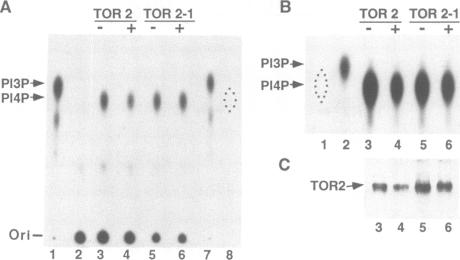
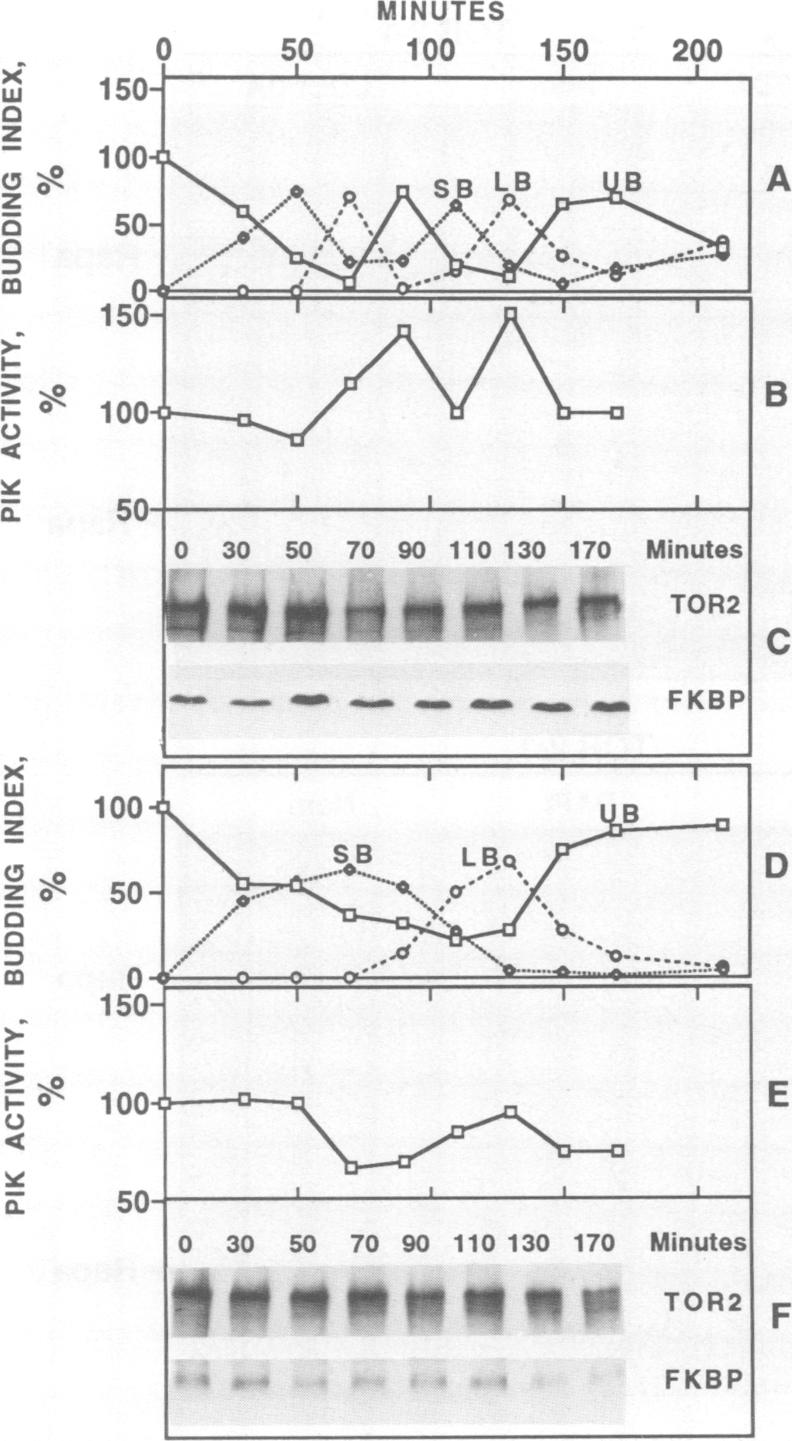
In complex with the immunophilin FKBP12, the natural product rapamycin inhibits signal transduction events required for G1 to S phase cell cycle progression in yeast and mammalian cells. Genetic studies in yeast first implicated the TOR1 and TOR2 proteins as targets of the FKBP12-rapamycin complex. We report here that the TOR2 protein is membrane associated and localized to the surface of the yeast vacuole. Immunoprecipitated TOR2 protein contains readily detectable phosphatidylinositol-4 (PI-4) kinase activity attributable to either a TOR2 intrinsic activity or to a PI-4 kinase tightly associated with TOR2. Importantly, we find that rapamycin stimulates FKBP12 binding to wild-type TOR2 but not to a rapamycin-resistant TOR2-1 mutant protein. Surprisingly, FKBP12-rapamycin binding does not markedly inhibit the PI kinase activity associated with TOR2, but does cause a delocalization of TOR2 from the vacuolar surface, which may deprive the TOR2-associated PI-4 kinase activity of its in vivo substrate. Several additional findings indicate that vacuolar localization is important for TOR2 function and, conversely, that TOR2 modulates vacuolar morphology and segregation. These studies demonstrate that TOR2 is an essential, highly conserved component of a signal transduction pathway regulating cell cycle progression conserved from yeast to man.
天然产物雷帕霉素与免疫亲和素FKBP12结合后,可抑制酵母和哺乳动物细胞中G1期到S期细胞周期进程所需的信号转导事件。酵母中的遗传学研究首先表明TOR1和TOR2蛋白是FKBP12 - 雷帕霉素复合物的作用靶点。我们在此报告,TOR2蛋白与膜相关,定位于酵母液泡表面。免疫沉淀的TOR2蛋白含有易于检测到的磷脂酰肌醇 - 4(PI - 4)激酶活性,这可归因于TOR2的内在活性或与TOR2紧密相关的PI - 4激酶。重要的是,我们发现雷帕霉素刺激FKBP12与野生型TOR2结合,但不与雷帕霉素抗性的TOR2 - 1突变蛋白结合。令人惊讶的是,FKBP12 - 雷帕霉素结合并未显著抑制与TOR2相关的PI激酶活性,但确实导致TOR2从液泡表面脱离,这可能使与TOR2相关的PI - 4激酶活性失去其体内底物。其他一些发现表明,液泡定位对TOR2功能很重要,反之,TOR2调节液泡形态和分离。这些研究表明,TOR2是从酵母到人类保守的调节细胞周期进程的信号转导途径的一个必需的、高度保守的组成部分。