Morris R, Winyard P G, Brass L F, Blake D R, Morris C J
Inflammation Research Group, St Bartholomew's, London, United Kingdom.
Ann Rheum Dis. 1996 Nov;55(11):841-3. doi: 10.1136/ard.55.11.841.
To investigate the possibility that synovial cells might respond to thrombin in the inflamed human joint, using immunohistochemical detection of thrombin receptors.
Frozen sections of synovial membrane from 20 patients with rheumatoid arthritis, 16 with osteoarthritis, and four normal controls were stained using a monoclonal antibody to the human thrombin receptor. Sections were also double stained for both receptors and non-specific esterase.
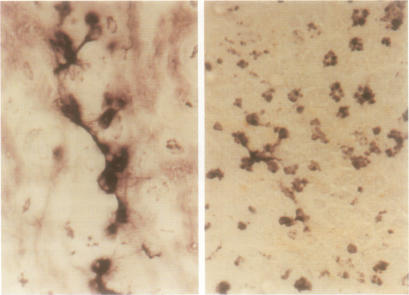
Receptor positive cells were present in rheumatoid synovia, with some cells also staining positively for non-specific esterase. In contrast, both osteoarthritic and normal synovia contained very few cells expressing receptors.
Thrombin may mediate important pathological changes during chronic inflammatory joint disease.
通过对凝血酶受体进行免疫组织化学检测,研究滑膜细胞是否可能对炎症状态下人体关节中的凝血酶产生反应。
采用针对人凝血酶受体的单克隆抗体,对20例类风湿性关节炎患者、16例骨关节炎患者以及4例正常对照者的滑膜组织冰冻切片进行染色。切片还进行了受体与非特异性酯酶的双重染色。
类风湿性关节炎滑膜组织中存在受体阳性细胞,部分细胞非特异性酯酶染色也呈阳性。相比之下,骨关节炎和正常滑膜组织中表达受体的细胞极少。
凝血酶可能在慢性炎症性关节疾病中介导重要的病理变化。