Buchenau P, Saumweber H, Arndt-Jovin D J
Department of Molecular Biology, Max Planck Institute for Biophysical Chemistry, Göttingen, Germany.
J Cell Biol. 1997 Apr 21;137(2):291-303. doi: 10.1083/jcb.137.2.291.
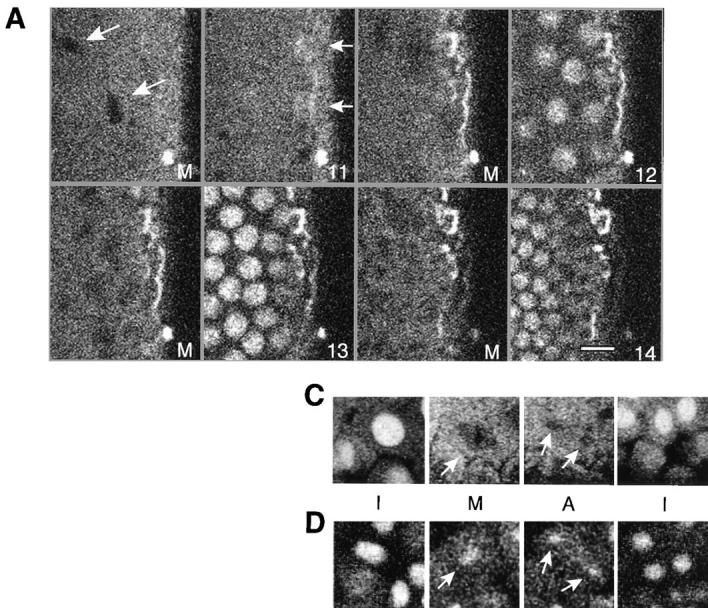
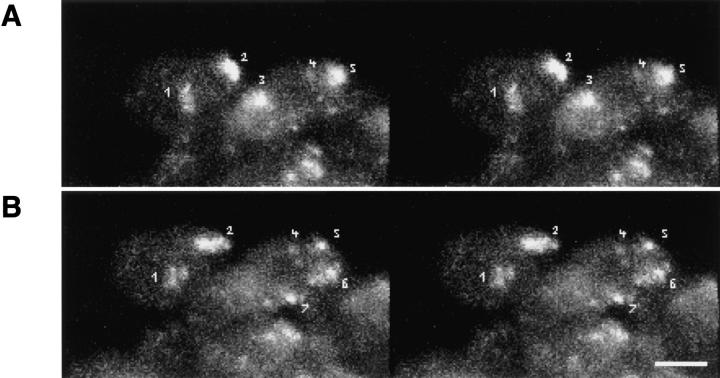
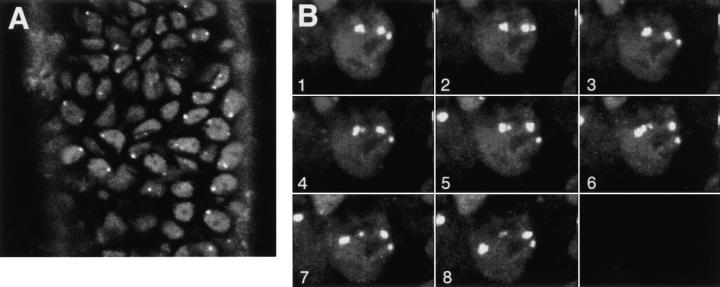
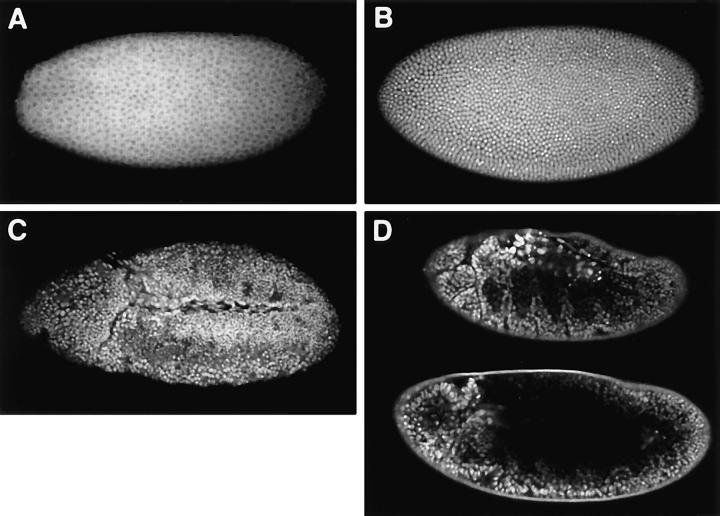
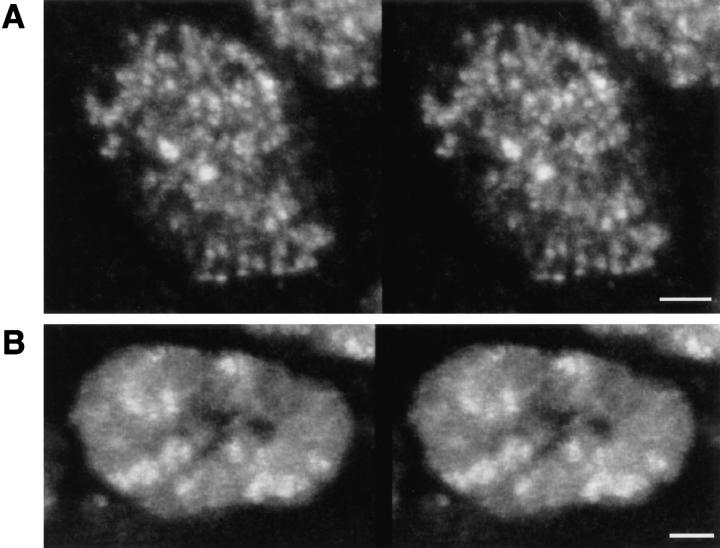
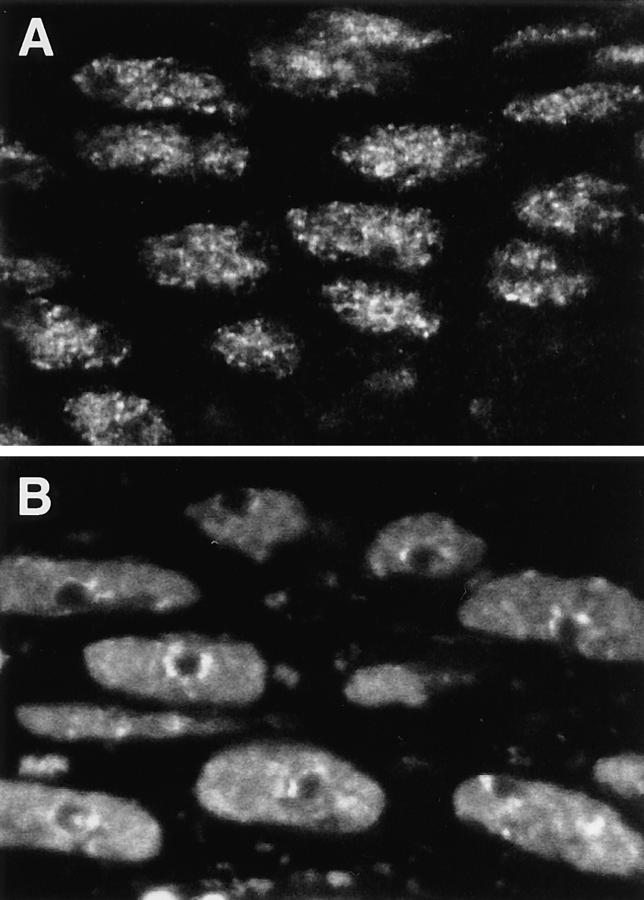
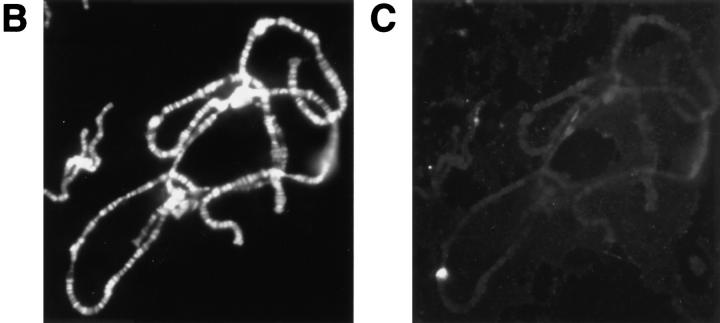
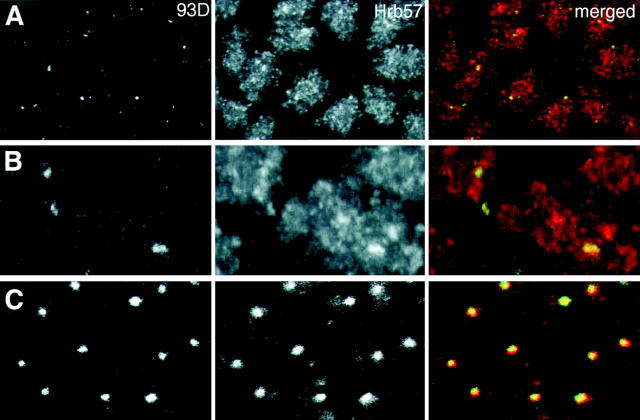
The Drosophila protein Hrb57A has sequence homology to mammalian heterogenous nuclear ribonucleoprotein (hnRNP) K proteins. Its in vivo distribution has been studied at high resolution by confocal laser scanning microscopy (CLSM) in embryos injected with fluorescently labeled monoclonal antibody. Injection of antibody into living embryos had no apparent deleterious effects on further development. Furthermore, the antibody-protein complex could be observed for more than 7 cell cycles in vivo, revealing a dynamic redistribution from the nucleus to cytoplasm at each mitosis from blastoderm until hatching. The evaluation of two- and three-dimensional CLSM data sets demonstrated important differences in the localization of the protein in the nuclei of living compared to fixed embryos. The Hrb57A protein was recruited to the 93D locus upon heat shock and thus serves as an in vivo probe for the activity of the gene in diploid cells of the embryo. Observations during heat shock revealed considerable mobility within interphase nuclei of this transcription site. Furthermore, the reinitiation as well as the down regulation of transcriptional loci in vivo during the recovery from heat shock could be followed by the rapid redistribution of the hnRNP K during stress recovery. These data are incompatible with a model of the interphase nucleus in which transcription complexes are associated with a rigid nuclear matrix.
果蝇蛋白Hrb57A与哺乳动物异质性核核糖核蛋白(hnRNP)K蛋白具有序列同源性。通过共聚焦激光扫描显微镜(CLSM)对注射了荧光标记单克隆抗体的胚胎进行高分辨率研究,分析了其在体内的分布情况。将抗体注射到活胚胎中对其进一步发育没有明显的有害影响。此外,在体内可以观察到抗体 - 蛋白复合物超过7个细胞周期,揭示了从胚盘到孵化的每个有丝分裂过程中,该复合物从细胞核到细胞质的动态重新分布。对二维和三维CLSM数据集的评估表明,与固定胚胎相比,活胚胎细胞核中该蛋白的定位存在重要差异。热休克时,Hrb57A蛋白被募集到93D位点,因此可作为胚胎二倍体细胞中该基因活性的体内探针。热休克期间的观察显示,该转录位点在间期核内具有相当大的流动性。此外,热休克恢复过程中,体内转录位点的重新起始以及下调可通过应激恢复期间hnRNP K的快速重新分布来跟踪。这些数据与转录复合物与刚性核基质相关的间期核模型不相符。