van IJzendoorn S C, Zegers M M, Kok J W, Hoekstra D
Department of Physiological Chemistry, University of Groningen, The Netherlands.
J Cell Biol. 1997 Apr 21;137(2):347-57. doi: 10.1083/jcb.137.2.347.
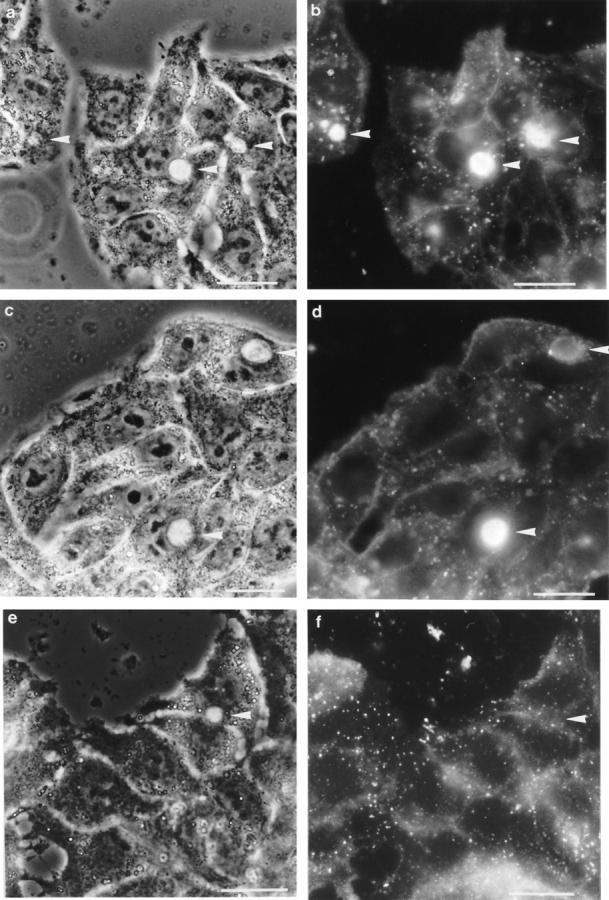
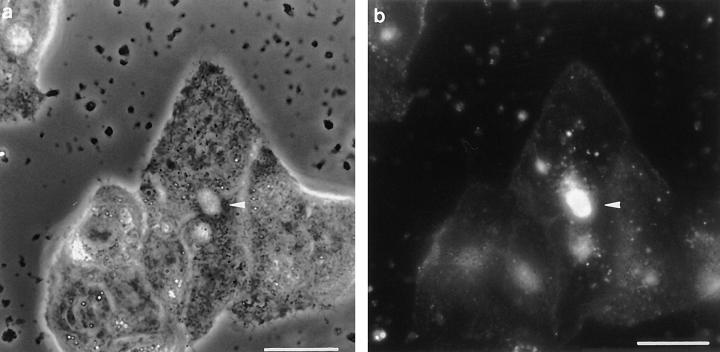
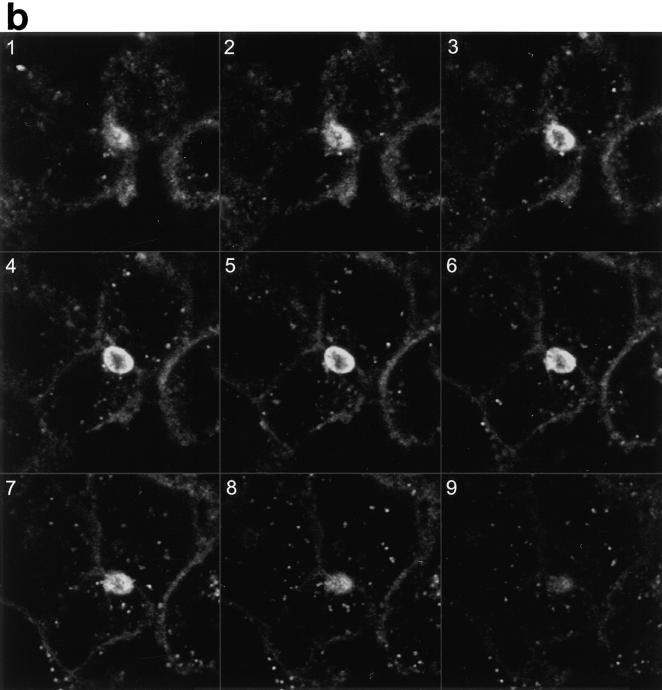
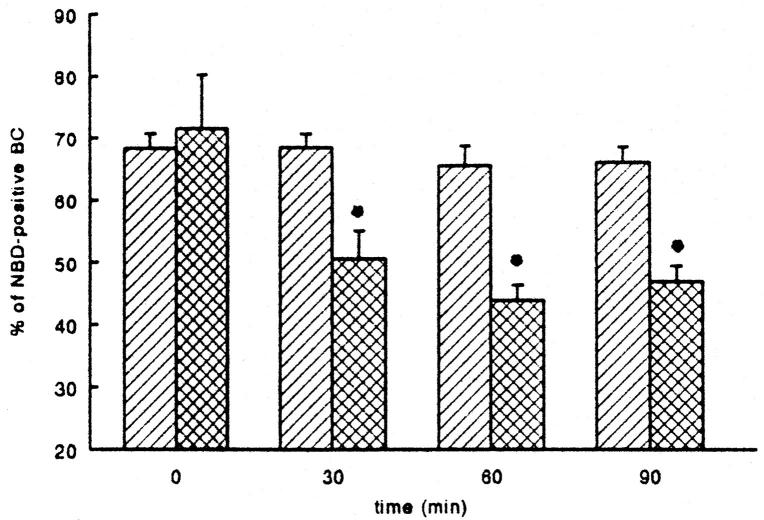
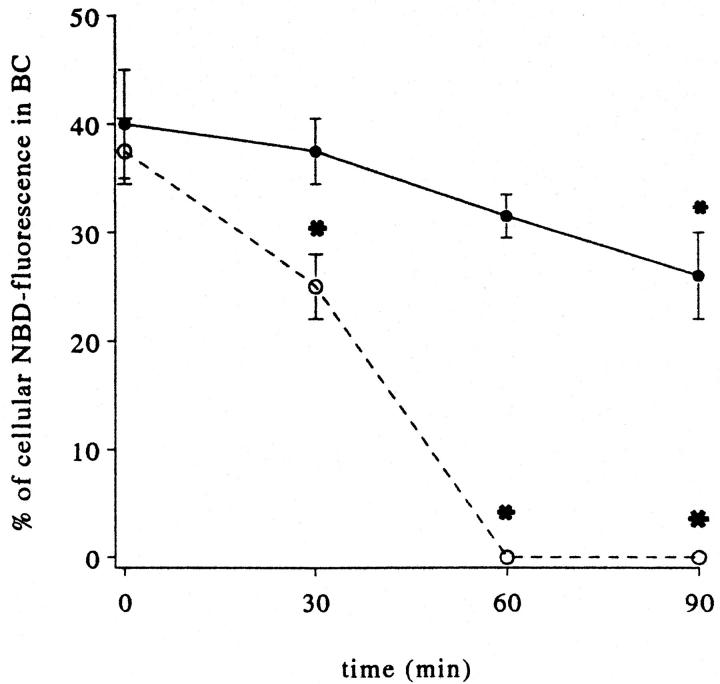
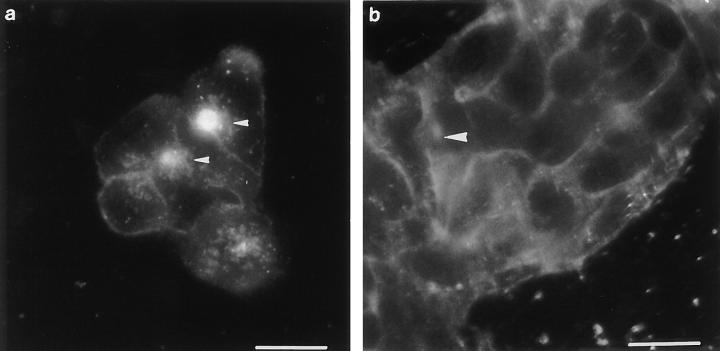
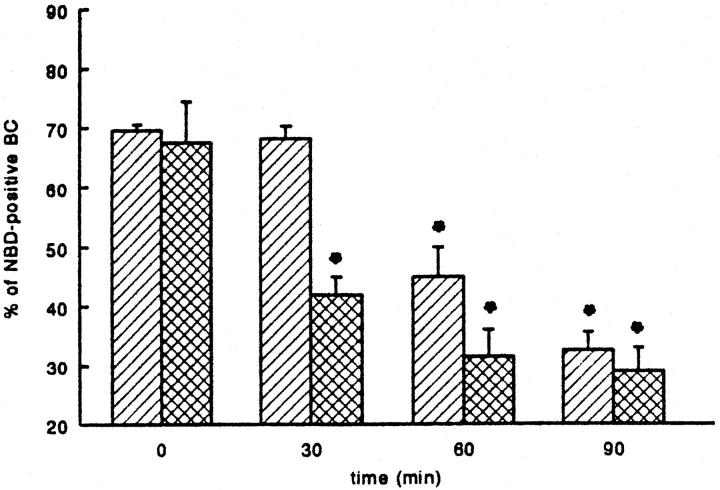
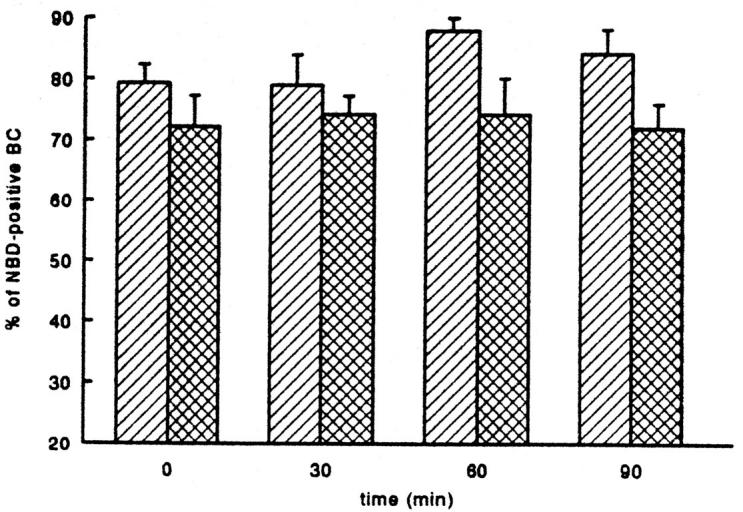
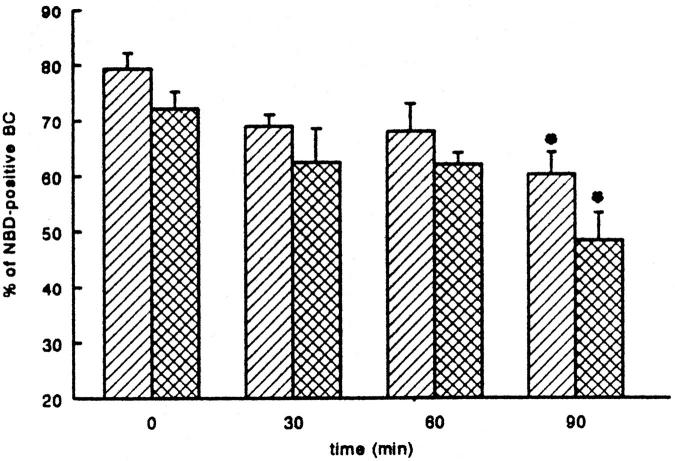
HepG2 cells are highly differentiated hepatoma cells that have retained an apical, bile canalicular (BC) plasma membrane polarity. We investigated the dynamics of two BC-associated sphingolipids, glucosylceramide (GlcCer) and sphingomyelin (SM). For this, the cells were labeled with fluorescent acyl chain-labeled 6-[N-(7-nitrobenz-2-oxa-1,3-diazol-4-yl)-amino]hexanoic acid (C6-NBD) derivatives of either GlcCer (C6-NBD-GlcCer) or SM (C6-NBD-SM). The pool of the fluorescent lipid analogues present in the basolateral plasma membrane domain was subsequently depleted and the apically located C6-NBD-lipid was chased at 37 degrees C. By using fluorescence microscopical analysis and a new assay that allows an accurate estimation of the fluorescent lipid pool in the apical membrane, qualitative and quantitative insight was obtained concerning kinetics, extent and (intra)cellular sites of the redistribution of apically located C6-NBD-GlcCer and C6-NBD-SM. It is demonstrated that both lipids display a preferential localization, C6-NBD-GlcCer in the apical and C6-NBD-SM in the basolateral area. Such a preference is expressed during transcytosis of both sphingolipids from the apical to the basolateral plasma membrane domain, a novel lipid trafficking route in HepG2 cells. Whereas the vast majority of the apically derived C6-NBD-SM was rapidly transcytosed to the basolateral surface, most of the apically internalized C6-NBD-GlcCer was efficiently redirected to the BC. The redirection of C6-NBD-GlcCer did not involve trafficking via the Golgi apparatus. Evidence is provided which suggests the involvement of vesicular compartments, located subjacent to the apical plasma membrane. Interestingly, the observed difference in preferential localization of C6-NBD-GlcCer and C6-NBD-SM was perturbed by treatment of the cells with dibutyryl cAMP, a stable cAMP analogue. While the preferential apical localization of C6-NBD-GlcCer was amplified, dibutyryl cAMP-treatment caused apically retrieved C6-NBD-SM to be processed via a similar pathway as that of C6-NBD-GlcCer. The data unambiguously demonstrate that segregation of GlcCer and SM occurs in the reverse transcytotic route, i.e., during apical to basolateral transport, which results in the preferential localization of GlcCer and SM in the apical and basolateral region of the cells, respectively. A role for non-Golgi-related, sub-apical vesicular compartments in the sorting of GlcCer and SM is proposed.
HepG2细胞是高度分化的肝癌细胞,保留了顶端胆小管(BC)质膜极性。我们研究了两种与BC相关的鞘脂,葡糖神经酰胺(GlcCer)和鞘磷脂(SM)的动态变化。为此,用荧光酰基链标记的GlcCer(C6-NBD-GlcCer)或SM(C6-NBD-SM)的6-[N-(7-硝基苯并-2-恶唑-1,3-二唑-4-基)-氨基]己酸(C6-NBD)衍生物对细胞进行标记。随后耗尽存在于基底外侧质膜结构域中的荧光脂质类似物池,并在37℃下追踪顶端定位的C6-NBD-脂质。通过荧光显微镜分析和一种新的测定方法,该方法能够准确估计顶端膜中的荧光脂质池,获得了关于顶端定位的C6-NBD-GlcCer和C6-NBD-SM重新分布的动力学、程度和(细胞内)位点的定性和定量见解。结果表明,两种脂质均表现出优先定位,C6-NBD-GlcCer在顶端,C6-NBD-SM在基底外侧区域。这种偏好性在两种鞘脂从顶端质膜结构域向基底外侧质膜结构域的转胞吞过程中表现出来,这是HepG2细胞中一种新的脂质运输途径。虽然绝大多数顶端来源的C6-NBD-SM迅速转胞吞到基底外侧表面,但大多数顶端内化的C6-NBD-GlcCer有效地重新导向到胆小管。C6-NBD-GlcCer的重新导向不涉及通过高尔基体的运输。提供的证据表明,位于顶端质膜下方的囊泡区室参与其中。有趣的是,用二丁酰cAMP(一种稳定的cAMP类似物)处理细胞会扰乱观察到的C6-NBD-GlcCer和C6-NBD-SM优先定位的差异。虽然C6-NBD-GlcCer的优先顶端定位被放大,但二丁酰cAMP处理导致顶端回收的C6-NBD-SM通过与C6-NBD-GlcCer类似的途径进行加工。数据明确表明,GlcCer和SM的分离发生在反向转胞吞途径中,即在从顶端到基底外侧的运输过程中,这导致GlcCer和SM分别优先定位在细胞的顶端和基底外侧区域。提出了非高尔基体相关的顶端下囊泡区室在GlcCer和SM分选中的作用。