Zarozinski C C, Welsh R M
Department of Pathology, University of Massachusetts Medical Center, Worcester 01655, USA.
J Exp Med. 1997 May 5;185(9):1629-39. doi: 10.1084/jem.185.9.1629.
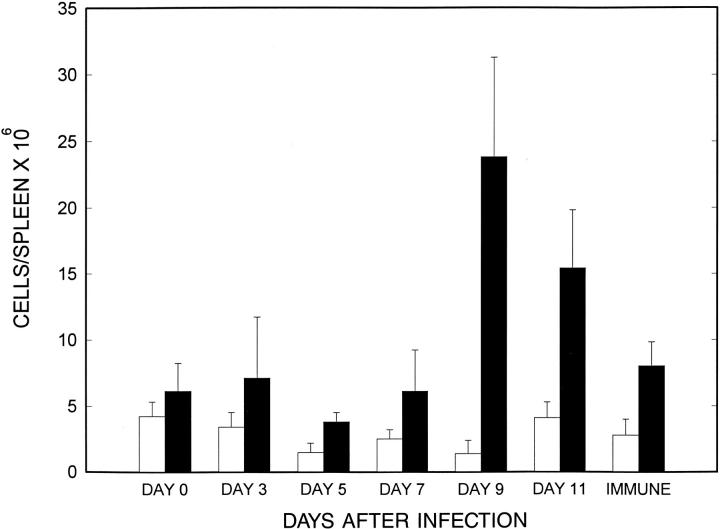
Acute infections with viruses such as lymphocytic choriomeningitis virus (LCMV) are associated with a massive polyclonal T cell response, but the specificities of only a small percentage of these activated T cells are known. To determine if bystander stimulation of T cells not specific to the virus plays a role in this T cell response, we examined two different systems, HY-specific T cell receptor (TCR)-transgenic mice, which have a restricted TCR repertoire, and LCMV-carrier mice, which are tolerant to LCMV. LCMV infection of HY-transgenic C57BL/6 mice induced antiviral CTLs that lysed target cells coated with two of the three immunodominant epitopes previously defined for LCMV (glycoprotein 33 and nucleoprotein 397). Although LCMV-induced cytotoxic T lymphocytes (CTLs) from C57BL/6 mice could lyse uninfected H-2(k) and H-2(d) allogeneic targets, LCMV-induced CTLs from HY mice lysed only the H-2(k)-expressing cells. The HY mice generated both anti-H-2(k) and anti-H-2(d) CTL in mixed leukocyte reactions, providing evidence that the generation of allospecific CTLs during acute LCMV infection is antigen specific. During the LCMV infection there was blastogenesis of the CD8+ T cell population, but the HY-specific T cells (as determined by expression of the TCR-alpha chain) remained small in size. To examine the potential for bystander stimulation under conditions of a very strong CTL response, T cell chimeras were made between normal and HY mice. Even in the context of a normal virus-induced CTL response, no stimulation of HY-specific T cells was observed, and HY-specific cells were diluted in number by day 9 after infection. In LCMV-carrier mice in which donor and host T cells could be distinguished by Thy1 allotypic markers, adoptive transfer of LCMV-immune T cells into LCMV-carrier mice, whose T cells were tolerant to LCMV, resulted in activation and proliferation of donor CD8 cells, but little or no activation of host CD8 cells. These results support the hypothesis that the massive polyclonal CTL response to LCMV infection is virus-specific and that bystander activation of non-virus-specific T cells is not a significant component of this response.
诸如淋巴细胞性脉络丛脑膜炎病毒(LCMV)等病毒引起的急性感染与大规模的多克隆T细胞反应相关,但这些活化T细胞中只有一小部分的特异性是已知的。为了确定对病毒无特异性的T细胞的旁观者刺激是否在这种T细胞反应中起作用,我们研究了两个不同的系统,即具有受限TCR库的HY特异性T细胞受体(TCR)转基因小鼠,以及对LCMV耐受的LCMV携带小鼠。用LCMV感染HY转基因C57BL/6小鼠可诱导抗病毒CTL,这些CTL可裂解包被有先前为LCMV定义的三个免疫显性表位中的两个(糖蛋白33和核蛋白397)的靶细胞。尽管来自C57BL/6小鼠的LCMV诱导的细胞毒性T淋巴细胞(CTL)可裂解未感染的H-2(k)和H-2(d)同种异体靶细胞,但来自HY小鼠的LCMV诱导的CTL仅裂解表达H-2(k)的细胞。HY小鼠在混合淋巴细胞反应中产生了抗H-2(k)和抗H-2(d) CTL,这提供了证据表明在急性LCMV感染期间同种特异性CTL的产生是抗原特异性的。在LCMV感染期间,CD8+ T细胞群体出现母细胞化,但HY特异性T细胞(通过TCR-α链的表达确定)的大小仍然很小。为了研究在非常强烈的CTL反应条件下旁观者刺激的可能性,在正常小鼠和HY小鼠之间制作了T细胞嵌合体。即使在正常的病毒诱导的CTL反应背景下,也未观察到HY特异性T细胞的刺激,并且在感染后第9天,HY特异性细胞的数量被稀释。在LCMV携带小鼠中,供体和宿主T细胞可通过Thy1同种异型标记区分,将LCMV免疫的T细胞过继转移到其T细胞对LCMV耐受的LCMV携带小鼠中,导致供体CD8细胞活化和增殖,但宿主CD8细胞很少或没有活化。这些结果支持以下假设,即对LCMV感染的大规模多克隆CTL反应是病毒特异性的,并且非病毒特异性T细胞的旁观者活化不是该反应的重要组成部分。