Krishna M, Varki A
Glycobiology Program, UCSD Cancer Center, the Department of Medicine, University of California, San Diego, La Jolla, California 92093, USA.
J Exp Med. 1997 Jun 2;185(11):1997-2013. doi: 10.1084/jem.185.11.1997.
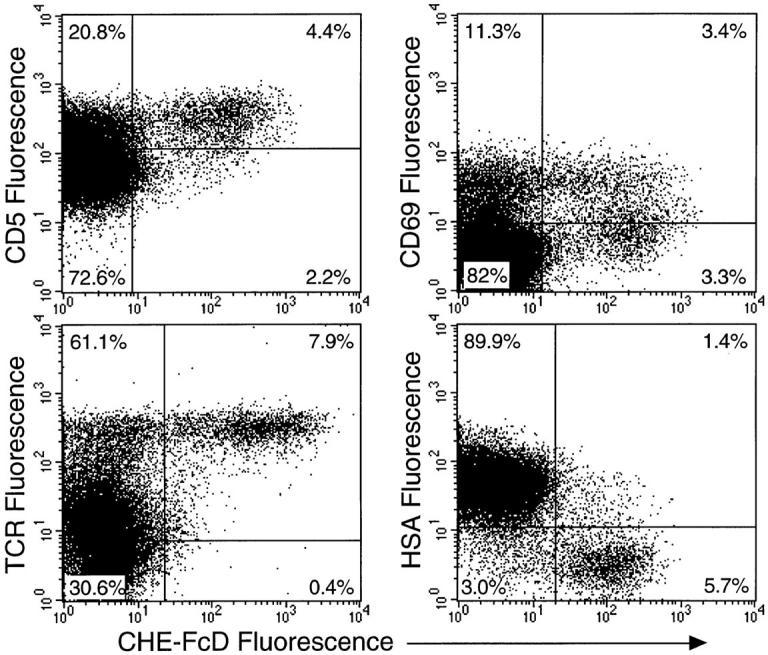
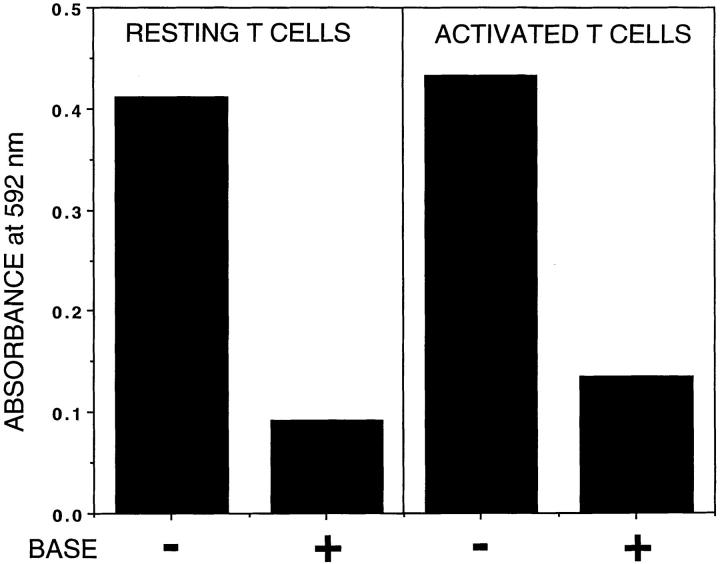
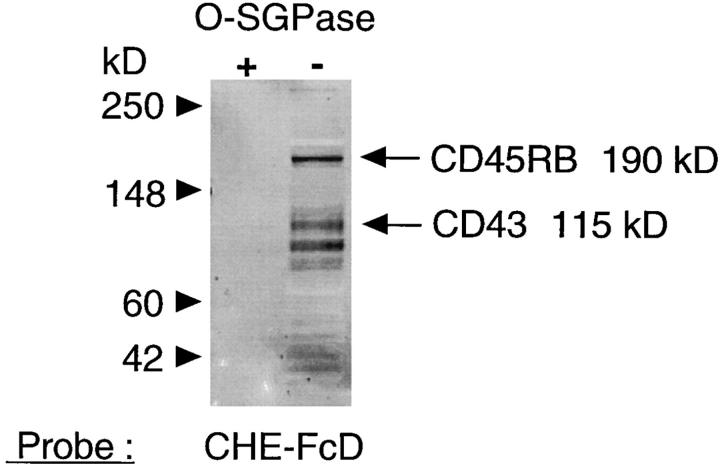
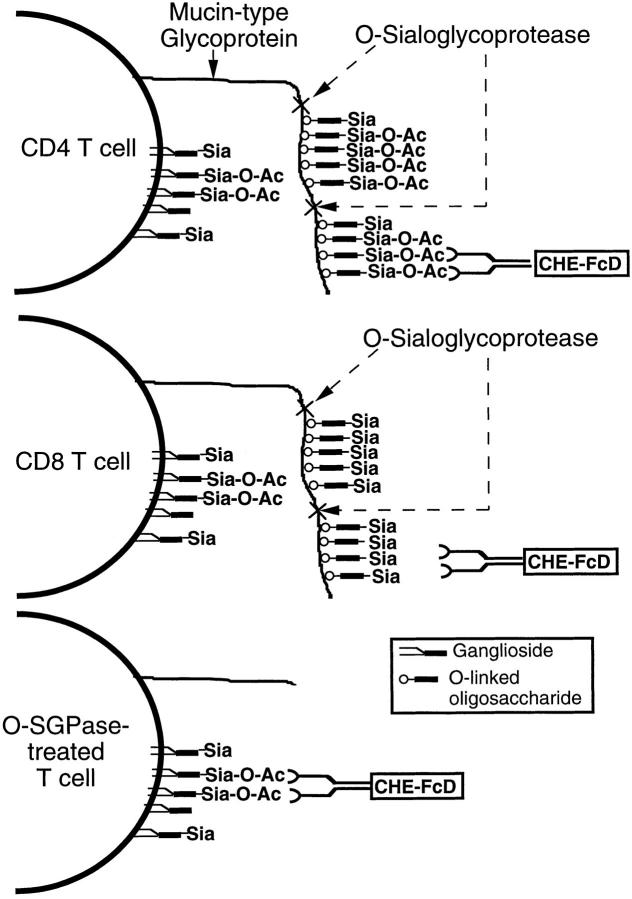
Terminal sialic acids on cell surface glycoconjugates can carry 9-O-acetyl esters. For technical reasons, it has previously been difficult to determine their precise distribution on different cell types. Using a recombinant soluble form of the Influenza C virus hemagglutinin-esterase as a probe for 9-O-acetylated sialic acids, we demonstrate here their preferential expression on the CD4 T cell lineage in normal B10.A mouse lymphoid organs. Of total thymocytes, 8-10% carry 9-O-acetylation; the great majority of these are the more mature PNA-, HSA-, and TCRhi medullary cells. While low levels of 9-O-acetylation are seen on some CD4/CD8 double positive (DP) and CD8 single positive (SP) cells, high levels are present primarily on 80- 85% of CD4 SP cells. Correlation with CD4 and CD8 levels suggests that 9-O-acetylation appears as an early differentiation marker as cells mature from the DP to the CD4 SP phenotype. This high degree of 9-O-acetylation is also present on 90-95% of peripheral spleen and lymph node CD4 T cells. In contrast, only a small minority of CD8 T cells and B cells show such levels of 9-O-acetylation. Among mature peripheral CD4 T lymphocytes, the highly O-acetylated cells are Mel 14(hi), CD44(lo), and CD45R(exon B)hi, features typical of naive cells. Digestions with trypsin and O-sialoglycoprotease (OSGPase) and ELISA studies of lipid extracts indicate that the 9-O-acetylated sialic acids on peripheral CD4 T cells are predominantly on O-linked mucintype glycoproteins and to a lesser degree, on sialylated glycolipids (gangliosides). In contrast, sialic acids on mucin type molecules of CD8 T cells are not O-acetylated; instead these molecules mask the recognition of O-acetylated gangliosides that seem to be present at similar levels as on CD4 cells. The 9-O-acetylated gangliosides on mouse T cells are not bound by CD60 antibodies, which recognize O-acetylated gangliosides in human T cells. Tethering 9-O-acetylated mucins with the Influenza C probe with or without secondary cross-linking did not cause activation of CD4 T cells. However, activation by other stimuli including TCR ligation is associated with a substantial decrease in surface 9-O-acetylation, primarily in the mucin glycoprotein component. Thus, 9-O-acetylation of sialic acids on cell surface mucins is a novel marker on CD4 T cells that appears on maturation and is modulated downwards upon activation.
细胞表面糖缀合物上的末端唾液酸可携带9 - O - 乙酰酯。由于技术原因,此前一直难以确定它们在不同细胞类型上的精确分布。我们使用重组可溶性形式的丙型流感病毒血凝素 - 酯酶作为9 - O - 乙酰化唾液酸的探针,在此证明它们在正常B10.A小鼠淋巴器官的CD4 T细胞谱系上优先表达。在总的胸腺细胞中,8 - 10%带有9 - O - 乙酰化;其中绝大多数是更成熟的PNA -、HSA - 和TCRhi髓质细胞。虽然在一些CD4/CD8双阳性(DP)和CD8单阳性(SP)细胞上可见低水平的9 - O - 乙酰化,但高水平主要存在于80 - 85%的CD4 SP细胞上。与CD4和CD8水平的相关性表明,随着细胞从DP表型成熟为CD4 SP表型,9 - O - 乙酰化作为一种早期分化标志物出现。在外周脾和淋巴结的CD4 T细胞中,90 - 95%也存在这种高度的9 - O - 乙酰化。相比之下,只有一小部分CD8 T细胞和B细胞显示出这种水平的9 - O - 乙酰化。在成熟的外周CD4 T淋巴细胞中,高度O - 乙酰化的细胞是Mel 14(hi)、CD44(lo)和CD45R(外显子B)hi,这些是幼稚细胞的典型特征。用胰蛋白酶和O - 唾液酸糖蛋白酶(OSGPase)消化以及对脂质提取物的ELISA研究表明,外周CD4 T细胞上的9 - O - 乙酰化唾液酸主要存在于O - 连接的粘蛋白型糖蛋白上,在较小程度上存在于唾液酸化糖脂(神经节苷脂)上。相比之下,CD8 T细胞粘蛋白型分子上的唾液酸没有O - 乙酰化;相反,这些分子掩盖了似乎与CD4细胞上水平相似的O - 乙酰化神经节苷脂的识别。小鼠T细胞上的9 - O - 乙酰化神经节苷脂不与识别人类T细胞中O - 乙酰化神经节苷脂的CD60抗体结合。用丙型流感病毒探针连接9 - O - 乙酰化粘蛋白,无论有无二次交联,都不会导致CD4 T细胞活化。然而,包括TCR连接在内的其他刺激激活与表面9 - O - 乙酰化的显著降低有关,主要是在粘蛋白糖蛋白成分中。因此,细胞表面粘蛋白上唾液酸的9 - O - 乙酰化是CD4 T细胞上的一种新型标志物,在成熟时出现,并在活化时向下调节。