Sozzani S, Ghezzi S, Iannolo G, Luini W, Borsatti A, Polentarutti N, Sica A, Locati M, Mackay C, Wells T N, Biswas P, Vicenzi E, Poli G, Mantovani A
Istituto di Ricerche Farmacologiche 'Mario Negri', 20157 Milan, Italy.
J Exp Med. 1998 Feb 2;187(3):439-44. doi: 10.1084/jem.187.3.439.
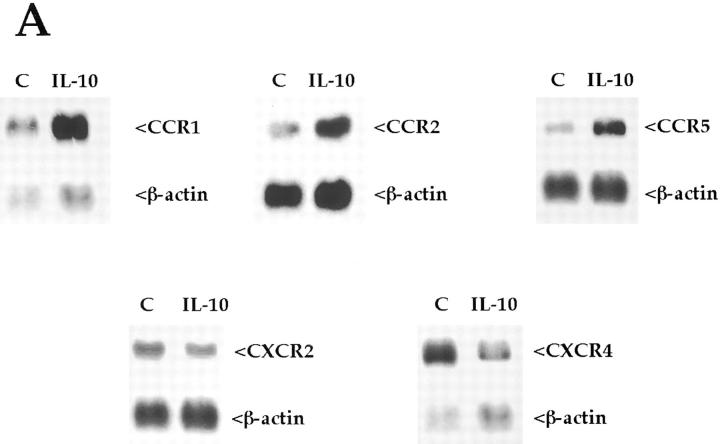
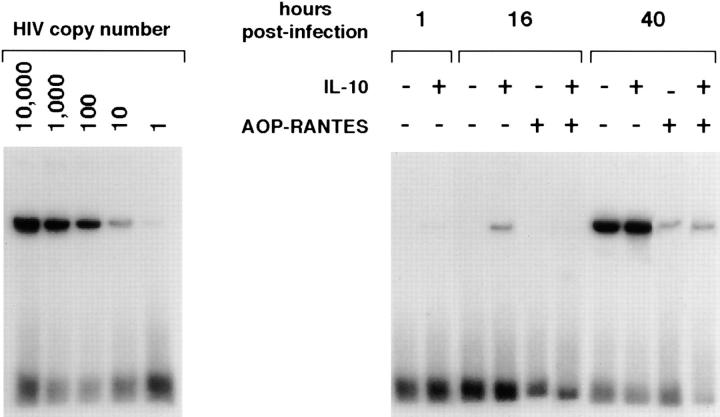
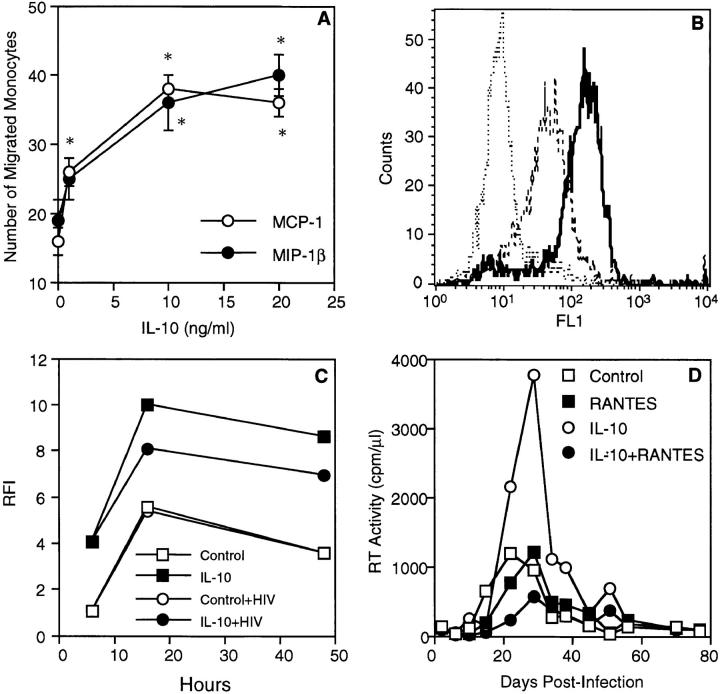
The immunosuppressive and antiinflammatory cytokine interleukin (IL) 10 selectively upregulates the expression of the CC chemokine receptors CCR5, 2, and 1 in human monocytes by prolonging their mRNA half-life. IL-10-stimulated monocytes display an increased number of cell surface receptors for, and better chemotactic responsiveness to, relevant agonists than do control cells. In addition, IL-10-stimulated monocytes are more efficiently infected by HIV BaL. This effect was associated to the enhancement of viral entry through CCR5. These data add support to an emerging paradigm in which pro- and antiinflammatory molecules exert reciprocal and opposing influence on chemokine agonist production and receptor expression.
免疫抑制和抗炎细胞因子白细胞介素(IL)-10通过延长其mRNA半衰期,选择性地上调人单核细胞中CC趋化因子受体CCR5、CCR2和CCR1的表达。与对照细胞相比,IL-10刺激的单核细胞显示出更多的细胞表面受体,并且对相关激动剂具有更好的趋化反应性。此外,IL-10刺激的单核细胞更容易被HIV BaL感染。这种效应与通过CCR5增强病毒进入有关。这些数据支持了一种新出现的模式,即促炎和抗炎分子对趋化因子激动剂的产生和受体表达发挥相互对立的影响。