D'Souza-Schorey C, van Donselaar E, Hsu V W, Yang C, Stahl P D, Peters P J
Department of Cell Biology, Washington University School of Medicine, St. Louis, Missouri 63110, USA.
J Cell Biol. 1998 Feb 9;140(3):603-16. doi: 10.1083/jcb.140.3.603.
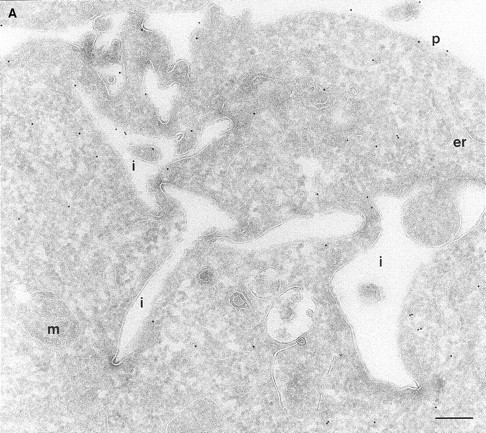
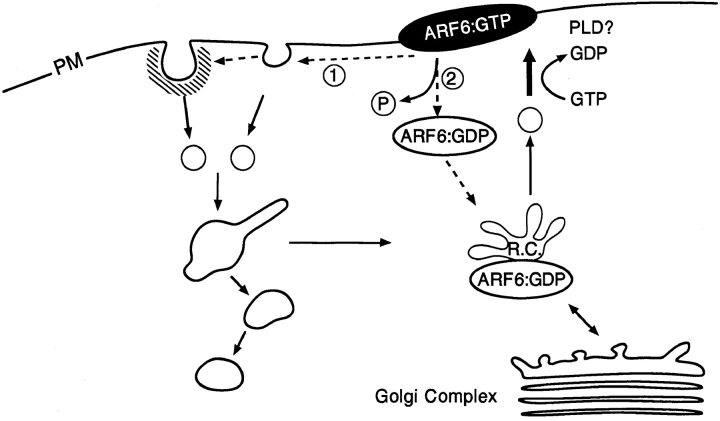
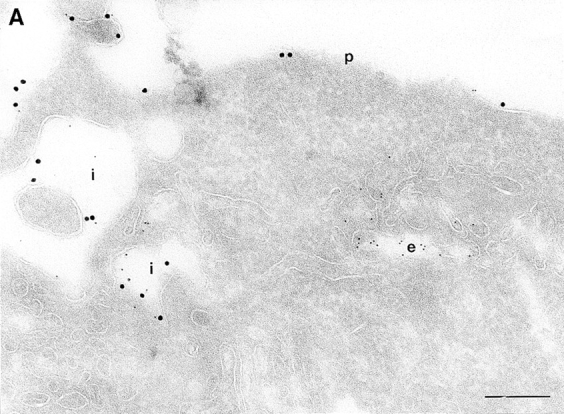
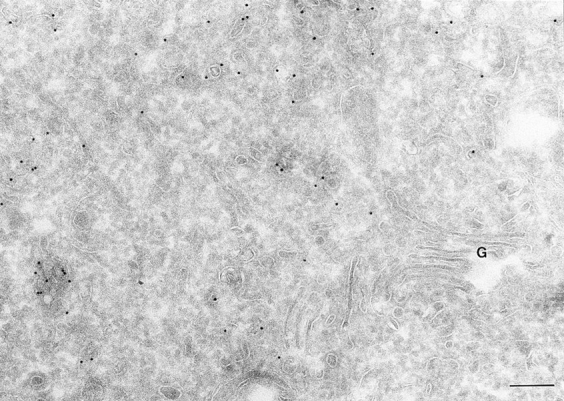
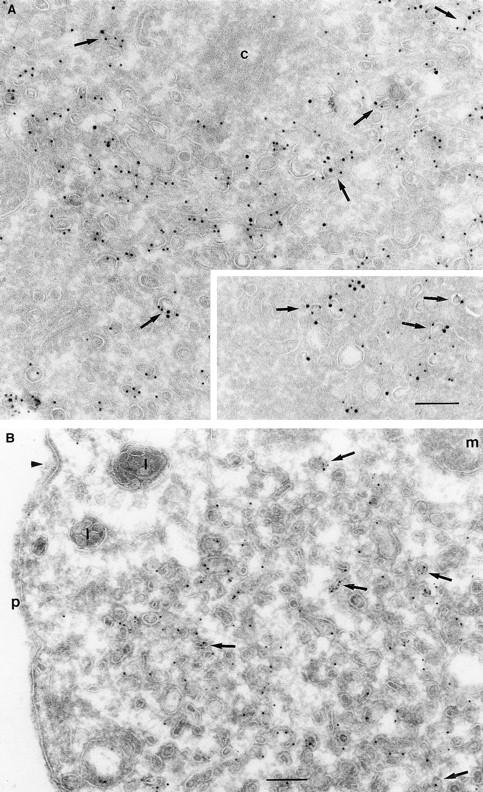
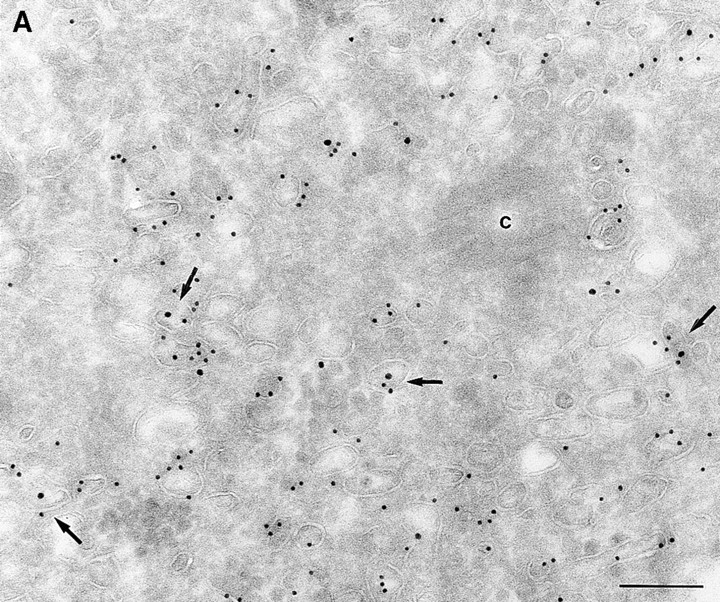
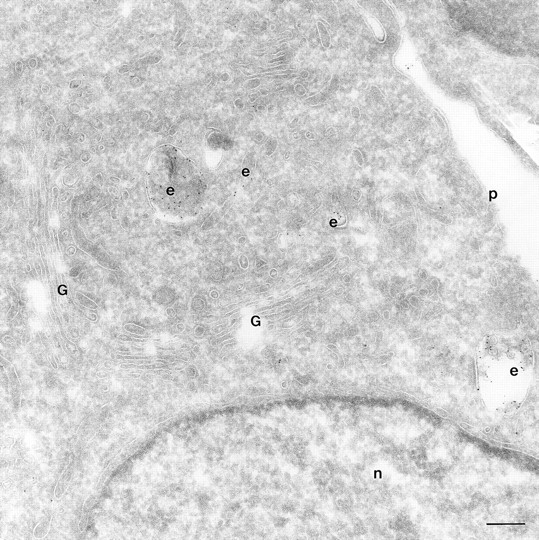
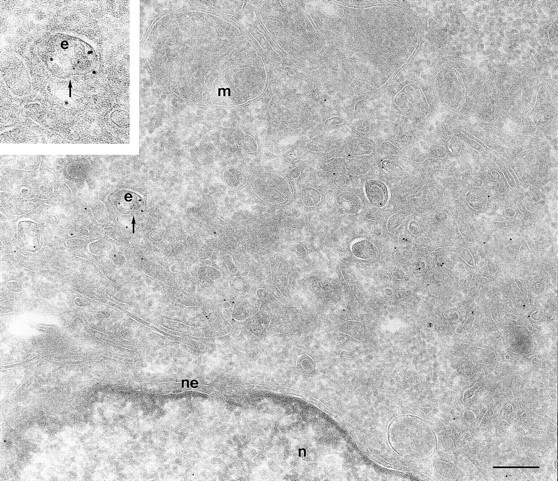
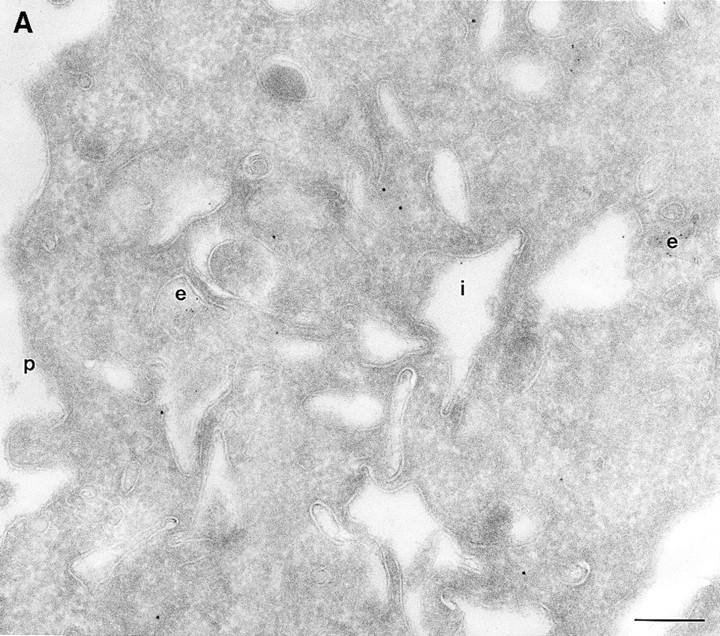
We have shown previously that the ADP-ribosylation factor (ARF)-6 GTPase localizes to the plasma membrane and intracellular endosomal compartments. Expression of ARF6 mutants perturbs endosomal trafficking and the morphology of the peripheral membrane system. However, another study on the distribution of ARF6 in subcellular fractions of Chinese hamster ovary (CHO) cells suggested that ARF6 did not localize to endosomes labeled after 10 min of horseradish peroxidase (HRP) uptake, but instead was uniquely localized to the plasma membrane, and that its reported endosomal localization may have been a result of overexpression. Here we demonstrate that at the lowest detectable levels of protein expression by cryoimmunogold electron microscopy, ARF6 localized predominantly to an intracellular compartment at the pericentriolar region of the cell. The ARF6-labeled vesicles were partially accessible to HRP only on prolonged exposure to the endocytic tracer but did not localize to early endocytic structures that labeled with HRP shortly after uptake. Furthermore, we have shown that the ARF6-containing intracellular compartment partially colocalized with transferrin receptors and cellubrevin and morphologically resembled the recycling endocytic compartment previously described in CHO cells. HRP labeling in cells expressing ARF6(Q67L), a GTP-bound mutant of ARF6, was restricted to small peripheral vesicles, whereas the mutant protein was enriched on plasma membrane invaginations. On the other hand, expression of ARF6(T27N), a mutant of ARF6 defective in GDP binding, resulted in an accumulation of perinuclear ARF6-positive vesicles that partially colocalized with HRP on prolonged exposure to the tracer. Taken together, our findings suggest that ARF activation is required for the targeted delivery of ARF6-positive, recycling endosomal vesicles to the plasma membrane.
我们之前已经表明,ADP核糖基化因子(ARF)-6 GTP酶定位于质膜和细胞内的内体区室。ARF6突变体的表达扰乱了内体运输和外周膜系统的形态。然而,另一项关于ARF6在中国仓鼠卵巢(CHO)细胞亚细胞组分中分布的研究表明,在摄取辣根过氧化物酶(HRP)10分钟后,ARF6并不定位于标记的内体,而是独特地定位于质膜,并且其报道的内体定位可能是过表达的结果。在这里,我们通过冷冻免疫金电子显微镜证明,在可检测到的最低蛋白质表达水平下,ARF6主要定位于细胞中心粒周围区域的一个细胞内区室。仅在长时间暴露于内吞示踪剂后,HRP才能部分进入ARF6标记的囊泡,但这些囊泡并不定位于摄取后不久用HRP标记的早期内吞结构。此外,我们已经表明,含有ARF6的细胞内区室与转铁蛋白受体和细胞ubrevin部分共定位,并且在形态上类似于先前在CHO细胞中描述的回收内吞区室。在表达ARF6(Q67L)(一种ARF6的GTP结合突变体)的细胞中,HRP标记仅限于小的外周囊泡,而突变蛋白则富集在质膜内陷处。另一方面,ARF6(T27N)(一种在GDP结合方面有缺陷的ARF6突变体)的表达导致核周ARF6阳性囊泡的积累,在长时间暴露于示踪剂后,这些囊泡与HRP部分共定位。综上所述,我们的研究结果表明,ARF激活是将ARF6阳性的回收内体囊泡靶向递送至质膜所必需的。