Radhakrishna H, Donaldson J G
Laboratory of Cell Biology, National Heart, Lung, and Blood Institute, Bethesda, Maryland 20892, USA.
J Cell Biol. 1997 Oct 6;139(1):49-61. doi: 10.1083/jcb.139.1.49.
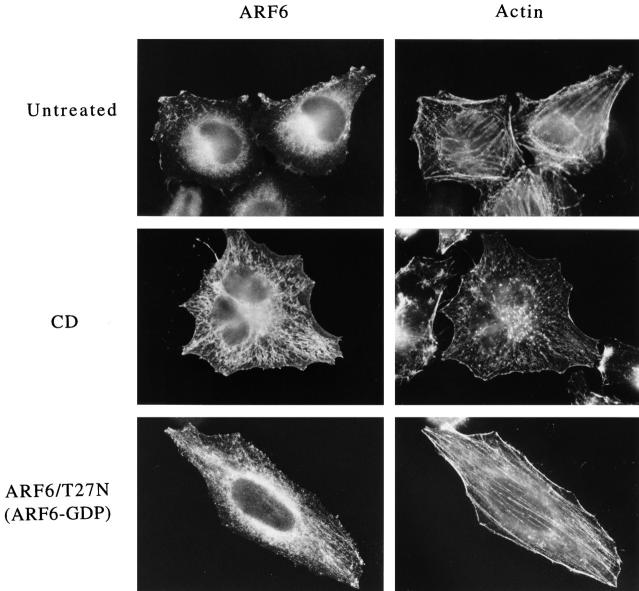
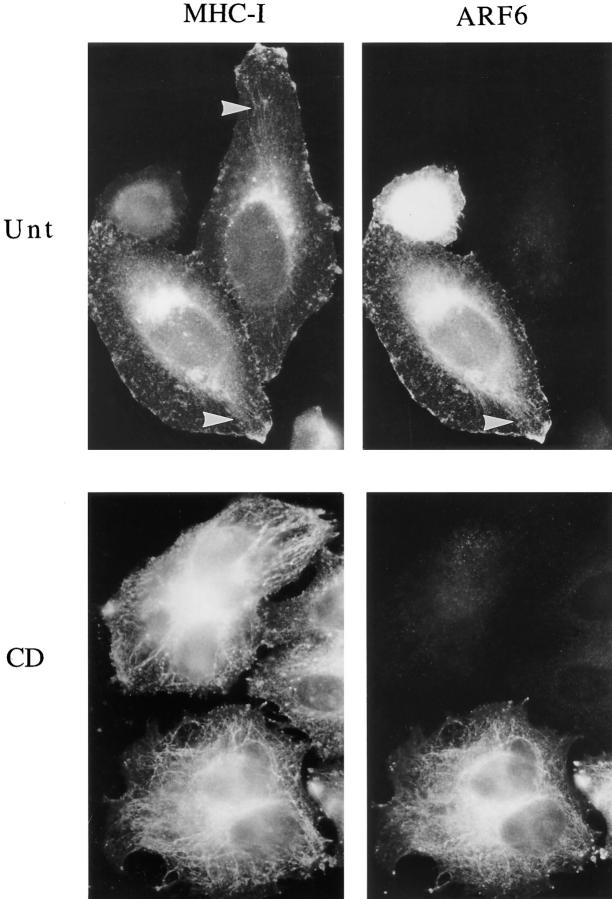
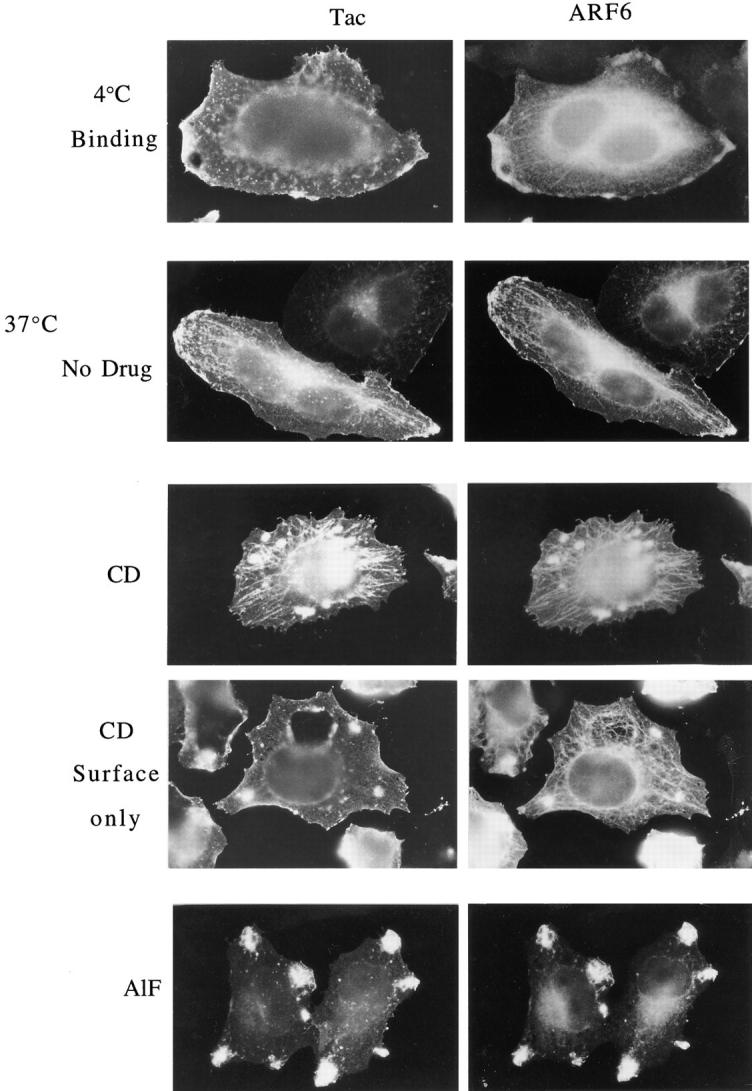
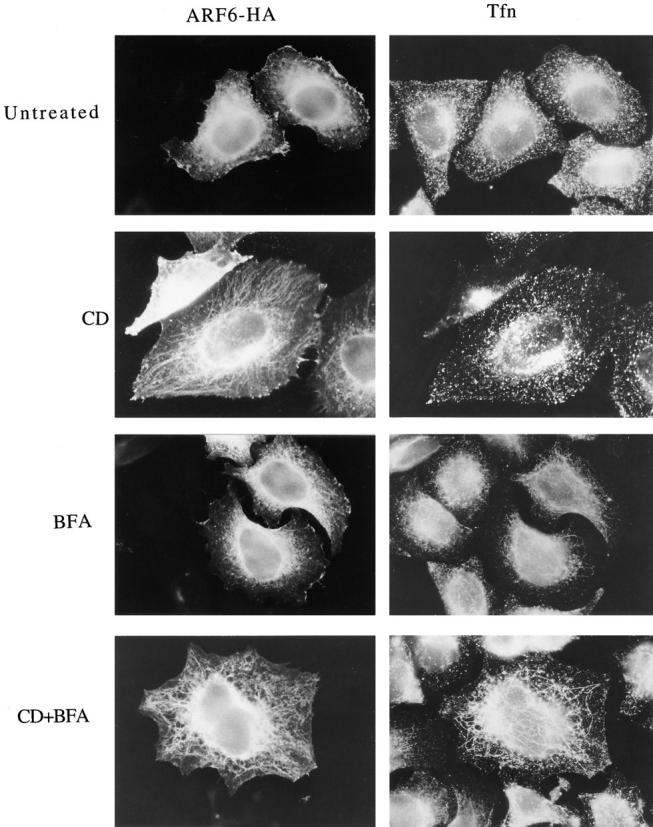
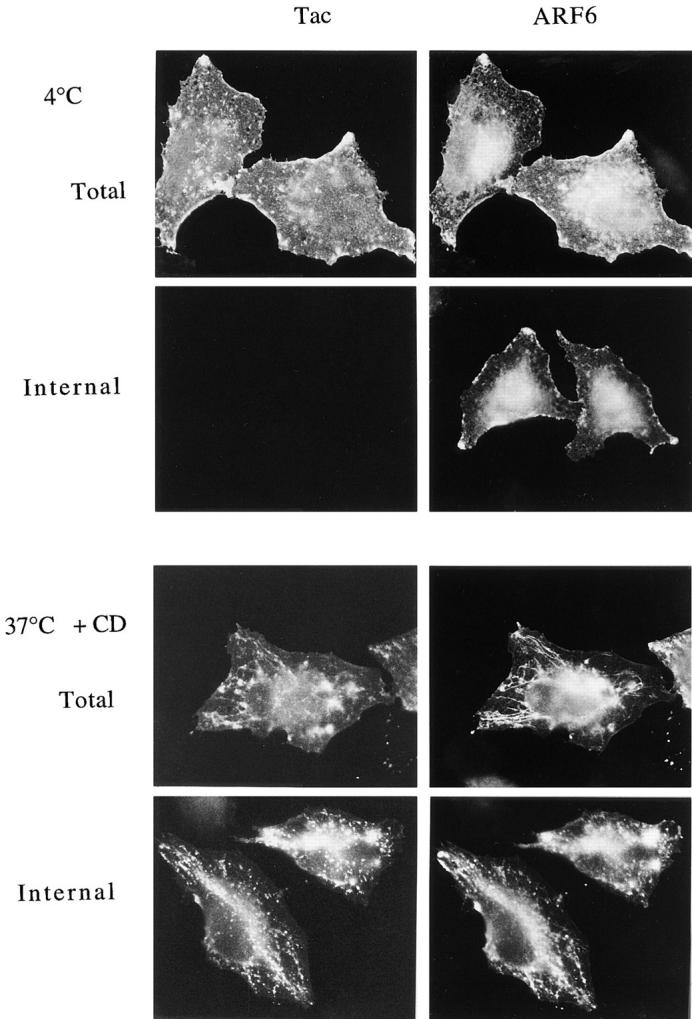
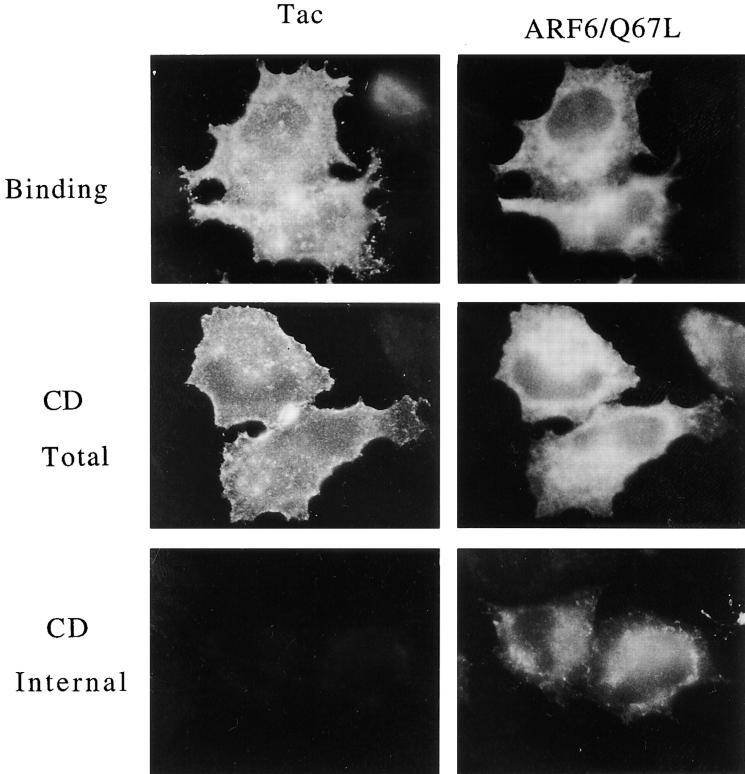
ADP-ribosylation factor (ARF) 6 localizes to the plasma membrane (PM) in its GTP state and to a tubulovesicular compartment in its GDP state in HeLa cells that express wild-type or mutant forms of this GTPase. Aluminum fluoride (AlF) treatment of ARF6-transfected cells redistributes ARF6 to the PM and stimulates the formation of actin-rich surface protrusions. Here we show that cytochalasin D (CD) treatment inhibited formation of the AlF-induced protrusions and shifted the distribution of ARF6 to a tubular membrane compartment emanating from the juxtanuclear region of cells, which resembled the compartment where the GTP-binding defective mutant of ARF6 localized. This membrane compartment was distinct from transferrin-positive endosomes, could be detected in the absence of ARF6 overexpression or CD treatment, and was accessible to loading by PM proteins lacking clathrin/AP-2 cytoplasmic targeting sequences, such as the IL-2 receptor alpha subunit Tac. ARF6 and surface Tac moved into this compartment and back out to the PM in the absence of pharmacologic treatment. Whereas AlF treatment blocked internalization, CD treatment blocked the recycling of wild-type ARF6 and Tac back to the PM; these blocks were mimicked by expression of ARF6 mutants Q67L and T27N, which were predicted to be in either the GTP- or GDP-bound state, respectively. Thus, the ARF6 GTP cycle regulates this membrane traffic pathway. The delivery of ARF6 and membrane to defined sites along the PM may provide components necessary for remodeling the cell surface and the underlying actin cytoskeleton.
在表达该GTP酶野生型或突变形式的HeLa细胞中,ADP核糖基化因子(ARF)6在其GTP状态下定位于质膜(PM),在其GDP状态下定位于微管泡区室。用氟化铝(AlF)处理ARF6转染的细胞会使ARF6重新分布到质膜,并刺激富含肌动蛋白的表面突起的形成。在这里,我们表明,细胞松弛素D(CD)处理会抑制AlF诱导的突起的形成,并使ARF6的分布转移到源自细胞近核区域的管状膜区室,这类似于ARF6的GTP结合缺陷突变体所定位的区室。这个膜区室与转铁蛋白阳性内体不同,在没有ARF6过表达或CD处理的情况下也能检测到,并且缺乏网格蛋白/AP-2细胞质靶向序列的质膜蛋白(如白细胞介素-2受体α亚基Tac)可以进入该区域。在没有药物处理的情况下,ARF6和表面Tac会移入这个区室,然后再回到质膜。虽然AlF处理会阻断内化,但CD处理会阻断野生型ARF6和Tac回到质膜的再循环;这些阻断作用可分别由预测处于GTP或GDP结合状态的ARF6突变体Q67L和T27N的表达来模拟。因此,ARF6 GTP循环调节这条膜运输途径。将ARF6和膜递送到质膜沿线的特定部位可能会提供重塑细胞表面和潜在肌动蛋白细胞骨架所需的成分。