Alexander R W
Department of Medicine, Emory University School of Medicine, Atlanta, Georgia, USA.
Trans Am Clin Climatol Assoc. 1998;109:129-45; discussion 145-6.
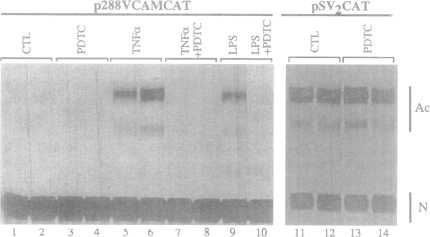
Accumulating evidence provides a compelling case that one of the major pathophysiologic mechanisms involved in the pathogenesis of atherosclerosis is enhanced oxidative stress and that the most important manifestation of this altered redox state is the modulation of a set(s) of proinflammatory genes that are regulated directly or indirectly by reactive oxygen species. Viewed in this perspective the oxidation of LDL is but one important consequence of a generalized metabolic abnormality of the arterial wall in atherosclerosis rather than being the core pathophysiological feature. The fact that hypercholesterolemia, hypertension, and AGEs related to diabetes mellitus all activate similar redox-sensitive proinflammatory genes associated with the pathogenesis of atherosclerosis provides the potential for the development of unifying concepts concerning the etiology of the disease. These concepts also provide additional evidence that antioxidants may be potentially attractive therapeutic agents.
越来越多的证据有力地表明,动脉粥样硬化发病机制中涉及的主要病理生理机制之一是氧化应激增强,并且这种氧化还原状态改变的最重要表现是一组促炎基因的调节,这些基因直接或间接受活性氧的调控。从这个角度来看,低密度脂蛋白的氧化只是动脉粥样硬化中动脉壁普遍代谢异常的一个重要后果,而不是核心病理生理特征。高胆固醇血症、高血压以及与糖尿病相关的晚期糖基化终产物均激活与动脉粥样硬化发病机制相关的类似氧化还原敏感促炎基因,这一事实为该疾病病因的统一概念发展提供了可能性。这些概念还提供了额外的证据,表明抗氧化剂可能是潜在有吸引力的治疗药物。