Loots E, Isacoff E Y
Department of Molecular & Cell Biology, University of California, Berkeley, Berkeley, California 94720-3200, USA.
J Gen Physiol. 1998 Oct;112(4):377-89. doi: 10.1085/jgp.112.4.377.
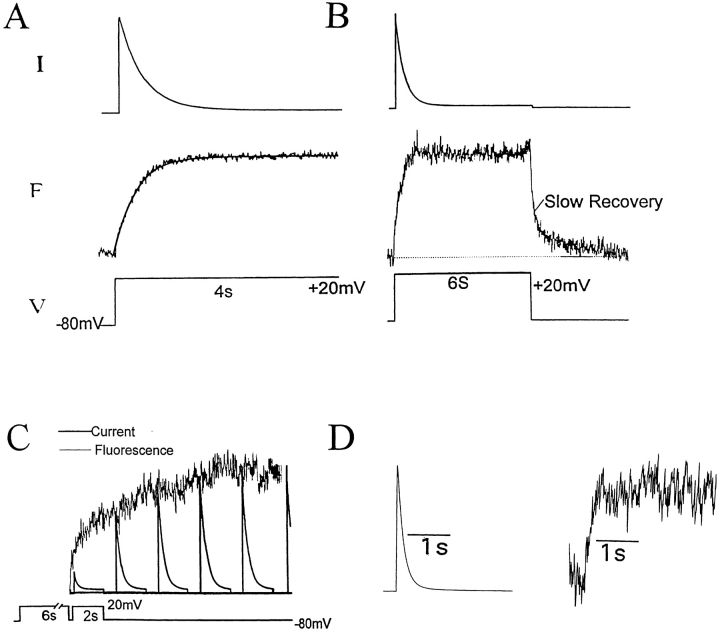
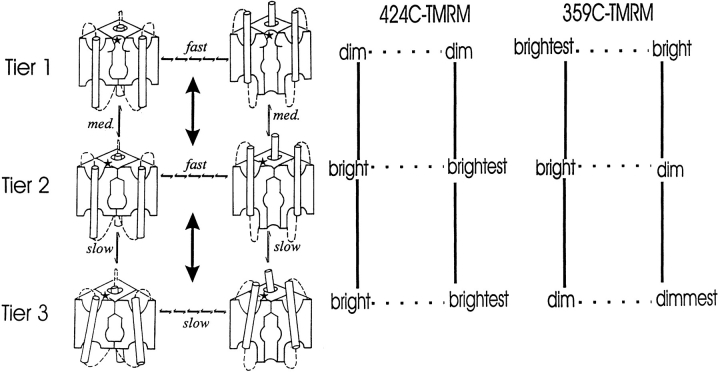
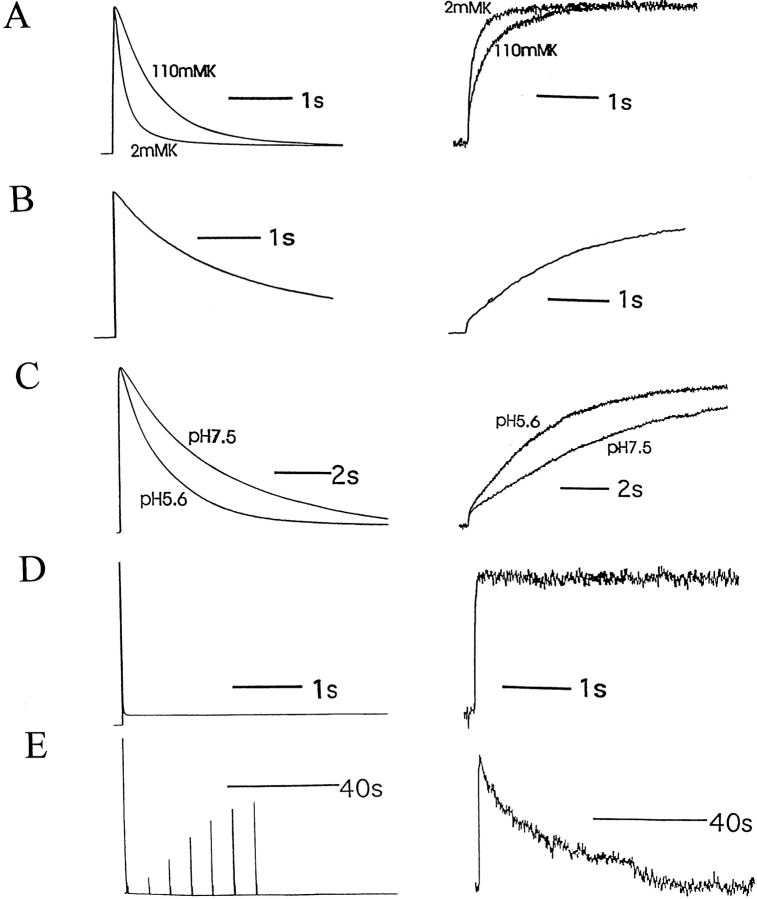
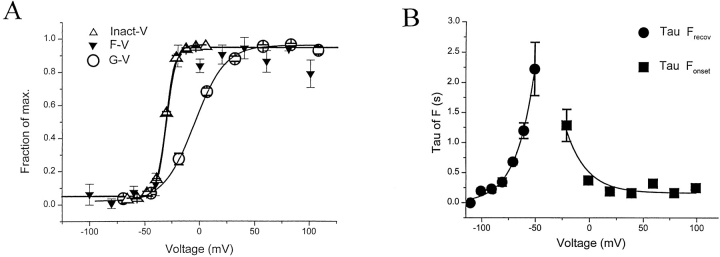
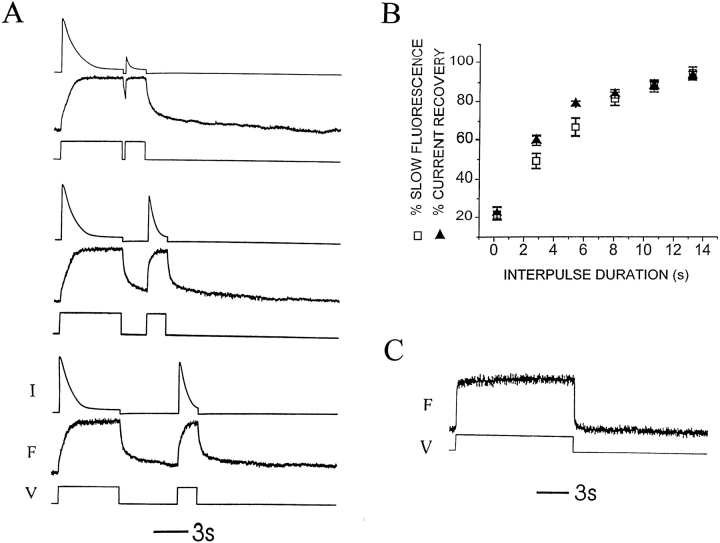
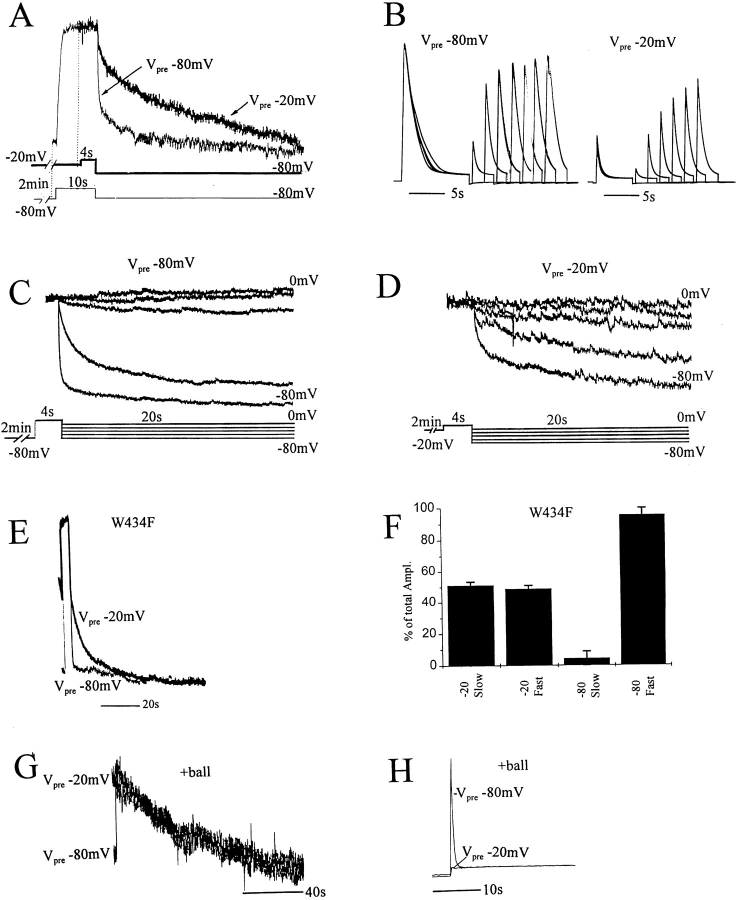
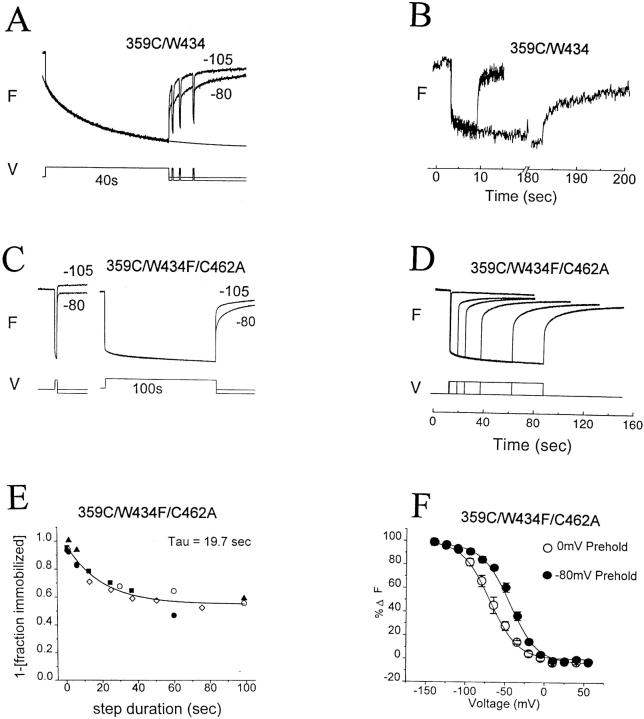
Voltage-dependent ion channels transduce changes in the membrane electric field into protein rearrangements that gate their transmembrane ion permeation pathways. While certain molecular elements of the voltage sensor and gates have been identified, little is known about either the nature of their conformational rearrangements or about how the voltage sensor is coupled to the gates. We used voltage clamp fluorometry to examine the voltage sensor (S4) and pore region (P-region) protein motions that underlie the slow inactivation of the Shaker K+ channel. Fluorescent probes in both the P-region and S4 changed emission intensity in parallel with the onset and recovery of slow inactivation, indicative of local protein rearrangements in this gating process. Two sequential rearrangements were observed, with channels first entering the P-type, and then the C-type inactivated state. These forms of inactivation appear to be mediated by a single gate, with P-type inactivation closing the gate and C-type inactivation stabilizing the gate's closed conformation. Such a stabilization was due, at least in part, to a slow rearrangement around S4 that stabilizes S4 in its activated transmembrane position. The fluorescence reports of S4 and P-region fluorophore are consistent with an increased interaction of the voltage sensor and inactivation gate upon gate closure, offering insight into how the voltage-sensing apparatus is coupled to a channel gate.
电压依赖性离子通道将膜电场的变化转化为蛋白质重排,从而控制其跨膜离子通透途径。虽然已经确定了电压感受器和门控的某些分子元件,但对于它们构象重排的性质以及电压感受器如何与门控耦合却知之甚少。我们使用电压钳荧光法来研究构成摇蚊钾通道缓慢失活基础的电压感受器(S4)和孔区域(P区域)的蛋白质运动。P区域和S4中的荧光探针的发射强度随着缓慢失活的开始和恢复而平行变化,这表明在这个门控过程中存在局部蛋白质重排。观察到两个连续的重排,通道首先进入P型,然后进入C型失活状态。这些失活形式似乎由单个门控介导,P型失活关闭门控,C型失活稳定门控的关闭构象。这种稳定至少部分是由于S4周围的缓慢重排,使S4稳定在其活化的跨膜位置。S4和P区域荧光团的荧光报告与门控关闭时电压感受器和失活门控之间增加的相互作用一致,这为深入了解电压传感装置如何与通道门控耦合提供了线索。