Cha A, Bezanilla F
Department of Physiology, University of California, Los Angeles, School of Medicine, Los Angeles, California 90095, USA.
J Gen Physiol. 1998 Oct;112(4):391-408. doi: 10.1085/jgp.112.4.391.
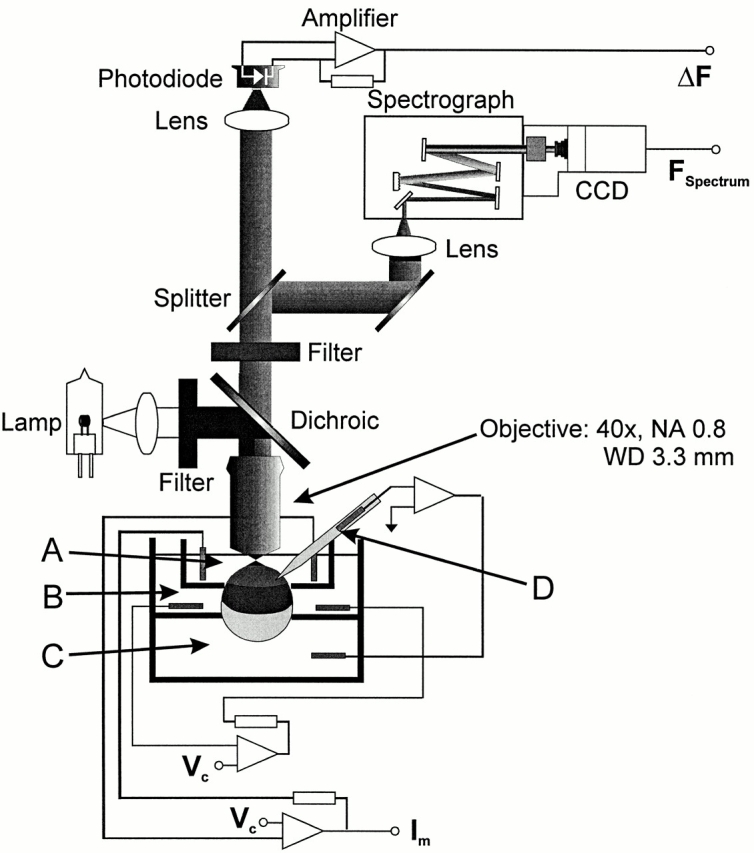
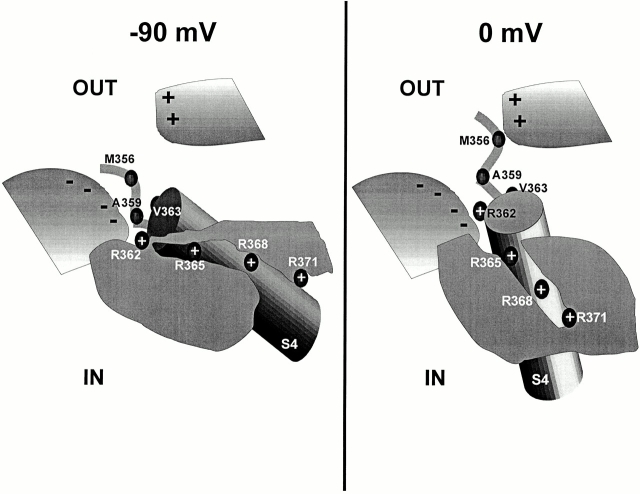
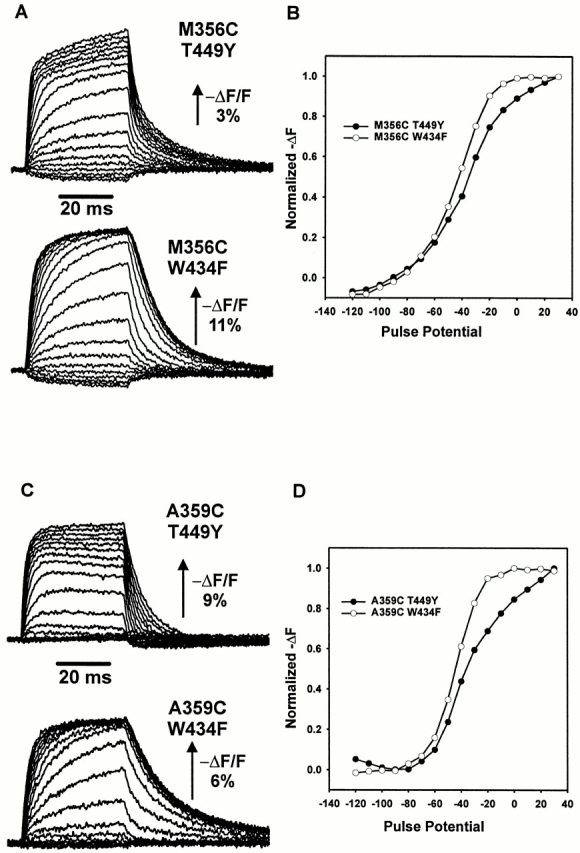
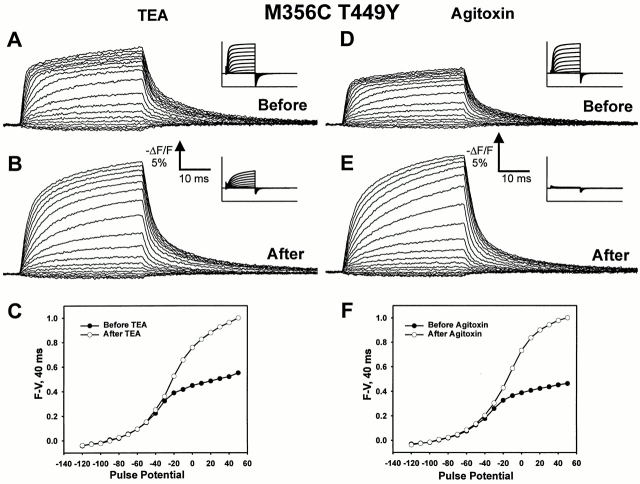
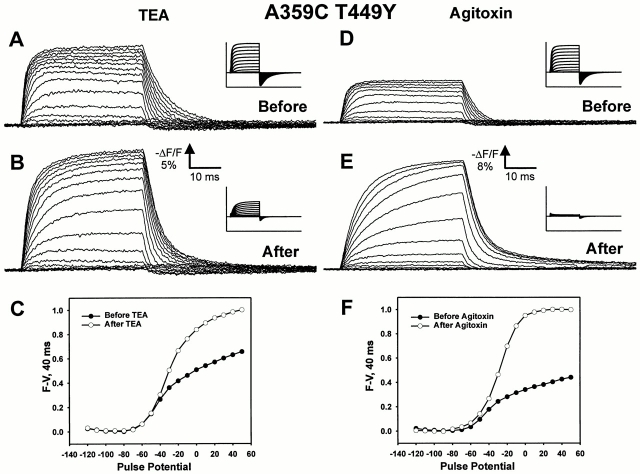
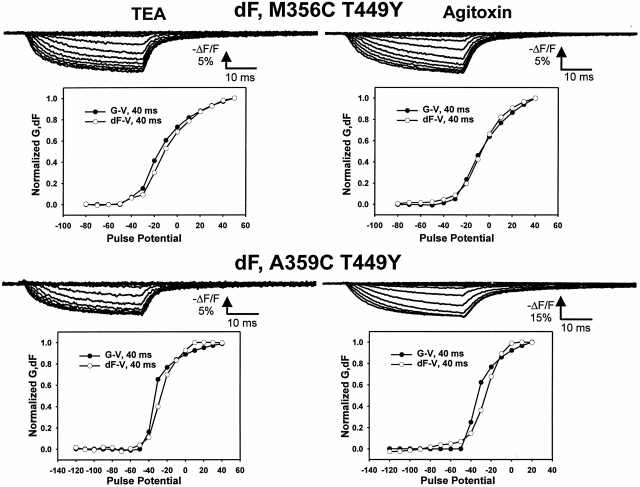
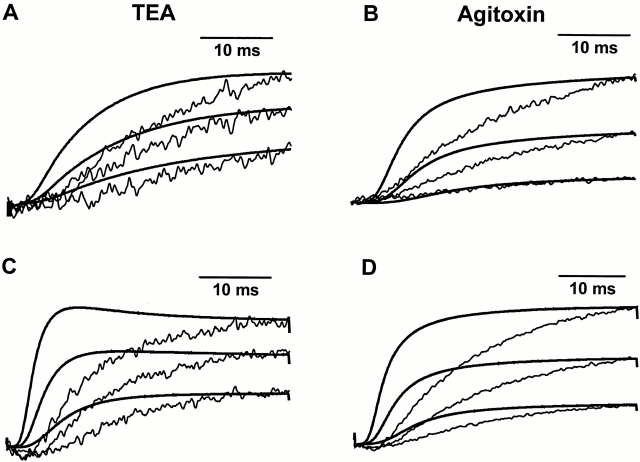
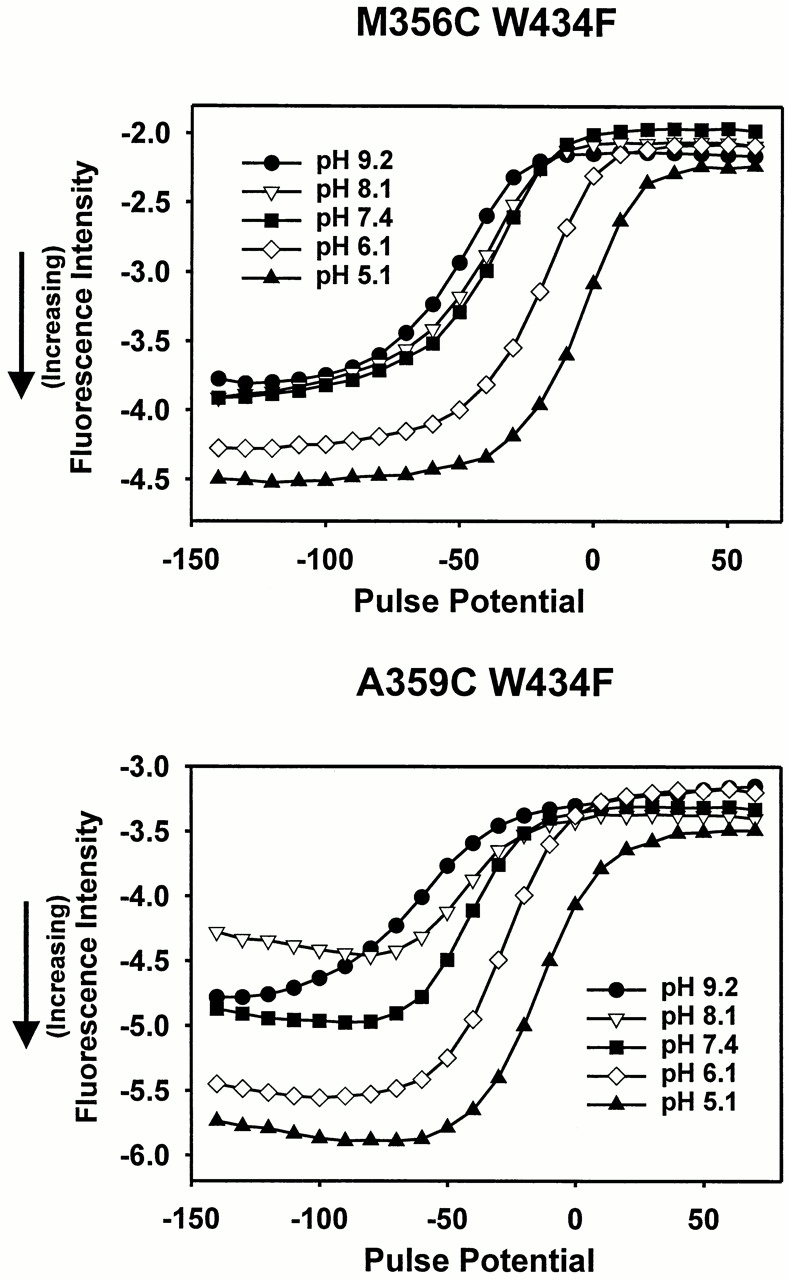
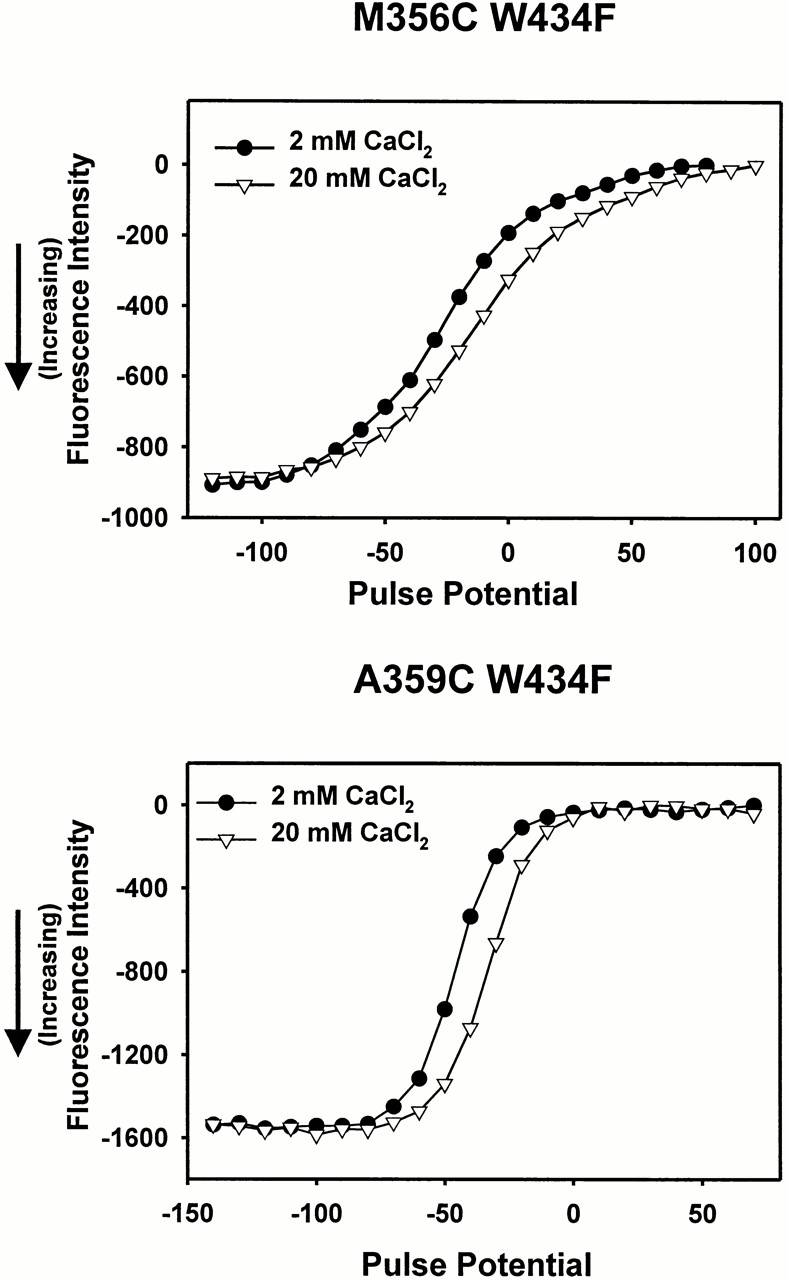
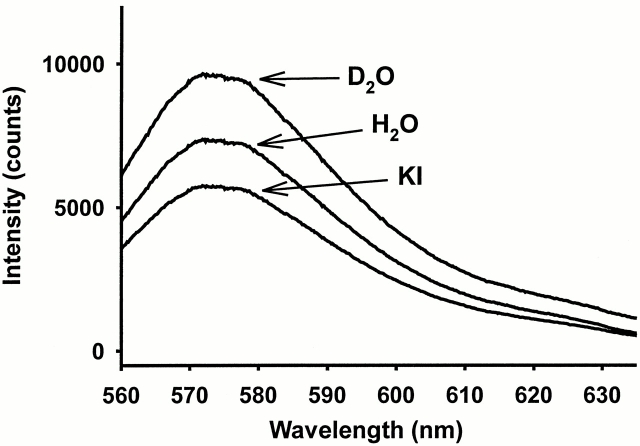
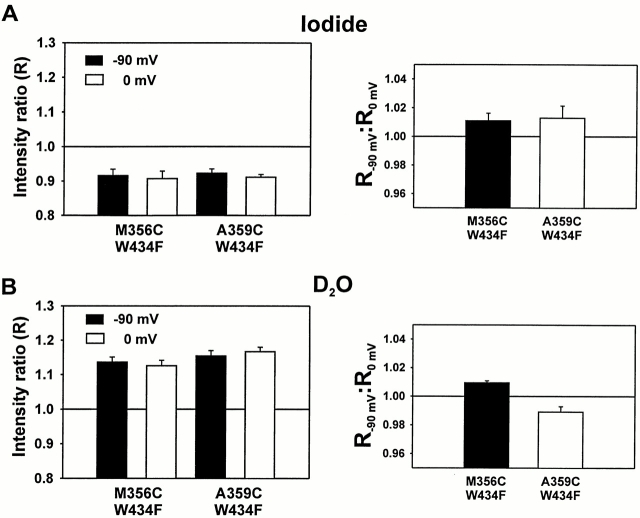
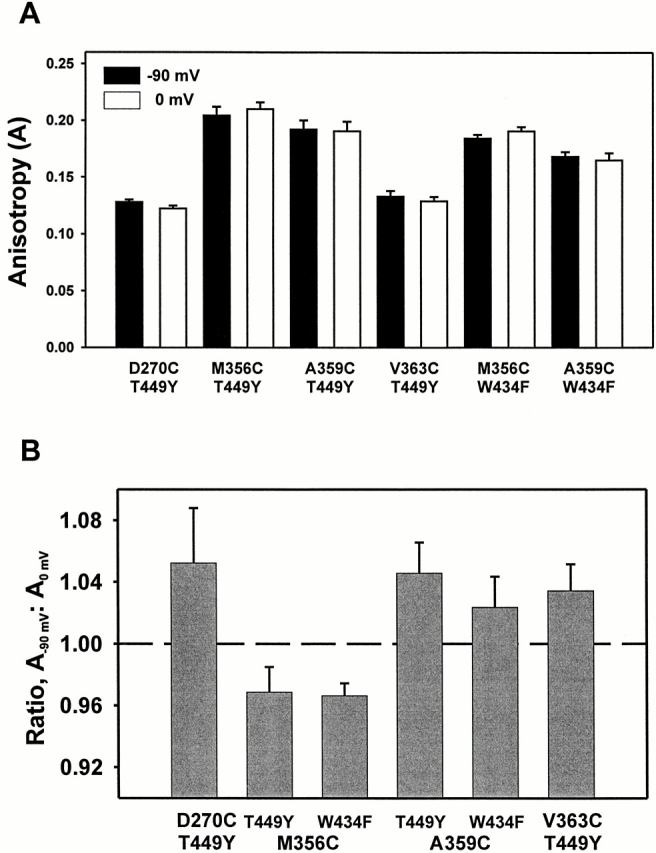
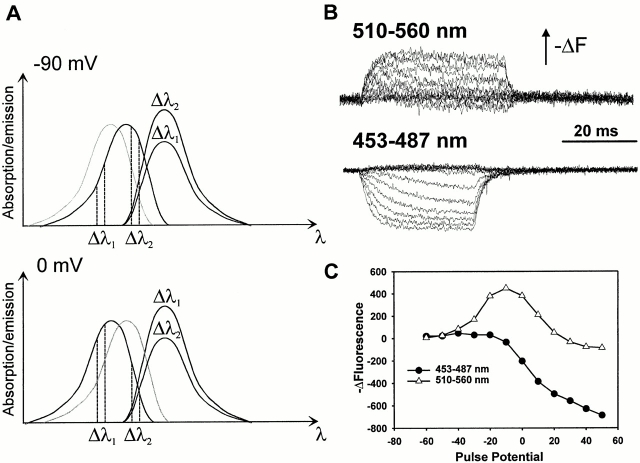
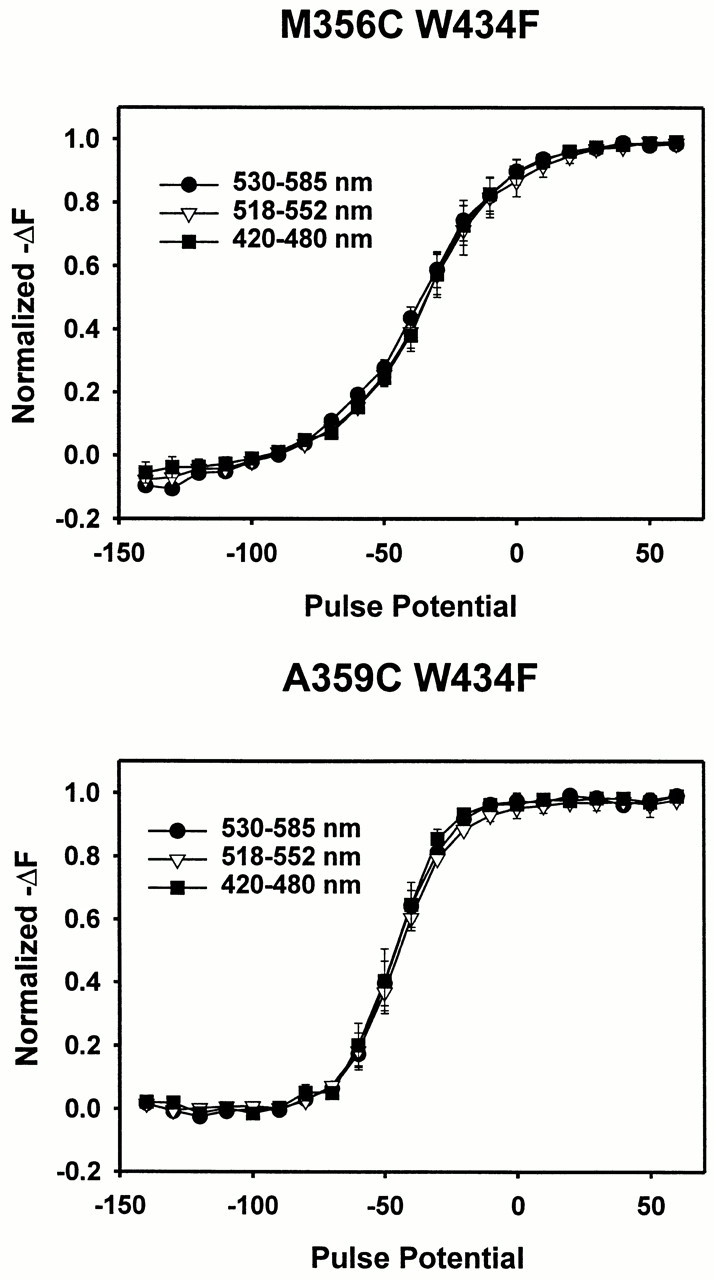
When attached to specific sites near the S4 segment of the nonconducting (W434F) Shaker potassium channel, the fluorescent probe tetramethylrhodamine maleimide undergoes voltage-dependent changes in intensity that correlate with the movement of the voltage sensor (Mannuzzu, L.M., M.M. Moronne, and E.Y. Isacoff. 1996. Science. 271:213-216; Cha, A., and F. Bezanilla. 1997. Neuron. 19:1127-1140). The characteristics of this voltage-dependent fluorescence quenching are different in a conducting version of the channel with a different pore substitution (T449Y). Blocking the pore of the T449Y construct with either tetraethylammonium or agitoxin removes a fluorescence component that correlates with the voltage dependence but not the kinetics of ionic activation. This pore-mediated modulation of the fluorescence quenching near the S4 segment suggests that the fluorophore is affected by the state of the external pore. In addition, this modulation may reflect conformational changes associated with channel opening that are prevented by tetraethylammonium or agitoxin. Studies of pH titration, collisional quenchers, and anisotropy indicate that fluorophores attached to residues near the S4 segment are constrained by a nearby region of protein. The mechanism of fluorescence quenching near the S4 segment does not involve either reorientation of the fluorophore or a voltage-dependent excitation shift and is different from the quenching mechanism observed at a site near the S2 segment. Taken together, these results suggest that the extracellular portion of the S4 segment resides in an aqueous protein vestibule and is influenced by the state of the external pore.
当荧光探针四甲基罗丹明马来酰亚胺附着在非传导性(W434F)Shaker钾通道S4片段附近的特定位点时,其强度会发生电压依赖性变化,这与电压传感器的移动相关(Mannuzzu, L.M., M.M. Moronne, and E.Y. Isacoff. 1996. 《科学》. 271:213 - 216; Cha, A., and F. Bezanilla. 1997. 《神经元》. 19:1127 - 1140)。在具有不同孔替代(T449Y)的传导性通道版本中,这种电压依赖性荧光猝灭的特征有所不同。用四乙铵或阿吉毒素阻断T449Y构建体的孔会去除与电压依赖性相关但与离子激活动力学无关的荧光成分。S4片段附近这种由孔介导的荧光猝灭调制表明,荧光团受外部孔状态的影响。此外,这种调制可能反映了与通道开放相关的构象变化,而四乙铵或阿吉毒素可阻止这种变化。pH滴定、碰撞猝灭剂和各向异性的研究表明,附着在S4片段附近残基上的荧光团受到附近蛋白质区域的限制。S4片段附近的荧光猝灭机制既不涉及荧光团的重新定向,也不涉及电压依赖性激发位移,并且与在S2片段附近观察到的猝灭机制不同。综上所述,这些结果表明S4片段的细胞外部分位于水性蛋白质前庭中,并受外部孔状态的影响。