Monack D M, Mecsas J, Bouley D, Falkow S
Department of Microbiology and Immunology, Stanford School of Medicine, Stanford University, Stanford, California 94305, USA.
J Exp Med. 1998 Dec 7;188(11):2127-37. doi: 10.1084/jem.188.11.2127.
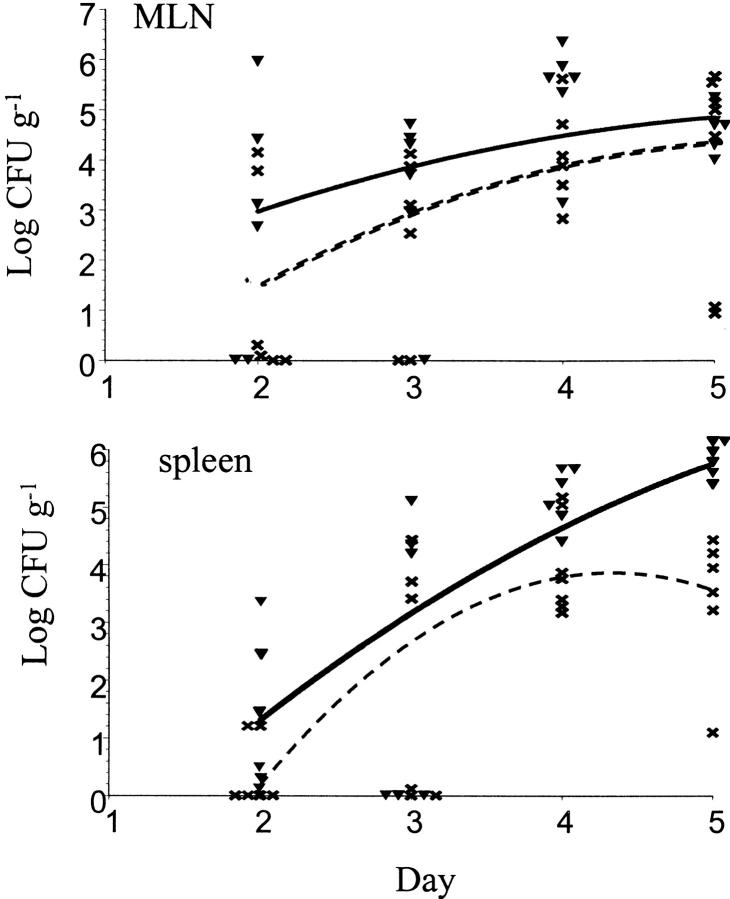
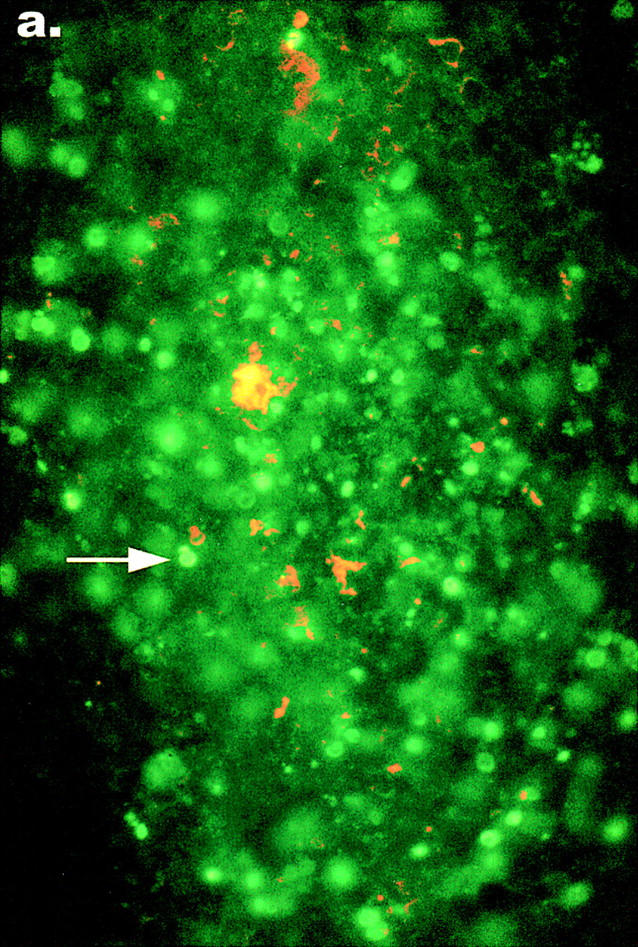
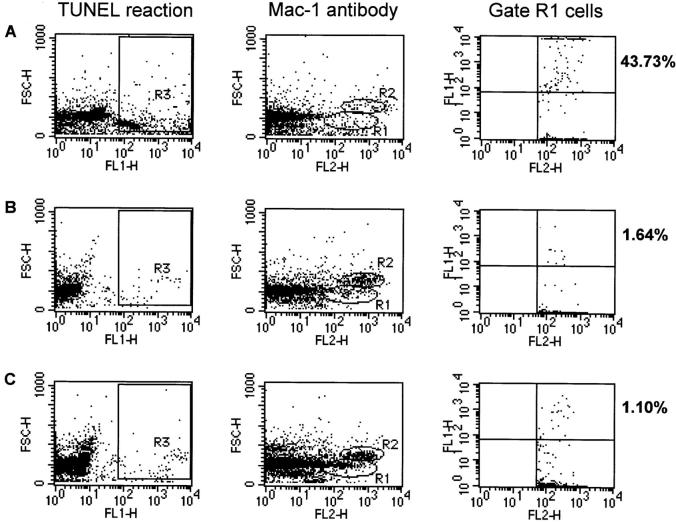
Pathogenic Yersinia cause a systemic infection in mice that is dependent on the presence of a large plasmid encoding a number of secreted virulence proteins called Yops. We previously demonstrated that a plasmid-encoded Yop, YopJ, was essential for inducing apoptosis in cultured macrophages. Here we report that YopJ is a virulence factor in mice and is important for the establishment of a systemic infection. The oral LD50 for a yopJ mutant Yersinia pseudotuberculosis increases 64-fold compared with wild-type. Although the yopJ mutant strain is able to reach the spleen of infected mice, the mutant strain seldom reaches the same high bacterial load that is seen with wild-type Yersinia strain and begins to be cleared from infected spleens on day 4 after infection. Furthermore, when in competition with wild-type Yersinia in a mixed infection, the yopJ mutant strain is deficient for spread from the Peyer's patches to other lymphoid tissue. We also show that wild-type Yersinia induces apoptosis in vivo of Mac-1(+) cells from infected mesenteric lymph nodes or spleens, as measured by quantitative flow cytometry of TUNEL (Tdt-mediated dUTP-biotin nick-end labeling)-positive cells. The levels of Mac-1(+), TUNEL+ cells from tissue infected with the yopJ mutant strain were equivalent to the levels detected in cells from uninfected tissue. YopJ is necessary for the suppression of TNF-alpha production seen in macrophages infected with wild-type Yersinia, based on previous in vitro studies (Palmer, L.E., S. Hobbie, J.E. Galan, and J.B. Bliska. 1998. Mol. Microbiol. 27:953-965). We conclude here that YopJ plays a role in the establishment of a systemic infection by inducing apoptosis and that this is consistent with the ability to suppress the production of the proinflammatory cytokine tumor necrosis factor alpha.
致病性耶尔森氏菌可在小鼠体内引发全身性感染,这种感染依赖于一个大型质粒的存在,该质粒编码多种被称为Yops的分泌型毒力蛋白。我们之前证明,质粒编码的YopJ对于在培养的巨噬细胞中诱导凋亡至关重要。在此我们报告,YopJ是小鼠体内的一种毒力因子,对全身性感染的建立很重要。与野生型相比,yopJ突变型假结核耶尔森氏菌的口服半数致死剂量增加了64倍。尽管yopJ突变株能够到达感染小鼠的脾脏,但该突变株很少能达到与野生型耶尔森氏菌菌株相同的高细菌载量,并且在感染后第4天开始从感染的脾脏中被清除。此外,在混合感染中与野生型耶尔森氏菌竞争时,yopJ突变株从派伊尔氏结扩散到其他淋巴组织的能力不足。我们还表明,通过对TUNEL(末端脱氧核苷酸转移酶介导的dUTP生物素缺口末端标记)阳性细胞进行定量流式细胞术检测,野生型耶尔森氏菌可在体内诱导感染的肠系膜淋巴结或脾脏中的Mac-1(+)细胞凋亡。来自感染yopJ突变株组织的Mac-1(+)、TUNEL+细胞水平与未感染组织细胞中检测到的水平相当。基于之前的体外研究(Palmer, L.E., S. Hobbie, J.E. Galan, and J.B. Bliska. 1998. Mol. Microbiol. 27:953 - 965),YopJ对于抑制感染野生型耶尔森氏菌的巨噬细胞中TNF-α的产生是必需的。我们在此得出结论,YopJ通过诱导凋亡在全身性感染的建立中发挥作用,这与抑制促炎细胞因子肿瘤坏死因子α产生的能力是一致的。