Yamashita N, Hoshida S, Otsu K, Asahi M, Kuzuya T, Hori M
Division of Cardiology, The First Department of Medicine, Osaka University Medical School, Suita, Osaka 565-0871, Japan.
J Exp Med. 1999 Jun 7;189(11):1699-706. doi: 10.1084/jem.189.11.1699.
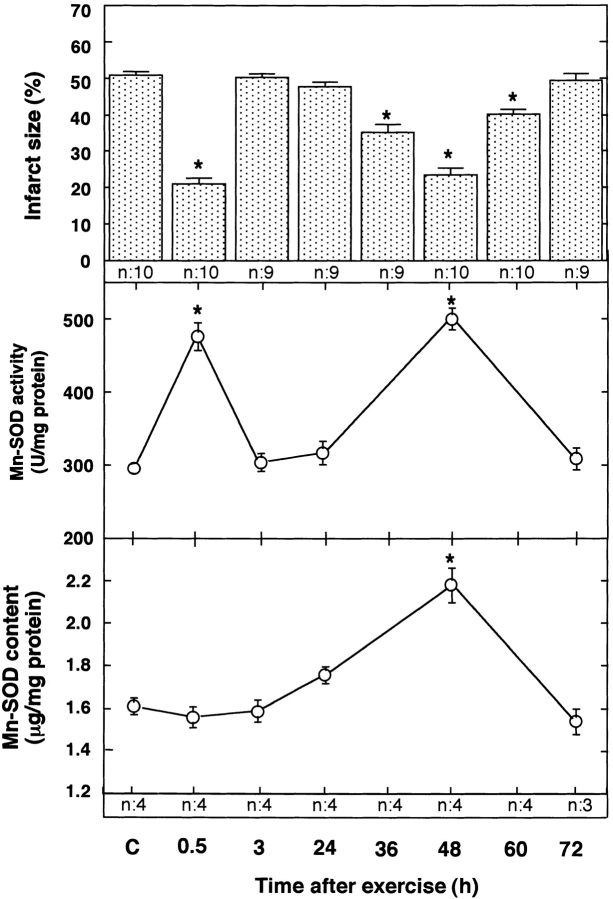
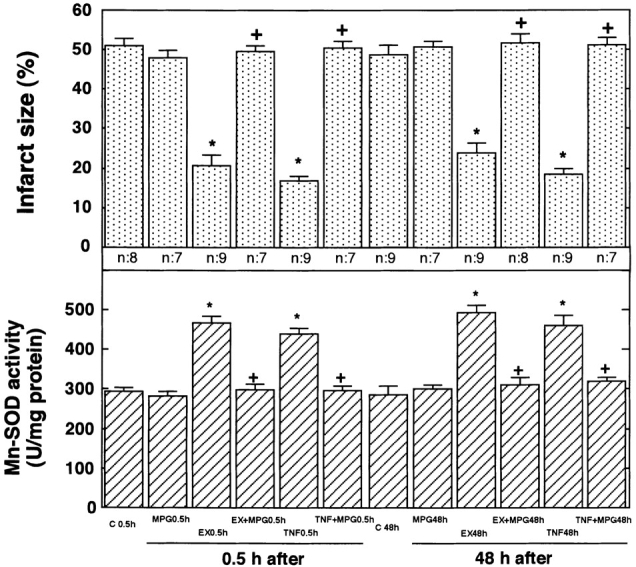
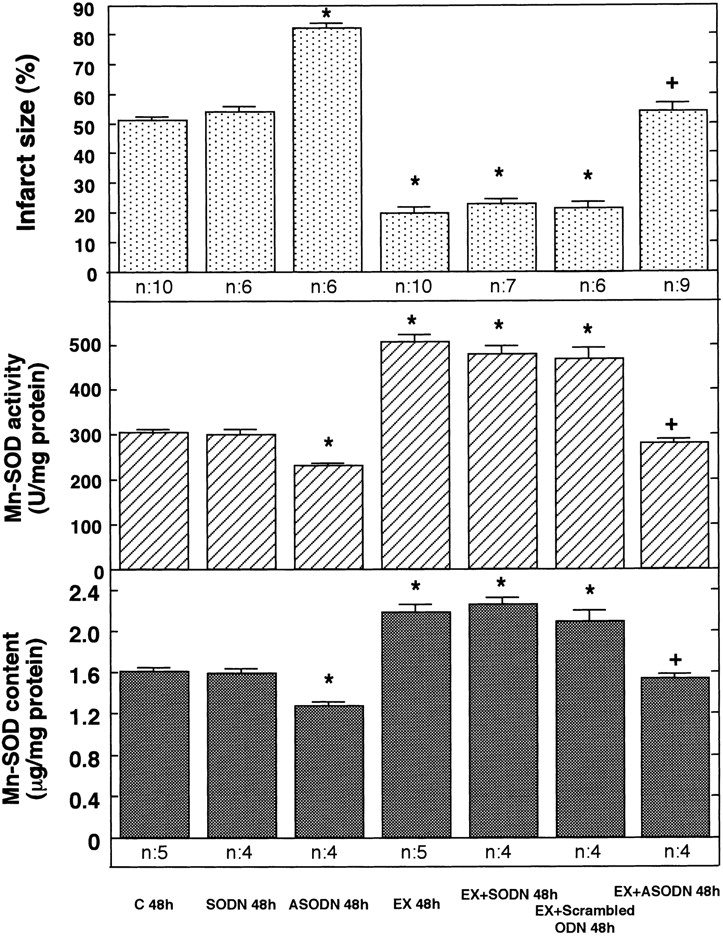
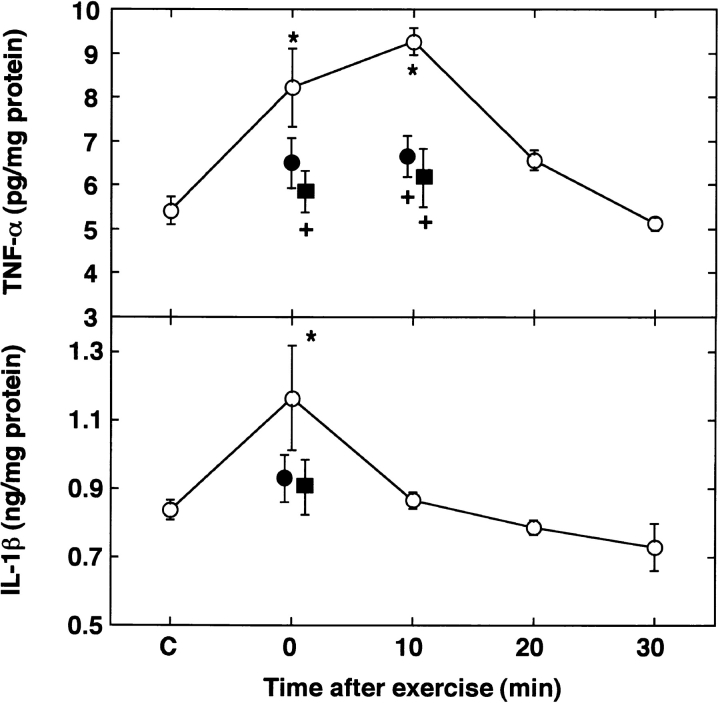
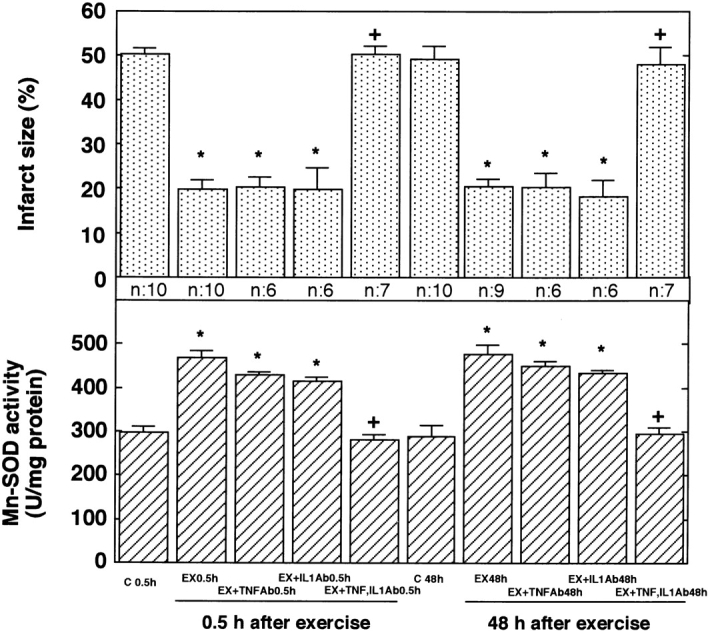
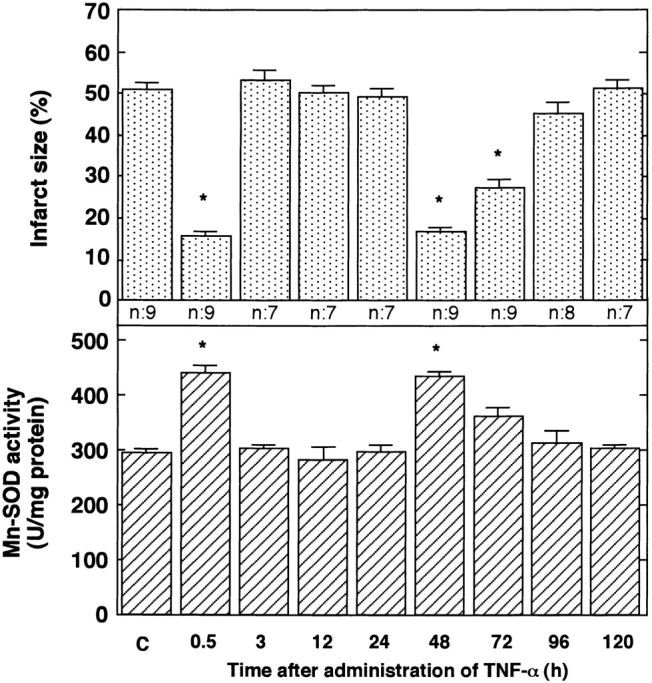
Epidemiologic investigations have shown that exercise reduces morbidity and mortality from coronary artery disease. In this study, using a rat model, we attempted to determine whether exercise can reduce ischemic injury to the heart and elucidate a mechanism for the cardioprotective effect of exercise. Results showed that exercise significantly reduced the magnitude of a myocardial infarction in biphasic manner. The time course for cardioprotection resembled that of the change in manganese superoxide dismutase (Mn-SOD) activity. The administration of the antisense oligodeoxyribonucleotide to Mn-SOD abolished the expected decrease in infarct size. We showed that the level of tumor necrosis factor alpha (TNF-alpha) and interleukin 1beta (IL-1beta) increased after exercise. The simultaneous administration of the neutralizing antibodies to the cytokines abolished the exercise-induced cardioprotection and the activation of Mn-SOD. Furthermore, TNF-alpha can mimic the biphasic pattern of cardioprotection and activation of Mn-SOD. An antioxidant completely abolished cardioprotection and the activation of Mn-SOD by exercise or the injection of TNF-alpha as well as exercise-induced increase in TNF-alpha and IL-1beta. The production of reactive oxygen species and endogenous TNF-alpha and IL-1beta induced by exercise leads to the activation of Mn-SOD, which plays major roles in the acquisition of biphasic cardioprotection against ischemia/reperfusion injury in rats.
流行病学调查表明,运动可降低冠状动脉疾病的发病率和死亡率。在本研究中,我们使用大鼠模型试图确定运动是否能减轻心脏的缺血性损伤,并阐明运动心脏保护作用的机制。结果显示,运动以双相方式显著降低心肌梗死的程度。心脏保护的时间进程与锰超氧化物歧化酶(Mn-SOD)活性的变化相似。给予Mn-SOD反义寡脱氧核苷酸消除了预期的梗死面积减小。我们发现运动后肿瘤坏死因子α(TNF-α)和白细胞介素1β(IL-1β)水平升高。同时给予细胞因子中和抗体消除了运动诱导的心脏保护作用以及Mn-SOD的激活。此外,TNF-α可模拟心脏保护和Mn-SOD激活的双相模式。一种抗氧化剂完全消除了运动或注射TNF-α以及运动诱导的TNF-α和IL-1β增加所引起的心脏保护作用和Mn-SOD的激活。运动诱导的活性氧生成以及内源性TNF-α和IL-1β导致Mn-SOD激活,这在大鼠对缺血/再灌注损伤的双相心脏保护作用中起主要作用。