Heidelberg J F, Eisen J A, Nelson W C, Clayton R A, Gwinn M L, Dodson R J, Haft D H, Hickey E K, Peterson J D, Umayam L, Gill S R, Nelson K E, Read T D, Tettelin H, Richardson D, Ermolaeva M D, Vamathevan J, Bass S, Qin H, Dragoi I, Sellers P, McDonald L, Utterback T, Fleishmann R D, Nierman W C, White O, Salzberg S L, Smith H O, Colwell R R, Mekalanos J J, Venter J C, Fraser C M
The Institute for Genomic Research, Rockville, Maryland 20850, USA.
Nature. 2000 Aug 3;406(6795):477-83. doi: 10.1038/35020000.
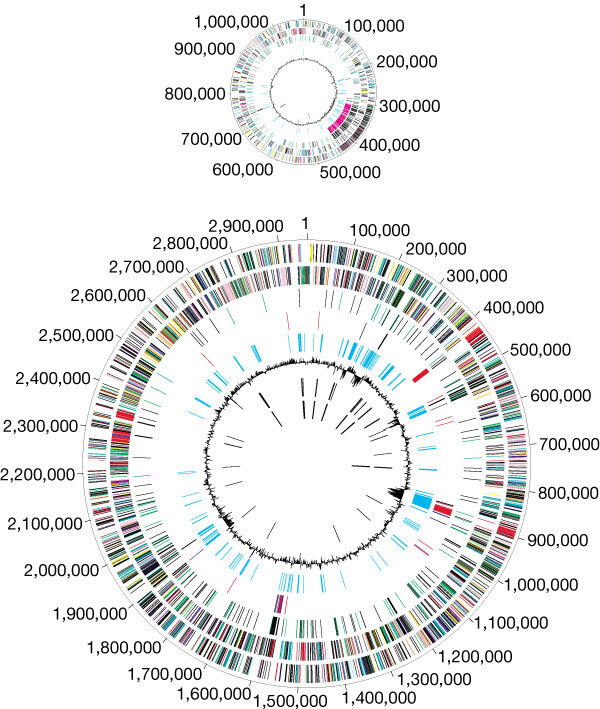
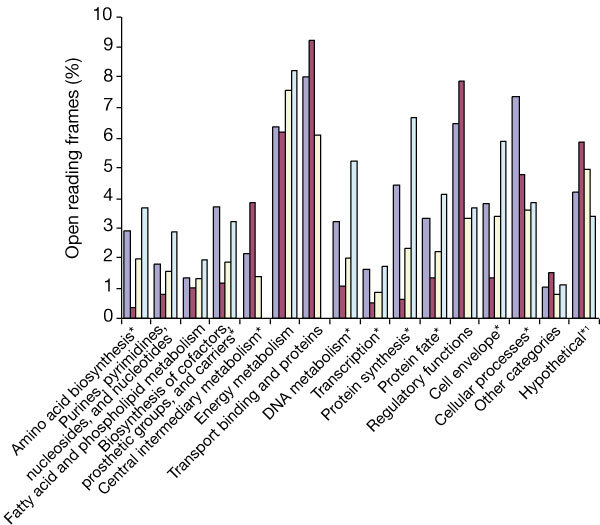
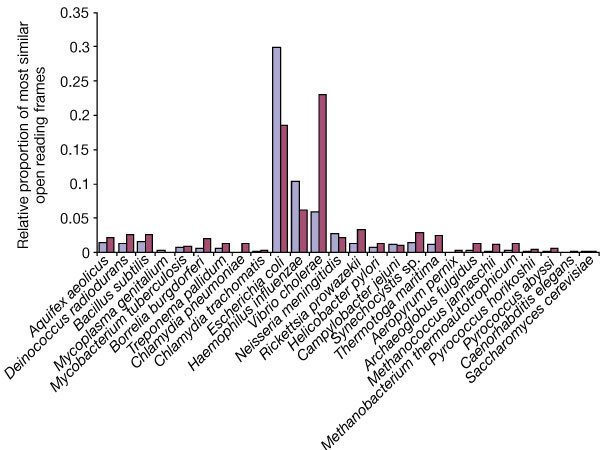
Here we determine the complete genomic sequence of the gram negative, gamma-Proteobacterium Vibrio cholerae El Tor N16961 to be 4,033,460 base pairs (bp). The genome consists of two circular chromosomes of 2,961,146 bp and 1,072,314 bp that together encode 3,885 open reading frames. The vast majority of recognizable genes for essential cell functions (such as DNA replication, transcription, translation and cell-wall biosynthesis) and pathogenicity (for example, toxins, surface antigens and adhesins) are located on the large chromosome. In contrast, the small chromosome contains a larger fraction (59%) of hypothetical genes compared with the large chromosome (42%), and also contains many more genes that appear to have origins other than the gamma-Proteobacteria. The small chromosome also carries a gene capture system (the integron island) and host 'addiction' genes that are typically found on plasmids; thus, the small chromosome may have originally been a megaplasmid that was captured by an ancestral Vibrio species. The V. cholerae genomic sequence provides a starting point for understanding how a free-living, environmental organism emerged to become a significant human bacterial pathogen.
我们测定革兰氏阴性γ-变形菌霍乱弧菌El Tor N16961的完整基因组序列为4,033,460碱基对(bp)。该基因组由两条环状染色体组成,分别为2,961,146 bp和1,072,314 bp,共编码3,885个开放阅读框。绝大多数与基本细胞功能(如DNA复制、转录、翻译和细胞壁生物合成)及致病性(如毒素、表面抗原和黏附素)相关的可识别基因位于大染色体上。相比之下,小染色体中假设基因的比例(59%)高于大染色体(42%),并且还包含许多似乎并非起源于γ-变形菌的基因。小染色体还携带一个基因捕获系统(整合子岛)和通常在质粒上发现的宿主“成瘾”基因;因此,小染色体最初可能是一个被祖先霍乱弧菌物种捕获的巨型质粒。霍乱弧菌基因组序列为理解一种自由生活的环境生物如何演变成一种重要的人类细菌病原体提供了一个起点。