Chan Paul K S, Tam John S, Lam Ching-Wan, Chan Edward, Wu Alan, Li Chi-Kong, Buckley Thomas A, Ng King-Cheung, Joynt Gavin M, Cheng Frankie W T, To Ka-Fai, Lee Nelson, Hui David S C, Cheung Jo L K, Chu Ida, Liu Esther, Chung Sydney S C, Sung Joseph J Y
Faculty of Medicine of the Chinese University of Hong Kong, Prince of Wales Hospital, Shatin, New Territories, Hong Kong SAR, China.
Emerg Infect Dis. 2003 Sep;9(9):1058-63. doi: 10.3201/eid0909.030304.
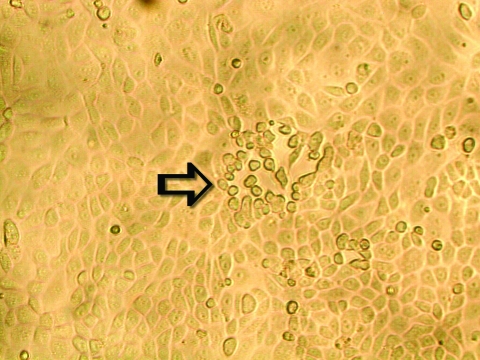
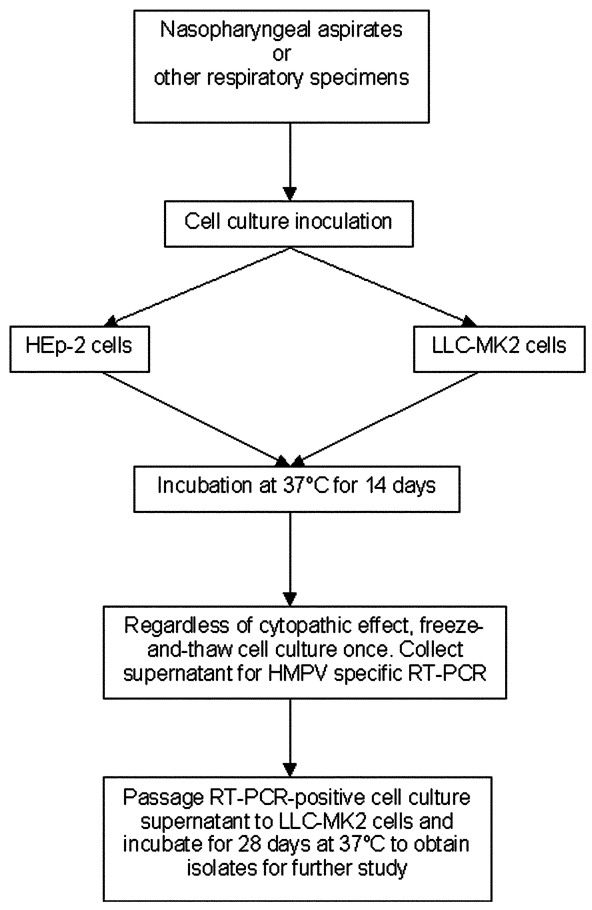
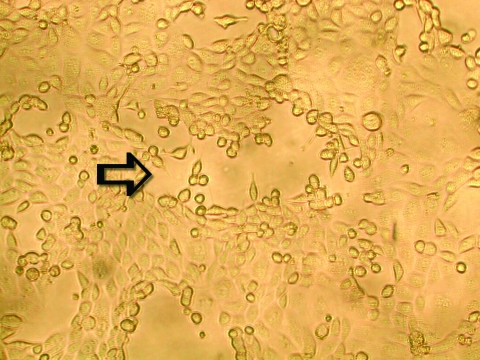
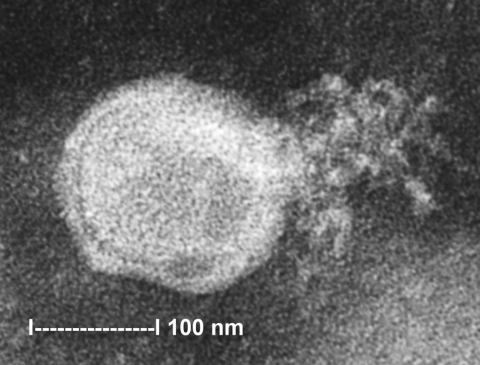
We used a combination approach of conventional virus isolation and molecular techniques to detect human metapneumovirus (HMPV) in patients with severe acute respiratory syndrome (SARS). Of the 48 study patients, 25 (52.1%) were infected with HMPV; 6 of these 25 patients were also infected with coronavirus, and another 5 patients (10.4%) were infected with coronavirus alone. Using this combination approach, we found that human laryngeal carcinoma (HEp-2) cells were superior to rhesus monkey kidney (LLC-MK2) cells commonly used in previous studies for isolation of HMPV. These widely available HEp-2 cells should be included in conjunction with a molecular method for cell culture followup to detect HMPV, particularly in patients with SARS.
我们采用传统病毒分离和分子技术相结合的方法,对严重急性呼吸综合征(SARS)患者进行人偏肺病毒(HMPV)检测。在48例研究患者中,25例(52.1%)感染了HMPV;这25例患者中有6例同时感染了冠状病毒,另有5例患者(10.4%)单独感染了冠状病毒。通过这种联合方法,我们发现人喉癌(HEp-2)细胞在分离HMPV方面优于先前研究中常用的恒河猴肾(LLC-MK2)细胞。这些广泛可得的HEp-2细胞应与分子方法结合用于细胞培养后续检测HMPV,尤其是对SARS患者。