Albert M J, Alam K, Ansaruzzaman M, Islam M M, Rahman A S, Haider K, Bhuiyan N A, Nahar S, Ryan N, Montanaro J
International Centre for Diarrhoeal Disease Research, Bangladesh, Dhaka.
Infect Immun. 1992 Dec;60(12):5017-24. doi: 10.1128/iai.60.12.5017-5024.1992.
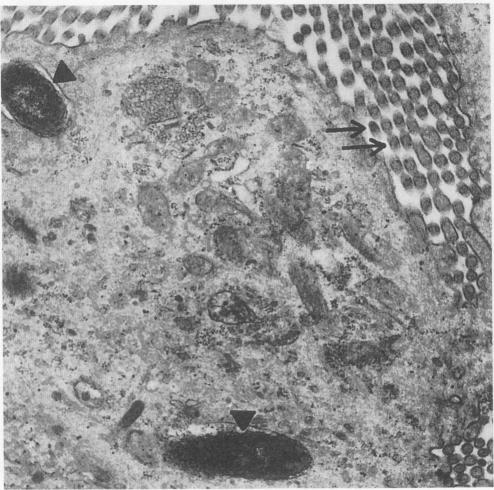
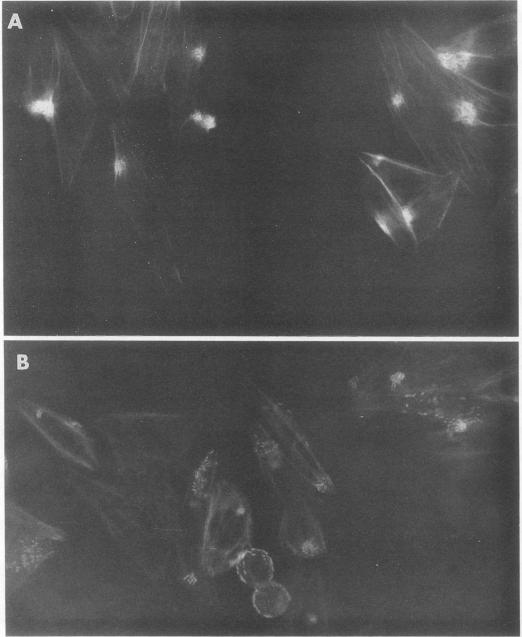
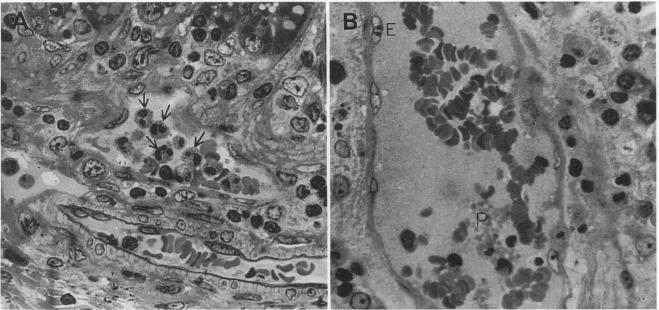
Providencia alcalifaciens is a member of the family Enterobacteriaceae. There are reports that P. alcalifaciens can cause diarrhea, but the mechanism(s) by which it causes diarrhea is known. We studied P. alcalifaciens isolated from a child and two adults with diarrhea for enteropathogenicity. The three isolates did not exhibit any characteristic adherence to cultured HEp-2 cell monolayers, and they did not produce enterotoxins, cytotoxins, or keratoconjunctivitis in the Sereny test. Two isolates invaded cultured HEp-2 cell monolayers, producing localized bacterial clusters and actin condensation. The pattern of actin condensation was different from that produced by enteropathogenic Escherichia coli but similar to that produced by Shigella flexneri. Invasion and actin condensation were poor for the third isolate. Histology of adult rabbit small intestinal loops inoculated with all three isolates revealed bacterial attachment to, penetration of, and microulcer formation on the surface epithelium and hyperemia, edema, and polymorphonuclear cell infiltration of lamina propria. All the isolates produced diarrhea in rabbits with removable intestinal ties, and some of these rabbits developed hindlimb paralysis. Intestinal histology of the rabbits with removable intestinal ties which developed diarrhea showed changes similar to that in adult rabbits on which ileal loop assays had been performed. Transmission electron microscopy of intestinal tissues also confirmed tissue penetration by the isolates. Nerve tissue histology of two rabbits that developed hindlimb paralysis showed focal mononuclear cell infiltration around peripheral nerve sheaths. It is concluded that some strains of P. alcalifaciens are enteropathogenic and that they cause diarrhea by invading the intestinal mucosal epithelium. However, the relevance to human disease of the hindlimb paralysis observed in this animal model is not clear.
产碱普罗威登斯菌是肠杆菌科的一员。有报道称产碱普罗威登斯菌可引起腹泻,但其致泻机制尚不清楚。我们研究了从一名儿童和两名腹泻成人中分离出的产碱普罗威登斯菌的肠道致病性。这三株分离菌对培养的人喉表皮样癌细胞(HEp-2)单层细胞未表现出任何特征性黏附,并且在塞雷尼试验中不产生肠毒素、细胞毒素或引起角膜结膜炎。两株分离菌侵入培养的HEp-2细胞单层,形成局部细菌聚集和肌动蛋白凝聚。肌动蛋白凝聚模式与肠致病性大肠杆菌产生的不同,但与福氏志贺菌产生的相似。第三株分离菌的侵袭和肌动蛋白凝聚较弱。用所有三株分离菌接种成年兔小肠袢的组织学检查显示,细菌附着于表面上皮、穿透上皮并形成微溃疡,固有层出现充血、水肿和多形核细胞浸润。所有分离菌在有可移除肠结扎的兔中均引起腹泻,其中一些兔出现后肢麻痹。出现腹泻的有可移除肠结扎兔的肠道组织学变化与进行回肠袢试验的成年兔相似。肠道组织的透射电子显微镜检查也证实分离菌可穿透组织。两只出现后肢麻痹兔的神经组织组织学检查显示外周神经鞘周围有局灶性单核细胞浸润。结论是某些产碱普罗威登斯菌菌株具有肠道致病性,它们通过侵入肠道黏膜上皮引起腹泻。然而,在该动物模型中观察到的后肢麻痹与人类疾病的相关性尚不清楚。