Solomon Laura, Nisenbaum Rosane, Reyes Michele, Papanicolaou Dimitris A, Reeves William C
Division of Viral and Rickettsial Diseases, National Center for Infectious Diseases, Centers for Disease Control and Prevention, Atlanta, GA, USA.
Health Qual Life Outcomes. 2003 Oct 3;1:48. doi: 10.1186/1477-7525-1-48.
Scant research has adequately addressed the impact of chronic fatigue syndrome on patients' daily activities and quality of life. Enumerating specific problems related to quality of life in chronic fatigue syndrome patients can help us to better understand and manage this illness. This study addresses issues of functional status in persons with chronic fatigue syndrome and other fatiguing illnesses in a population based sample, which can be generalized to all persons with chronic fatigue.
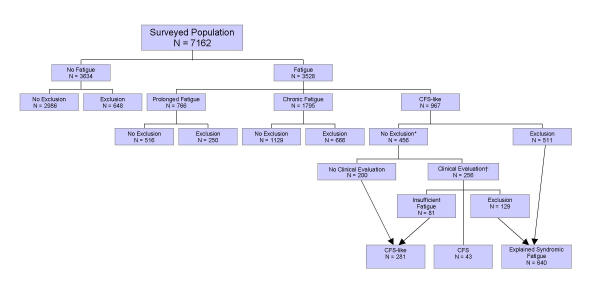
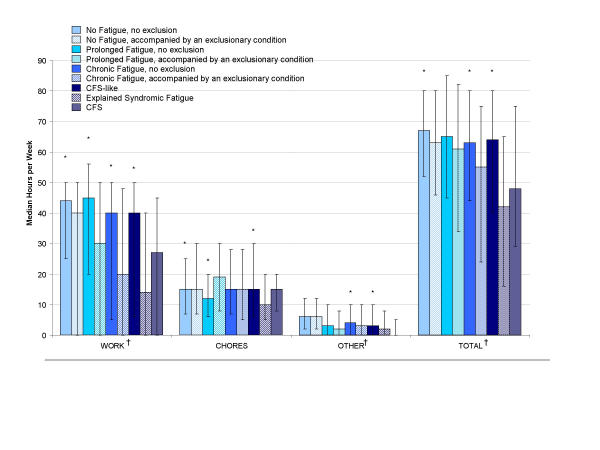
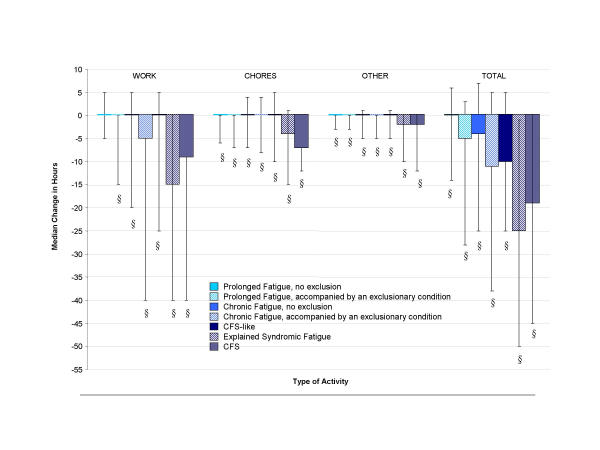
We conducted a random telephone survey in Wichita, Kansas to identify persons with chronic fatigue syndrome and other fatiguing illnesses. Respondents reporting severe fatigue of at least 1 month's duration and randomly selected non-fatigued respondents were asked to participate in a detailed telephone interview. Participants were asked about symptoms, medical and psychiatric illnesses, and about physical, social, and recreational functioning. Those meeting the 1994 chronic fatigue syndrome case definition, as determined on the basis of their telephone responses, were invited for clinical evaluation to confirm a diagnosis of chronic fatigue syndrome. For this analysis, we evaluated unemployment due to fatigue, number of hours per week spent on work, chores, and other activities (currently and prior to the onset of fatigue), and energy level.
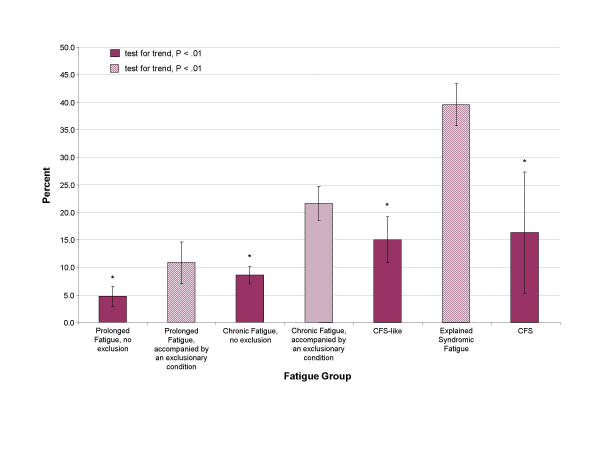
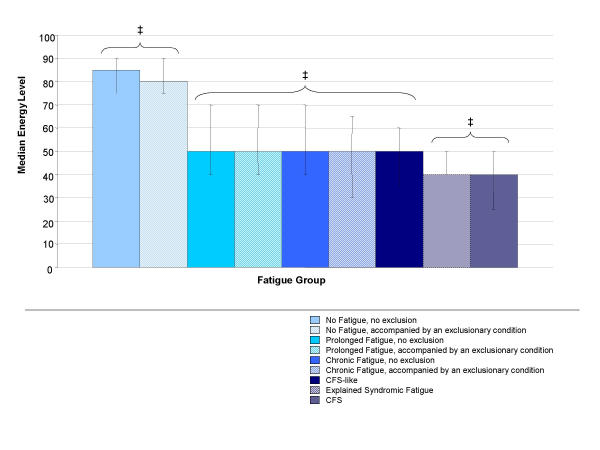
There was no difference between persons with chronic fatigue syndrome and persons with a chronic fatigue syndrome-like illness that could be explained by a medical or psychiatric condition for any of the outcomes we measured except for unemployment due to fatigue (15% vs. 40%, P <.01). Persons with chronic fatigue syndrome and other fatiguing illnesses had substantially less energy and spent less time on hobbies, schooling, or volunteer work than did non-fatigued controls (P <.01).
Persons with chronic fatigue syndrome are as impaired as persons whose fatigue could be explained by a medical or psychiatric condition, and they have less energy than non-fatigued controls.
关于慢性疲劳综合征对患者日常活动及生活质量影响的研究较少。列举慢性疲劳综合征患者生活质量方面的具体问题有助于我们更好地理解和管理该疾病。本研究探讨了基于人群样本的慢性疲劳综合征患者及其他疲劳性疾病患者的功能状态问题,这些结果可推广至所有慢性疲劳患者。
我们在堪萨斯州威奇托市进行了一项随机电话调查,以确定慢性疲劳综合征患者及其他疲劳性疾病患者。报告至少持续1个月严重疲劳的受访者以及随机选择的无疲劳症状的受访者被要求参与详细的电话访谈。参与者被问及症状、内科和精神疾病以及身体、社交和娱乐功能。根据电话回复确定符合1994年慢性疲劳综合征病例定义的患者被邀请进行临床评估以确诊慢性疲劳综合征。对于本分析,我们评估了因疲劳导致的失业情况、每周用于工作、家务和其他活动的小时数(当前及疲劳发作前)以及精力水平。
除因疲劳导致的失业情况外(15% 对 40%,P <.01),在我们测量的任何结果中,慢性疲劳综合征患者与类似慢性疲劳综合征疾病患者之间的差异无法用内科或精神疾病来解释。与无疲劳症状的对照组相比,慢性疲劳综合征患者及其他疲劳性疾病患者精力明显不足,用于爱好、学业或志愿工作的时间更少(P <.01)。
慢性疲劳综合征患者与那些疲劳可由内科或精神疾病解释的患者一样存在功能损害,且他们比无疲劳症状的对照组精力更少。