Segura Tatiana, Chung Peter H, Shea Lonnie D
Department of Chemical and Biological Engineering, Northwestern University, 2145 Sheridan Rd./E156, Evanston, IL 60208-3120, USA.
Biomaterials. 2005 May;26(13):1575-84. doi: 10.1016/j.biomaterials.2004.05.007.
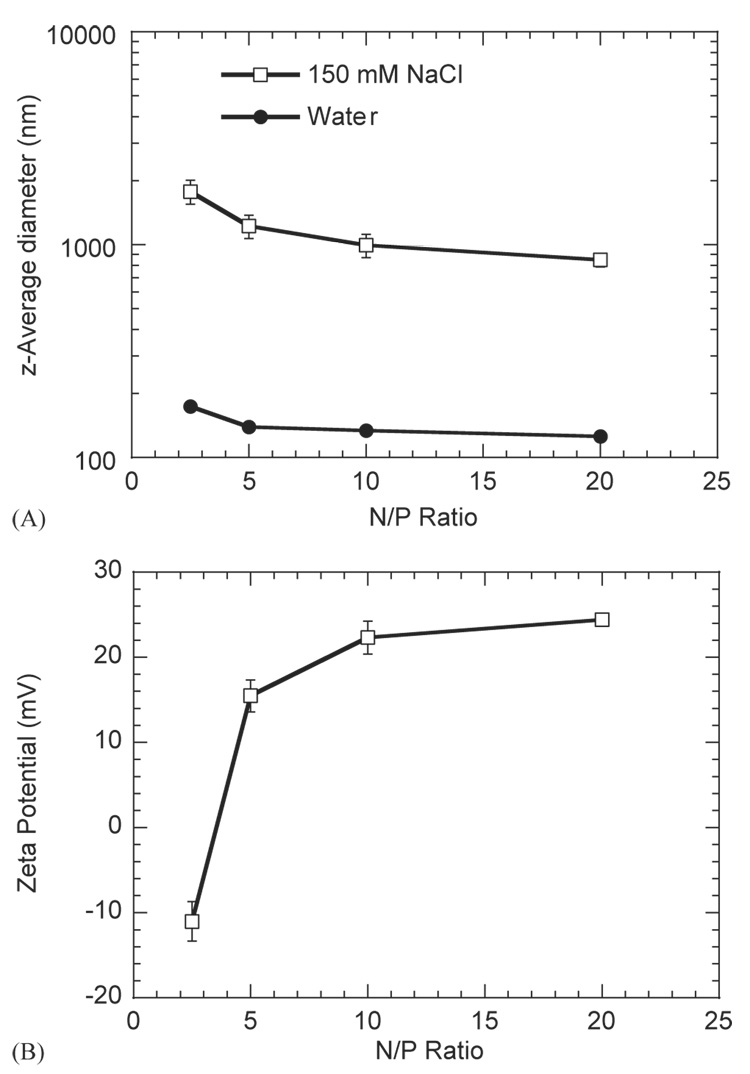
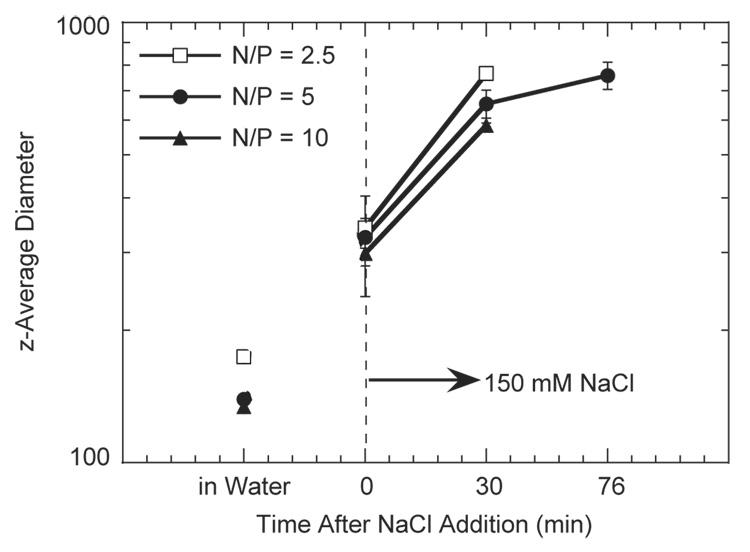
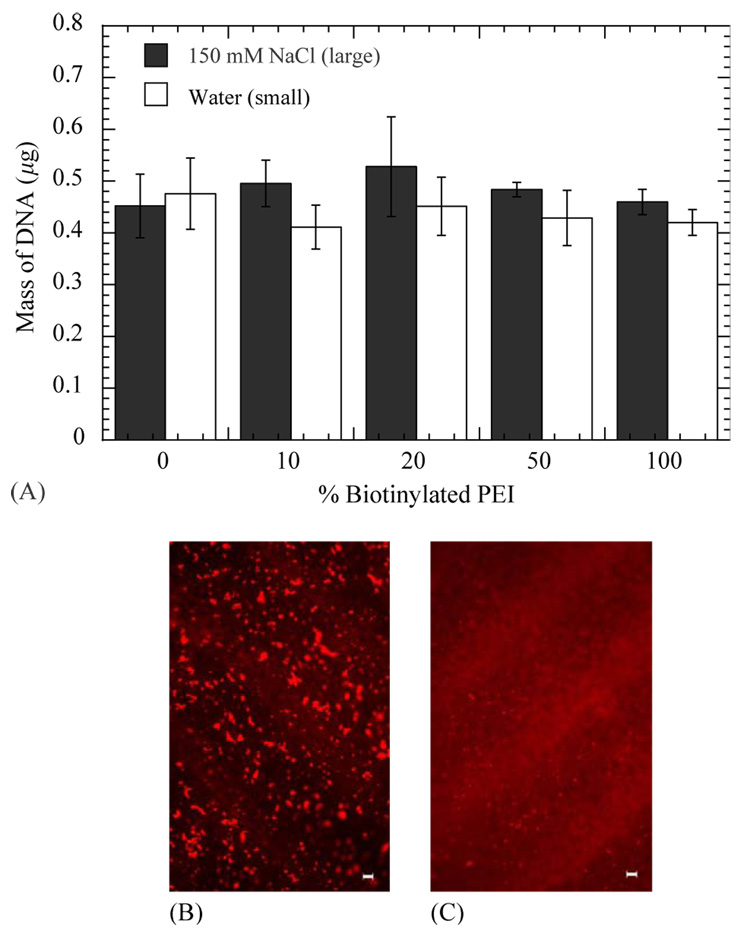
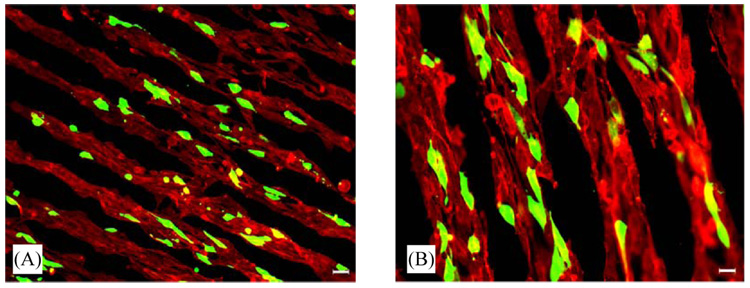
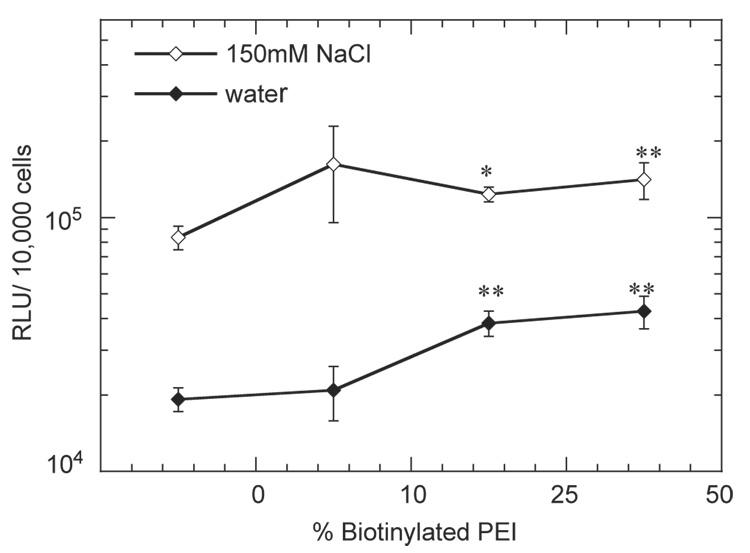
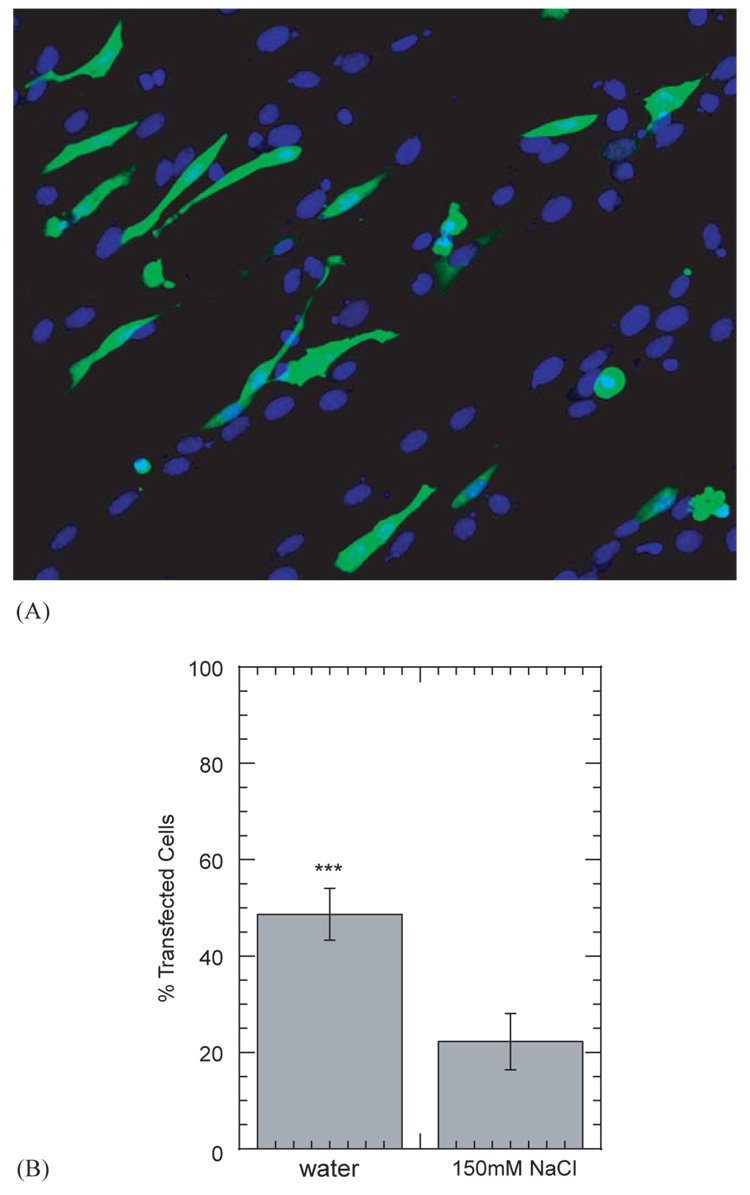
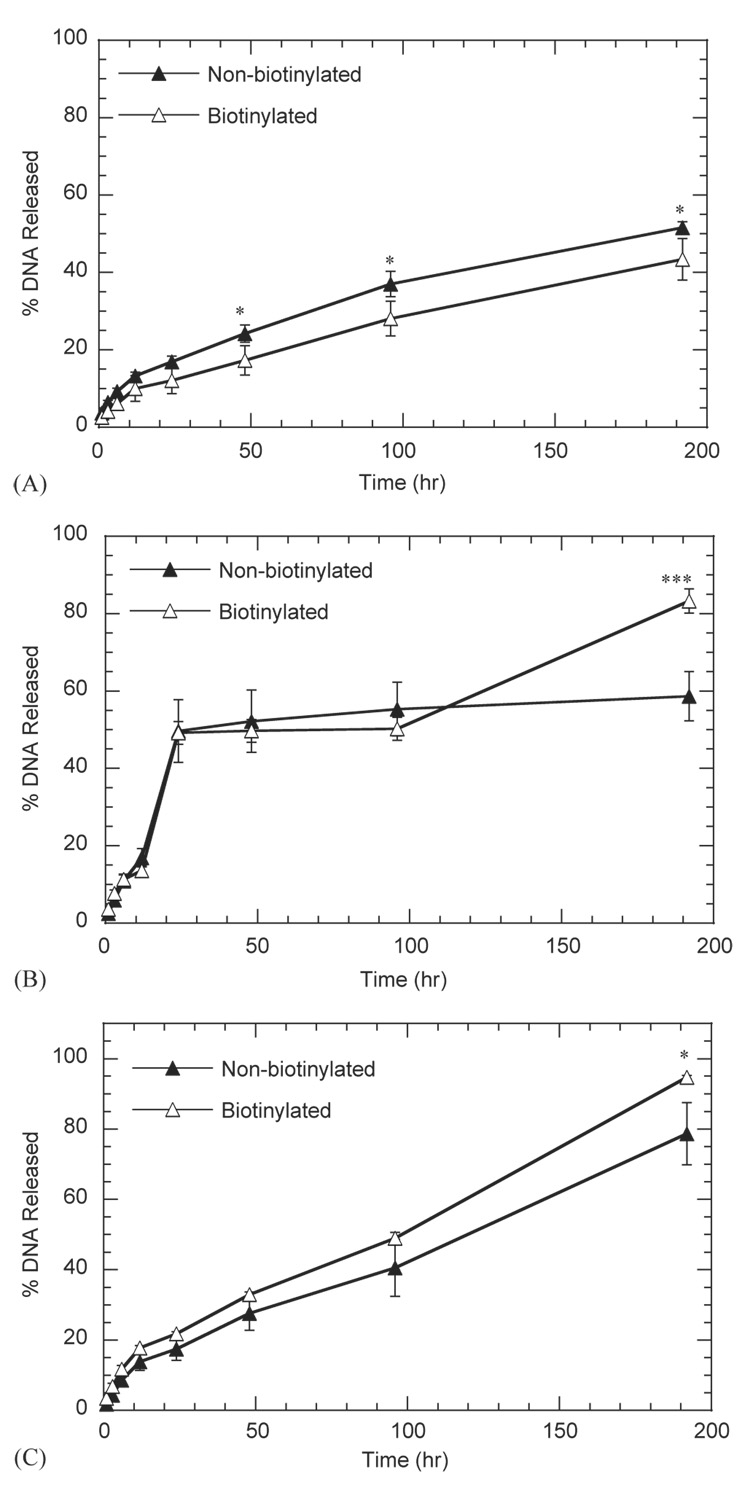
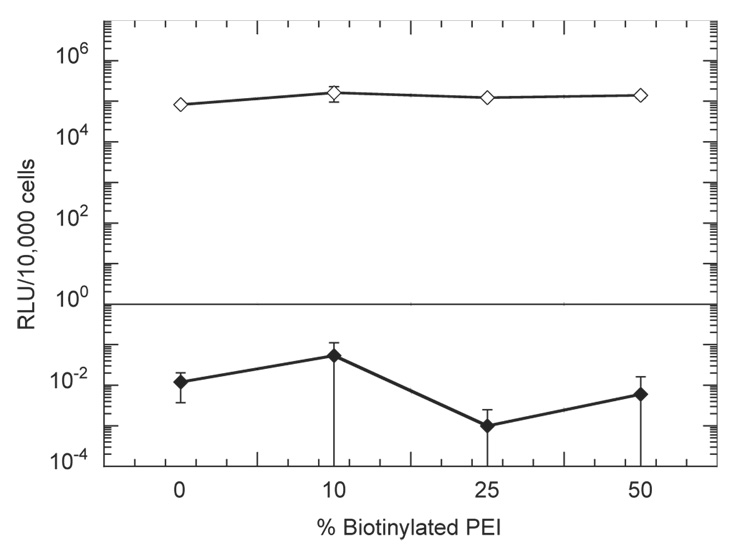
Efficient and controlled gene delivery from biodegradable materials can be employed to stimulate cellular processes that lead to tissue regeneration. In this report, a substrate-mediated approach was developed to deliver DNA from hyaluronic acid-collagen hydrogels. The hydrogels were formed by crosslinking HA with poly(ethylene glycol) diglycidyl ether. Poly(ethylene imine)(PEI)/DNA complexes were immobilized to the substrate using either biotin/neutravidin or non-specific adsorption. Complexes were formed in the presence or absence of salt to regulate complex size, and resulted in complexes with z-average diameters of 1221.7 +/- 152.3 and 139.4 +/- 1.3 nm, respectively. During 48-h incubation in PBS or hyaluronidase, DNA was released slowly from the hydrogel substrate (<30% of immobilized DNA), which was enhanced by incubation with conditioned media (approximately 50% of immobilized DNA). Transgene expression mediated by immobilized, large diameter complexes was 3 to 7-fold greater than for small diameter complexes. However, the percentage of cells expressing the transgene was greater for small diameter complexes (48.7%) than for large diameter complexes (22.3%). Spatially controlled gene transfer was achieved by topographically patterning the hydrogel to pattern cell adhesion. Biomaterial-based gene delivery can be applicable to numerous tissue engineering applications, or as a tool to examine tissue formation.
可利用可生物降解材料进行高效且可控的基因递送,以刺激导致组织再生的细胞过程。在本报告中,开发了一种底物介导的方法,用于从透明质酸-胶原蛋白水凝胶中递送DNA。水凝胶通过将透明质酸与聚乙二醇二缩水甘油醚交联形成。聚乙二胺(PEI)/DNA复合物通过生物素/中性抗生物素蛋白或非特异性吸附固定在底物上。在有盐或无盐的情况下形成复合物以调节复合物大小,分别得到z平均直径为1221.7±152.3和139.4±1.3 nm的复合物。在PBS或透明质酸酶中孵育48小时期间,DNA从水凝胶底物中缓慢释放(固定化DNA的<30%),与条件培养基孵育可增强释放(固定化DNA的约50%)。由固定化的大直径复合物介导的转基因表达比小直径复合物高3至7倍。然而,表达转基因的细胞百分比小直径复合物(48.7%)高于大直径复合物(22.3%)。通过对水凝胶进行拓扑图案化以形成细胞粘附图案,实现了空间控制的基因转移。基于生物材料的基因递送可应用于众多组织工程应用,或作为研究组织形成的工具。