Leclerc Marie Claude, Menegon Michela, Cligny Alexandra, Noyer Jean Louis, Mammadov Suleyman, Aliyev Namig, Gasimov Elkhan, Majori Giancarlo, Severini Carlo
UR IRD 165, Génétique et Evolution des Maladies Infectieuses, UMR CNRS/IRD 2724, 911 Avenue Agropolis, BP 64501, 34394 Montpellier cedex 5, France.
Malar J. 2004 Nov 9;3:40. doi: 10.1186/1475-2875-3-40.
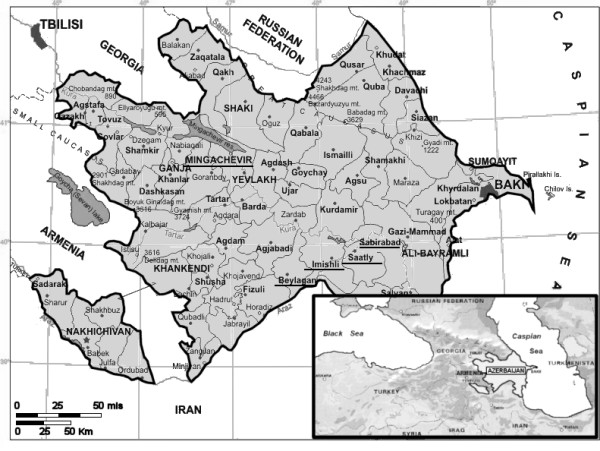
Plasmodium vivax, although causing a less serious disease than Plasmodium falciparum, is the most widespread of the four human malarial species. Further to the recent recrudescence of P. vivax cases in the Newly Independent States (NIS) of central Asia, a survey on the genetic diversity and dissemination in Azerbaijan was undertaken. Azerbaijan is at the crossroads of Asia and, as such, could see a rise in the number of cases, although an effective malaria control programme has been established in the country.
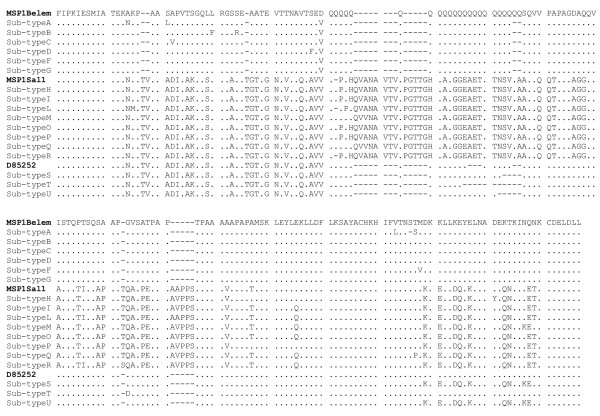
Thirty-six P. vivax isolates from Central Azerbaijan were characterized by analysing the genetic polymorphism of the circumsporozoite protein (CSP) and the merozoite surface protein 1 (MSP-1) genes, using PCR amplifications and amplicons sequencing.
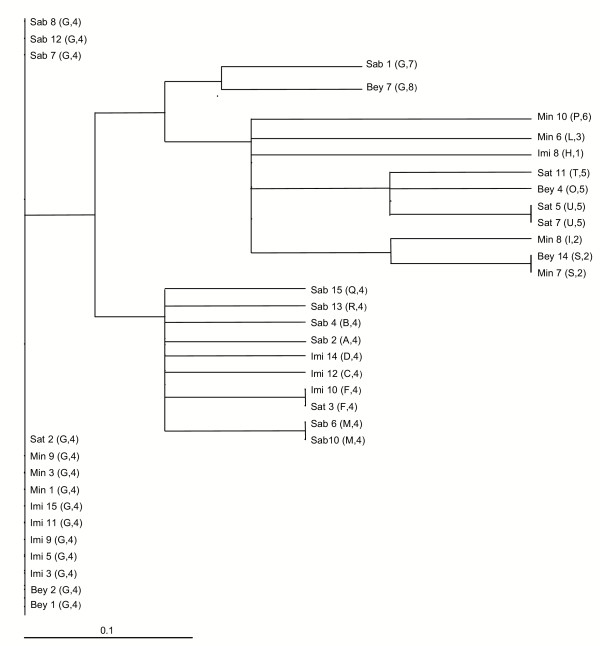
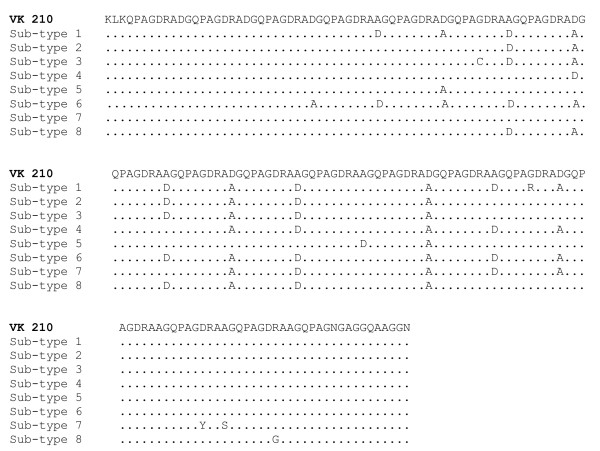
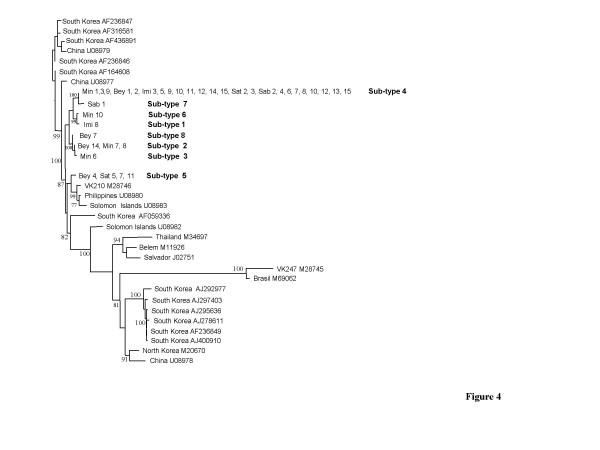
Analysis of CSP sequences showed that all the processed isolates belong to the VK 210 type, with variations in the alternation of alanine residue (A) or aspartic acid residue (D) in the repeat motif GDRA(A/D)GQPA along the sequence. As far as MSP-1 genotyping is concerned, it was found that the majority of isolates analysed belong to Belem and Sal I types. Five recombinant isolates were also identified. Combined analysis with the two genetic markers allowed the identification of 19 plasmodial sub-types.
The results obtained in the present study indicate that there are several P. vivax clones circulating in Azerbaijan and, consequently, a careful malaria surveillance could be of paramount importance to identify, at early stage, the occurrence of possible P. vivax malaria outbreaks.
间日疟原虫虽然引起的疾病不如恶性疟原虫严重,但却是四种人类疟原虫中分布最广的。继中亚新独立国家(NIS)近期间日疟原虫病例复发之后,在阿塞拜疆开展了一项关于其遗传多样性和传播情况的调查。阿塞拜疆处于亚洲的十字路口,因此,尽管该国已建立了有效的疟疾控制项目,但疟疾病例数量仍可能上升。
通过聚合酶链反应(PCR)扩增和扩增子测序,分析环子孢子蛋白(CSP)和裂殖子表面蛋白1(MSP-1)基因的遗传多态性,对来自阿塞拜疆中部的36株间日疟原虫分离株进行了特征分析。
CSP序列分析表明,所有处理过的分离株均属于VK 210型,在重复基序GDRA(A/D)GQPA中沿序列的丙氨酸残基(A)或天冬氨酸残基(D)的交替存在变异。就MSP-1基因分型而言,发现大多数分析的分离株属于贝伦型和萨尔I型。还鉴定出5株重组分离株。通过对这两个遗传标记的联合分析,鉴定出19种疟原虫亚型。
本研究获得的结果表明,阿塞拜疆有几种间日疟原虫克隆在传播,因此,仔细的疟疾监测对于早期发现可能的间日疟原虫疟疾暴发至关重要。