Espejel Silvia, Klatt Peter, Ménissier-de Murcia Josiane, Martín-Caballero Juan, Flores Juana M, Taccioli Guillermo, de Murcia Gilbert, Blasco María A
Molecular Oncology Program, Spanish National Cancer Center (CNIO), E-28029 Madrid, Spain.
J Cell Biol. 2004 Nov 22;167(4):627-38. doi: 10.1083/jcb.200407178. Epub 2004 Nov 15.
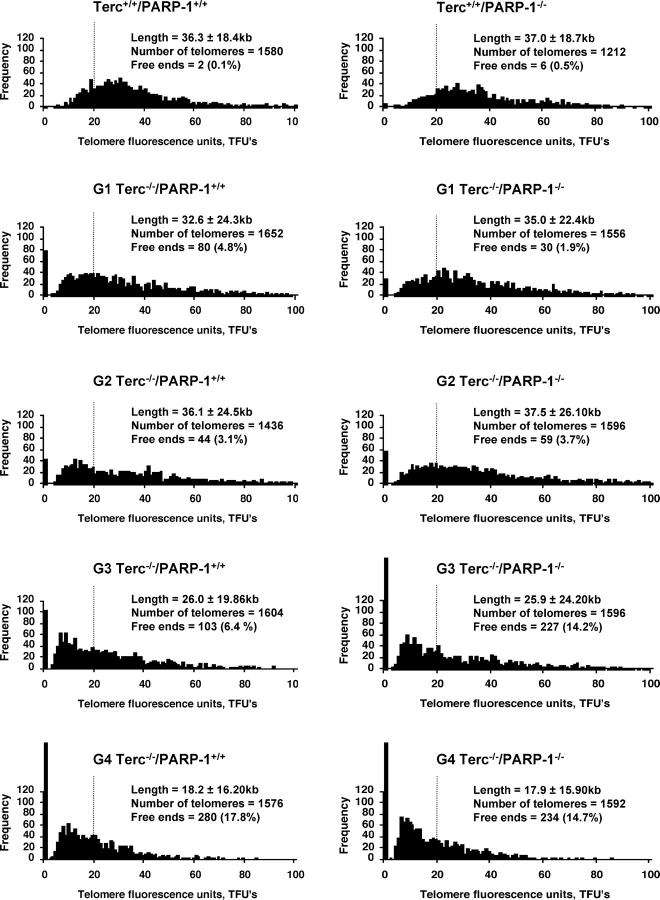
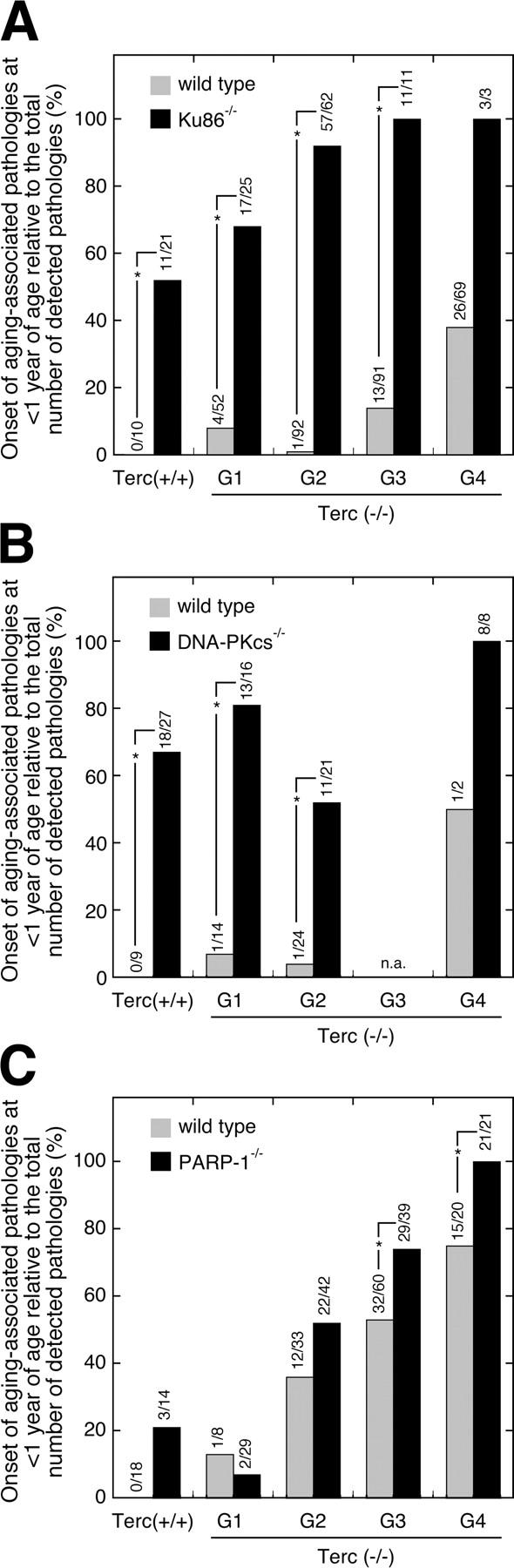
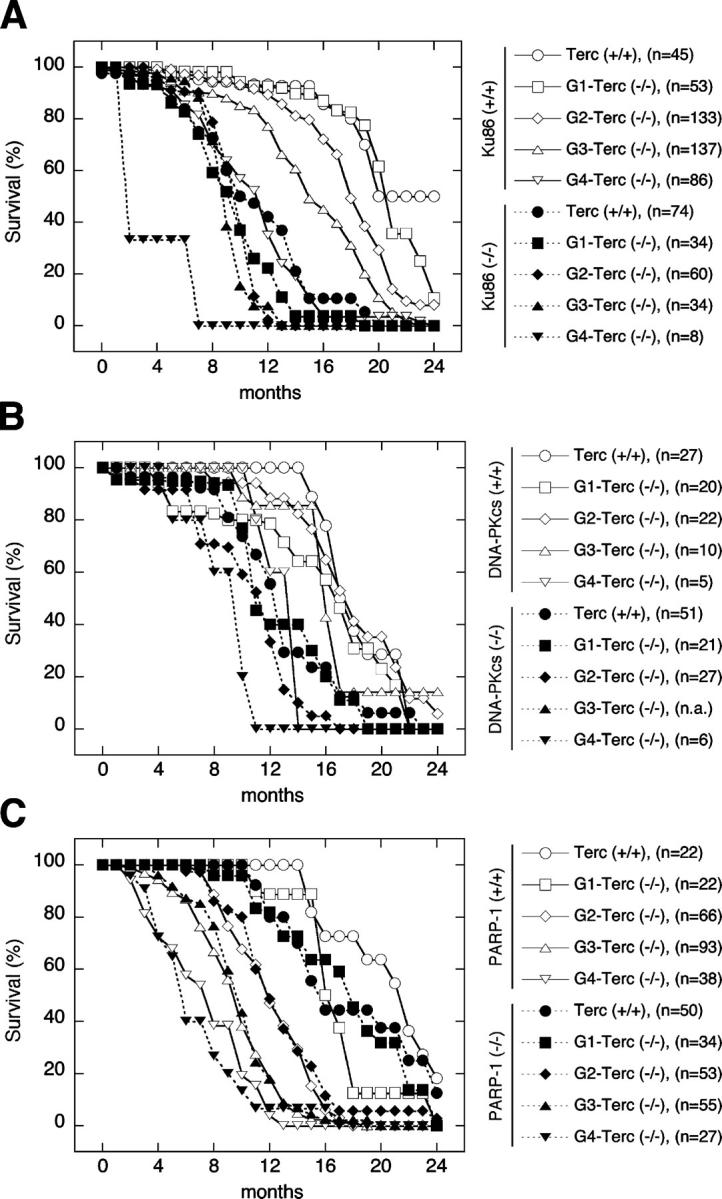
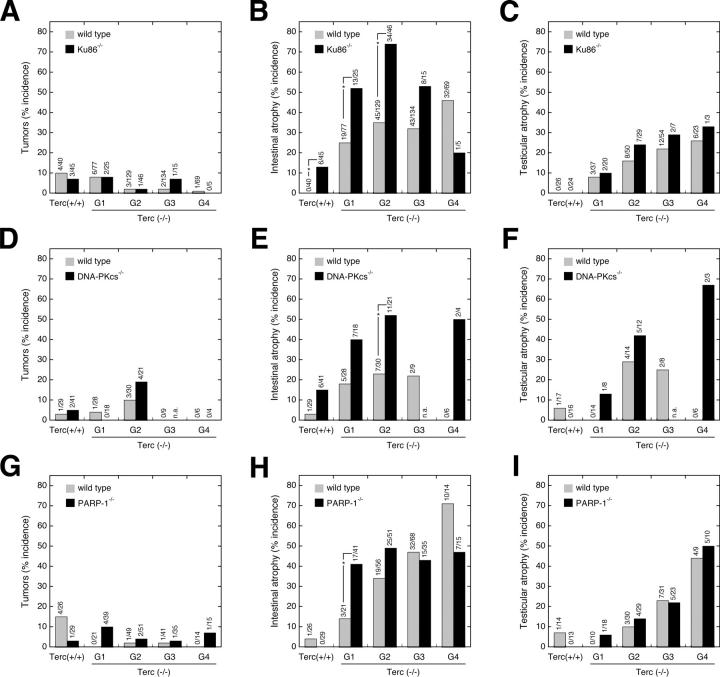
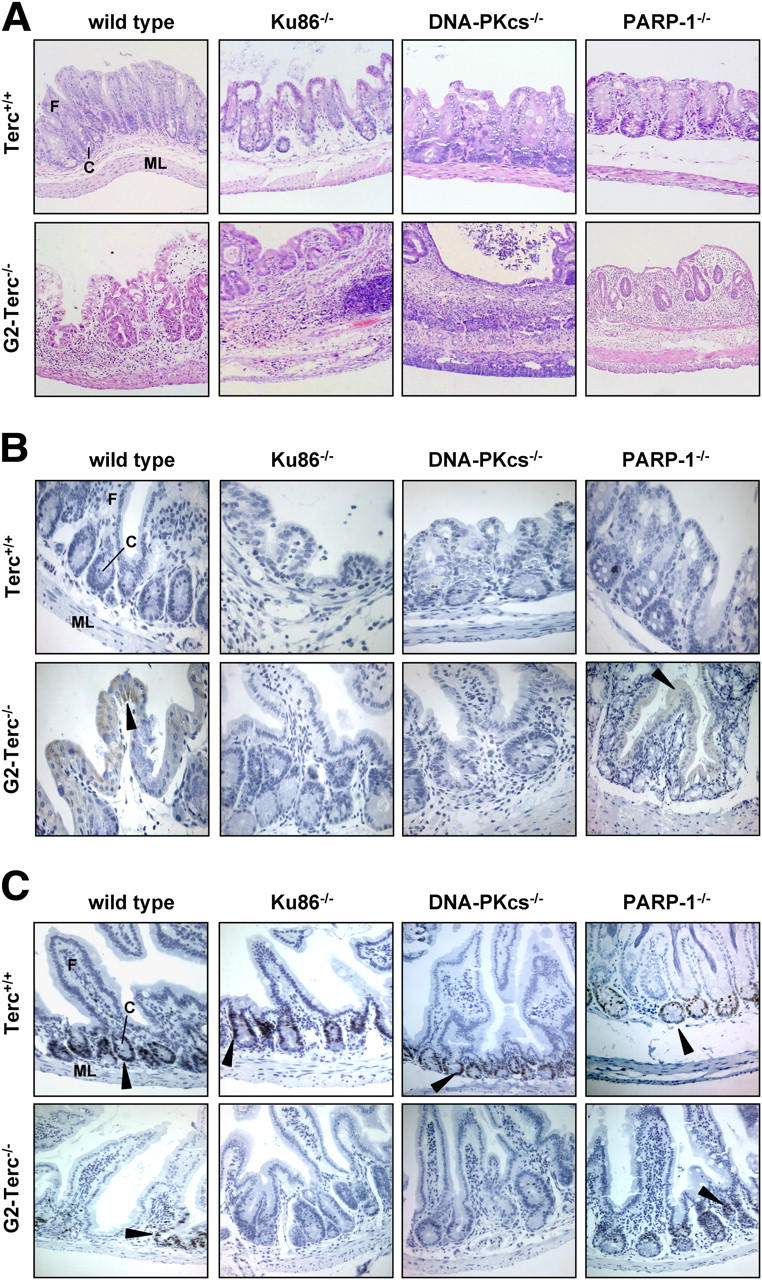
The DNA repair proteins poly(ADP-ribose) polymerase-1 (PARP-1), Ku86, and catalytic subunit of DNA-PK (DNA-PKcs) have been involved in telomere metabolism. To genetically dissect the impact of these activities on telomere function, as well as organismal cancer and aging, we have generated mice doubly deficient for both telomerase and any of the mentioned DNA repair proteins, PARP-1, Ku86, or DNA-PKcs. First, we show that abrogation of PARP-1 in the absence of telomerase does not affect the rate of telomere shortening, telomere capping, or organismal viability compared with single telomerase-deficient controls. Thus, PARP-1 does not have a major role in telomere metabolism, not even in the context of telomerase deficiency. In contrast, mice doubly deficient for telomerase and either Ku86 or DNA-PKcs manifest accelerated loss of organismal viability compared with single telomerase-deficient mice. Interestingly, this loss of organismal viability correlates with proliferative defects and age-related pathologies, but not with increased incidence of cancer. These results support the notion that absence of telomerase and short telomeres in combination with DNA repair deficiencies accelerate the aging process without impacting on tumorigenesis.
DNA修复蛋白聚(ADP - 核糖)聚合酶-1(PARP - 1)、Ku86和DNA - PK催化亚基(DNA - PKcs)都参与了端粒代谢。为了从基因层面剖析这些活性对端粒功能以及生物体癌症和衰老的影响,我们构建了端粒酶与上述任何一种DNA修复蛋白(PARP - 1、Ku86或DNA - PKcs)双缺陷的小鼠。首先,我们发现与单端粒酶缺陷对照相比,在缺乏端粒酶的情况下消除PARP - 1并不影响端粒缩短速率、端粒封端或生物体活力。因此,PARP - 1在端粒代谢中没有主要作用,即使在端粒酶缺陷的情况下也是如此。相比之下,与单端粒酶缺陷小鼠相比,端粒酶与Ku86或DNA - PKcs双缺陷的小鼠表现出生物体活力加速丧失。有趣的是,这种生物体活力丧失与增殖缺陷和年龄相关病理相关,但与癌症发病率增加无关。这些结果支持这样一种观点,即端粒酶缺失和短端粒与DNA修复缺陷相结合会加速衰老过程,而不影响肿瘤发生。