Schwan T G, Gage K L, Karstens R H, Schrumpf M E, Hayes S F, Barbour A G
Arthropod-Borne Diseases Section, Rocky Mountain Laboratories, National Institute of Allergy and Infectious Diseases, Hamilton, Montana 59840.
J Clin Microbiol. 1992 Apr;30(4):790-5. doi: 10.1128/jcm.30.4.790-795.1992.
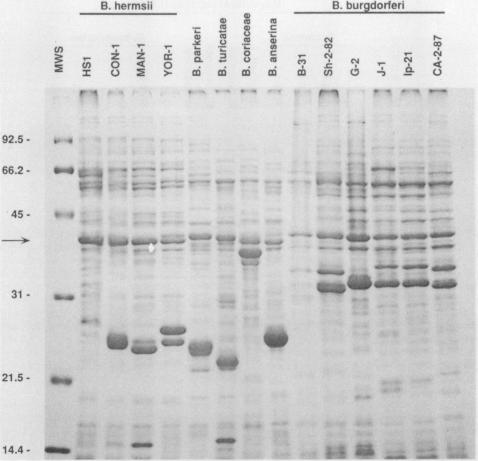
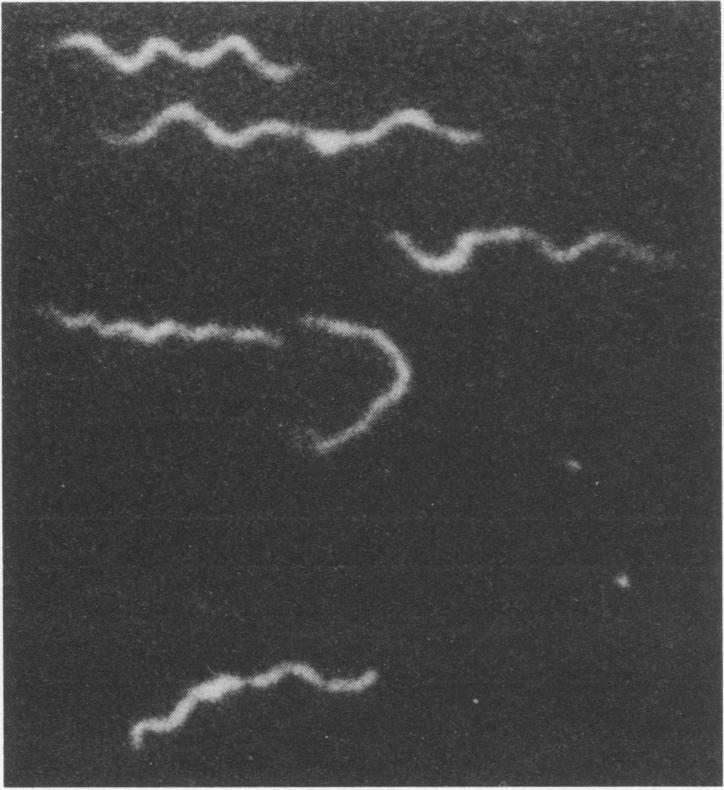
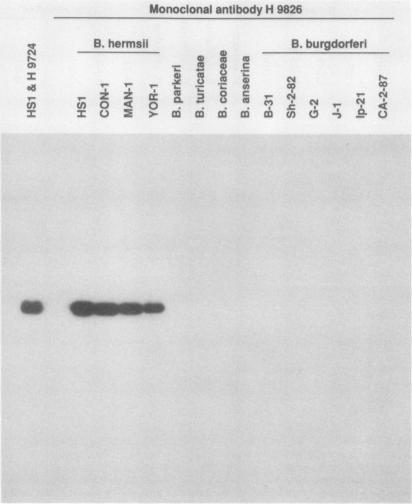
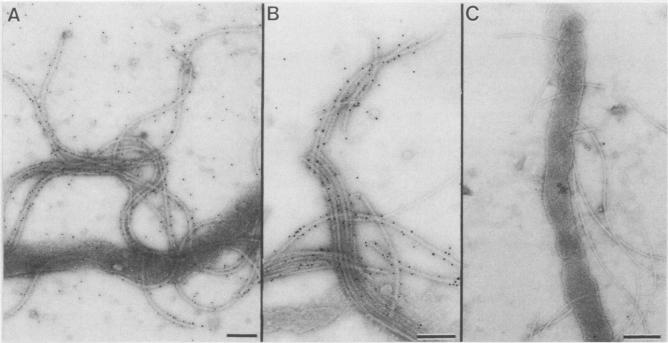
Borrelia hermsii causes a relapsing fever in humans and is one of several species of tick-borne spirochetes known to occur in the western United States. Spirochetes observed in the peripheral blood of patients acutely ill have been presumptively identified in the past by the geographic location of exposure and the probable species of tick vector. We describe a monoclonal antibody (H9826) that bound to the flagellar protein of B. hermsii but not to those of any of the other species tested, which included B. parkeri, B. turicatae, B. coriaceae, B. anserina, B. burgdorferi, and Leptospira interrogans serovar ballum. This antibody bound efficiently to B. hermsii in an indirect immunofluorescence assay and was used to rapidly detect and identify this spirochete in the peripheral blood of experimentally infected mice and in the central ganglia of Ornithodoros hermsi ticks. H9826 can rapidly confirm the identification of B. hermsii to increase our understanding concerning the geographic distribution, vector specificity, and epidemiological significance of this zoonotic human pathogen.
赫氏疏螺旋体可引起人类回归热,是已知在美国西部出现的几种蜱传螺旋体之一。过去,根据暴露的地理位置和可能的蜱传媒介种类,对急性病患者外周血中观察到的螺旋体进行了初步鉴定。我们描述了一种单克隆抗体(H9826),它与赫氏疏螺旋体的鞭毛蛋白结合,但不与其他任何测试物种的鞭毛蛋白结合,这些物种包括帕克疏螺旋体、图莱里疏螺旋体、科里亚疏螺旋体、鹅疏螺旋体、伯氏疏螺旋体和问号钩端螺旋体血清型巴卢姆。该抗体在间接免疫荧光试验中能有效地与赫氏疏螺旋体结合,并用于快速检测和鉴定实验感染小鼠外周血以及赫氏钝缘蜱中枢神经节中的这种螺旋体。H9826可快速确认赫氏疏螺旋体的鉴定,以增进我们对这种人畜共患人类病原体的地理分布、媒介特异性和流行病学意义的了解。