Schwan Tom G, Raffel Sandra J, Schrumpf Merry E, Schrumpf Merry E, Webster Larry S, Marques Adriana R, Spano Robyn, Rood Michael, Burns Joe, Hu Renjie
National Institute of Allergy and Infectious Diseases, Hamilton, Montana, USA.
Emerg Infect Dis. 2009 Jul;15(7):1026-31. doi: 10.3201/eid1507.090223.
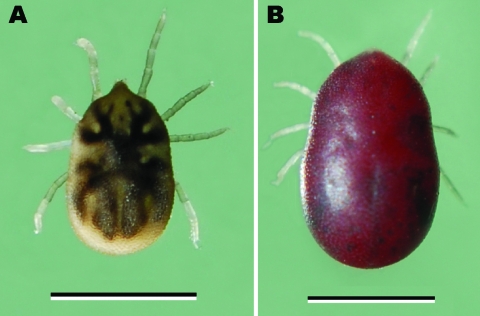
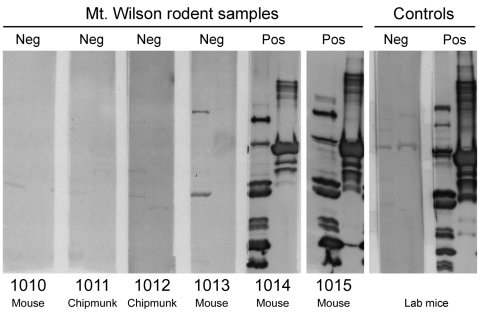
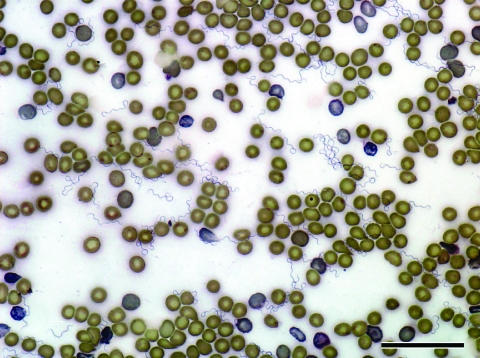
The primary cause of tick-borne relapsing fever in western North America is Borrelia hermsii, a rodent-associated spirochete transmitted by the fast-feeding soft tick Ornithodoros hermsi. We describe a patient who had an illness consistent with relapsing fever after exposure in the mountains near Los Angeles, California, USA. The patient's convalescent-phase serum was seropositive for B. hermsii but negative for several other vector-borne bacterial pathogens. Investigations at the exposure site showed the presence of O. hermsi ticks infected with B. hermsii and the presence of rodents that were seropositive for the spirochete. We determined that this tick-borne disease is endemic to the San Gabriel Mountains near the greater Los Angeles metropolitan area.
北美西部蜱传回归热的主要病因是赫氏疏螺旋体,这是一种与啮齿动物相关的螺旋体,由快速吸血的软蜱赫氏钝缘蜱传播。我们描述了一名患者,在美国加利福尼亚州洛杉矶附近山区暴露后患上了与回归热相符的疾病。该患者恢复期血清对赫氏疏螺旋体呈血清阳性,但对其他几种媒介传播的细菌病原体呈阴性。在暴露地点的调查显示存在感染了赫氏疏螺旋体的赫氏钝缘蜱,以及对该螺旋体呈血清阳性的啮齿动物。我们确定这种蜱传疾病在大洛杉矶都会区附近的圣盖博山为地方病。