Lin Cheng-Wen, Tsai Fuu-Jen, Tsai Chang-Hai, Lai Chien-Chen, Wan Lei, Ho Tin-Yun, Hsieh Chang-Chi, Chao Pei-Dawn Lee
Department of Medical Laboratory Science and Biotechnology, China Medical University, No. 91 Hsueh-Shih Road, Taichung 404, Taiwan, ROC.
Antiviral Res. 2005 Oct;68(1):36-42. doi: 10.1016/j.antiviral.2005.07.002.
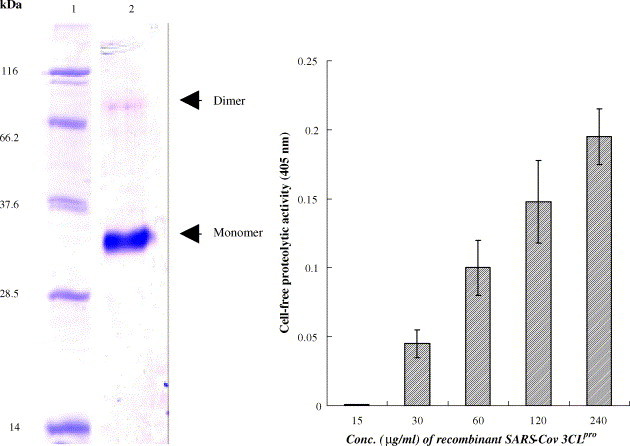
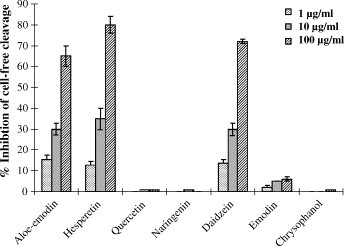
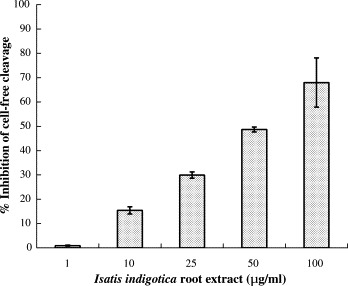
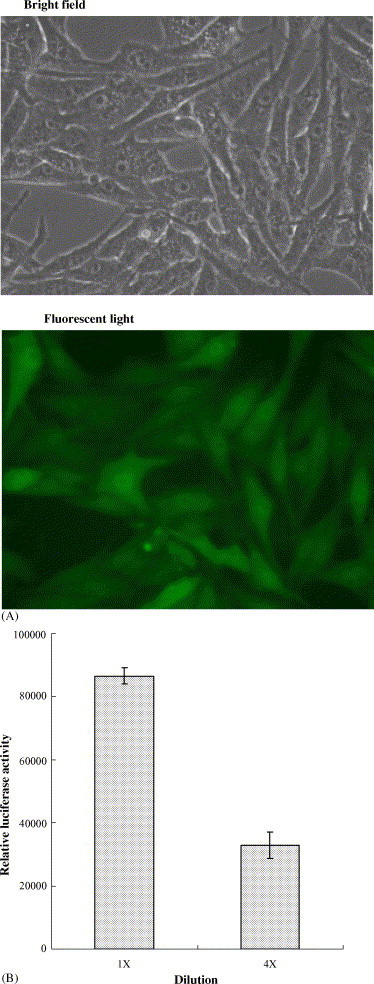
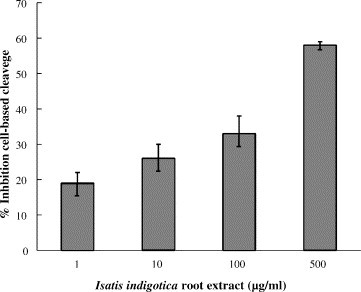
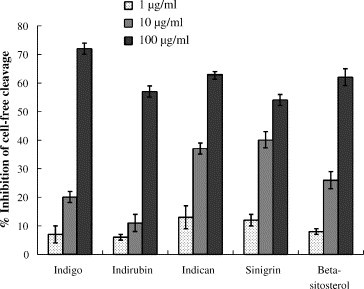
The 3C-like protease (3CLpro) of SARS-coronavirus mediates the proteolytic processing of replicase polypeptides 1a and 1ab into functional proteins, becoming an important target for the drug development. In this study, Isatis indigotica root extract, five major compounds of I. indigotica root, and seven plant-derived phenolic compounds were tested for anti-SARS-CoV 3CLpro effects using cell-free and cell-based cleavage assays. Cleavage assays with the 3CLpro demonstrated that IC50 values were in micromolar ranges for I. indigotica root extract, indigo, sinigrin, aloe emodin and hesperetin. Sinigrin (IC50: 217 microM) was more efficient in blocking the cleavage processing of the 3CLpro than indigo (IC50: 752 microM) and beta-sitosterol (IC50: 1210 microM) in the cell-based assay. Only two phenolic compounds aloe emodin and hesperetin dose-dependently inhibited cleavage activity of the 3CLpro, in which the IC50 was 366 microM for aloe emodin and 8.3 microM for hesperetin in the cell-based assay.
严重急性呼吸综合征冠状病毒(SARS-CoV)的3C样蛋白酶(3CLpro)介导复制酶多肽1a和1ab蛋白水解加工成功能蛋白,成为药物研发的重要靶点。在本研究中,利用无细胞和基于细胞的切割试验,检测了板蓝根提取物、板蓝根的五种主要化合物以及七种植物源酚类化合物对SARS-CoV 3CLpro的抑制作用。3CLpro切割试验表明,板蓝根提取物、靛蓝、芥子苷、芦荟大黄素和橙皮苷的半数抑制浓度(IC50)值在微摩尔范围内。在基于细胞的试验中,芥子苷(IC50:217μM)比靛蓝(IC50:752μM)和β-谷甾醇(IC50:1210μM)更有效地阻断3CLpro的切割加工。只有两种酚类化合物芦荟大黄素和橙皮苷呈剂量依赖性抑制3CLpro的切割活性,在基于细胞的试验中,芦荟大黄素的IC50为366μM,橙皮苷的IC50为8.3μM。