Perry Cary, LeMay Nancy, Rodway Greg, Tracy Allison, Galer Joan
Management & Leadership Program, Management Sciences for Health, Cambridge, Massachusetts, USA.
Hum Resour Health. 2005 Oct 13;3:10. doi: 10.1186/1478-4491-3-10.
This article describes the validation of an instrument to measure work group climate in public health organizations in developing countries. The instrument, the Work Group Climate Assessment Tool (WCA), was applied in Brazil, Mozambique, and Guinea to assess the intermediate outcomes of a program to develop leadership for performance improvement. Data were collected from 305 individuals in 42 work groups, who completed a self-administered questionnaire.
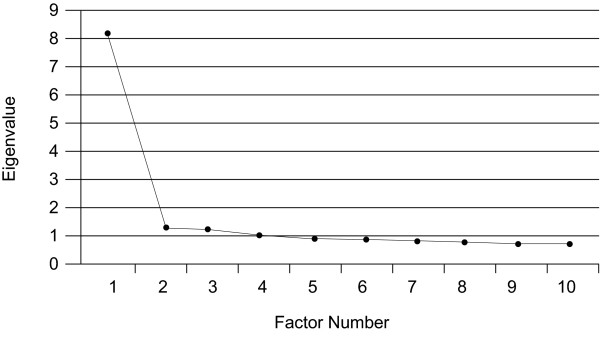
The WCA was initially validated using Cronbach's alpha reliability coefficient and exploratory factor analysis. This article presents the results of a second validation study to refine the initial analyses to account for nested data, to provide item-level psychometrics, and to establish construct validity. Analyses included eigenvalue decomposition analysis, confirmatory factor analysis, and validity and reliability analyses.
This study confirmed the validity and reliability of the WCA across work groups with different demographic characteristics (gender, education, management level, and geographical location). The study showed that there is agreement between the theoretical construct of work climate and the items in the WCA tool across different populations. The WCA captures a single perception of climate rather than individual sub-scales of clarity, support, and challenge.
The WCA is useful for comparing the climates of different work groups, tracking the changes in climate in a single work group over time, or examining differences among individuals' perceptions of their work group climate. Application of the WCA before and after a leadership development process can help work groups hold a discussion about current climate and select a target for improvement. The WCA provides work groups with a tool to take ownership of their own group climate through a process that is simple and objective and that protects individual confidentiality.
本文描述了一种用于测量发展中国家公共卫生组织工作团队氛围的工具的验证情况。该工具即工作团队氛围评估工具(WCA),已在巴西、莫桑比克和几内亚应用,以评估一项旨在提升绩效的领导力发展项目的中间成果。数据收集自42个工作团队中的305名个体,他们完成了一份自填式问卷。
WCA最初通过克朗巴哈系数法进行信度验证以及探索性因子分析。本文呈现了第二次验证研究的结果,以完善初始分析,从而考虑嵌套数据、提供项目层面的心理测量指标并建立结构效度。分析包括特征值分解分析、验证性因子分析以及效度和信度分析。
本研究证实了WCA在不同人口统计学特征(性别、教育程度、管理水平和地理位置)的工作团队中的效度和信度。研究表明,不同人群在工作氛围的理论构建与WCA工具中的项目之间存在一致性。WCA捕捉到的是对氛围的单一认知,而非清晰性、支持度和挑战性等个体子量表。
WCA有助于比较不同工作团队的氛围,追踪单个工作团队随时间推移的氛围变化,或考察个体对其工作团队氛围认知的差异。在领导力发展过程前后应用WCA,有助于工作团队就当前氛围进行讨论并选择改进目标。WCA为工作团队提供了一种工具,通过一个简单、客观且保护个人隐私的过程来掌控自身团队氛围。