Schlatter Rebekka, Maier Dieter
Universität Hohenheim, Institut für Genetik, Garbenstr. 30, 70599 Stuttgart, Germany.
BMC Evol Biol. 2005 Nov 17;5:67. doi: 10.1186/1471-2148-5-67.
In Drosophila melanogaster the Enhancer of split-Complex [E(spl)-C] consists of seven highly related genes encoding basic helix-loop-helix (bHLH) repressors and intermingled, four genes that belong to the Bearded (Brd) family. Both gene classes are targets of the Notch signalling pathway. The Achaete-Scute-Complex [AS-C] comprises four genes encoding bHLH activators. The question arose how these complexes evolved with regard to gene number in the evolution of insects concentrating on Diptera and the Hymenoptera Apis mellifera.
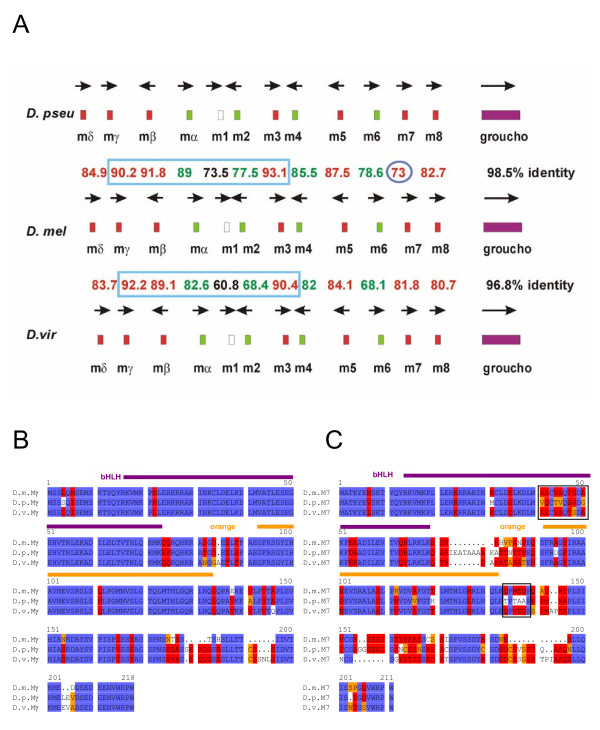
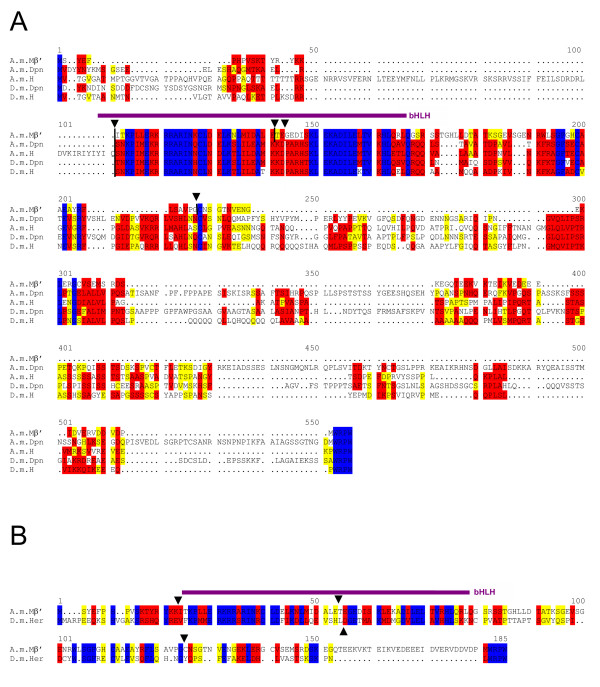
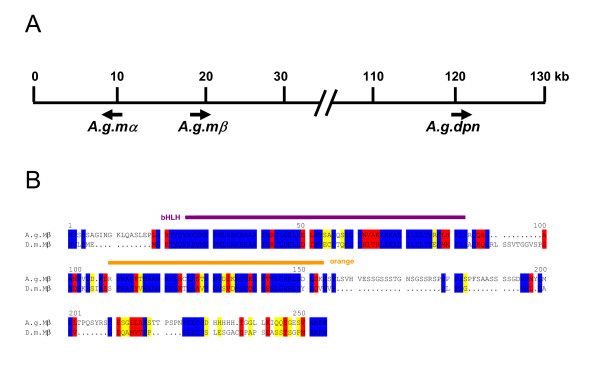
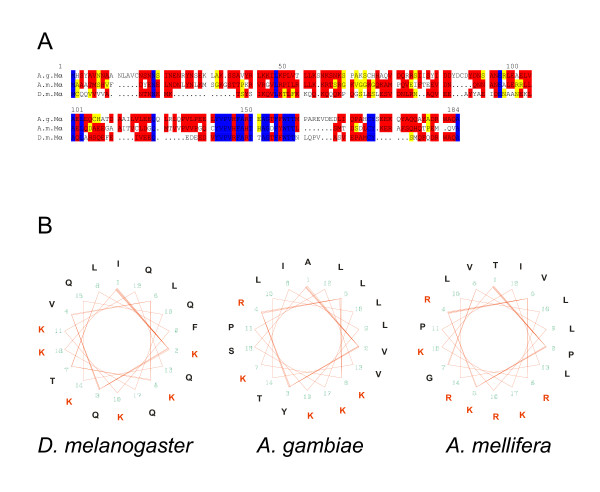
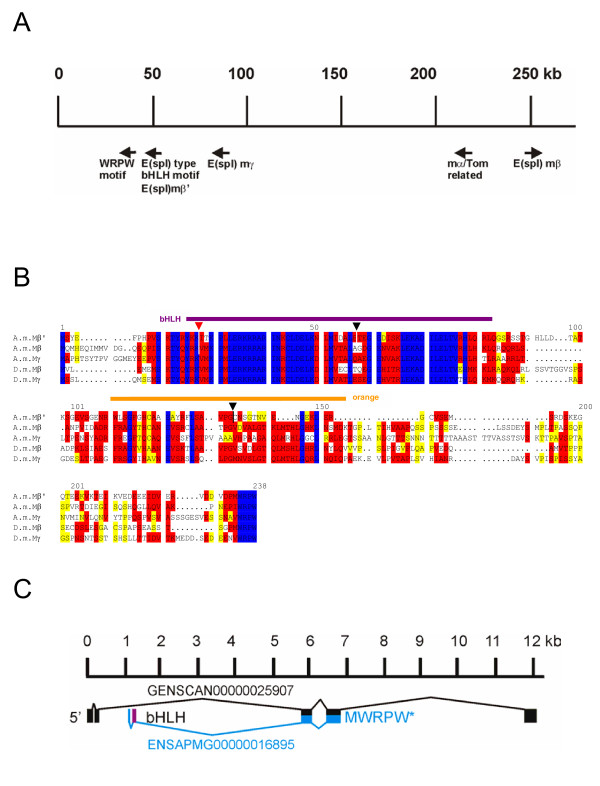
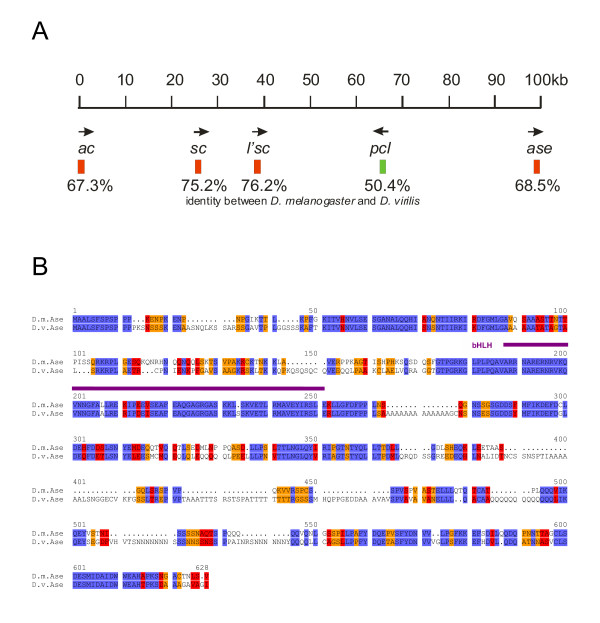
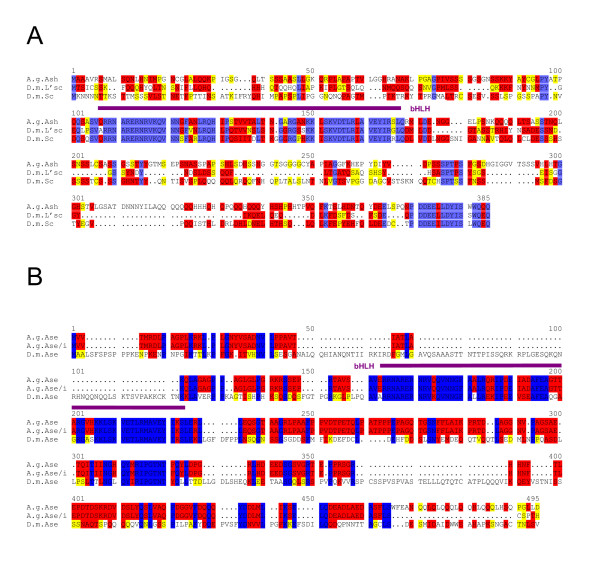
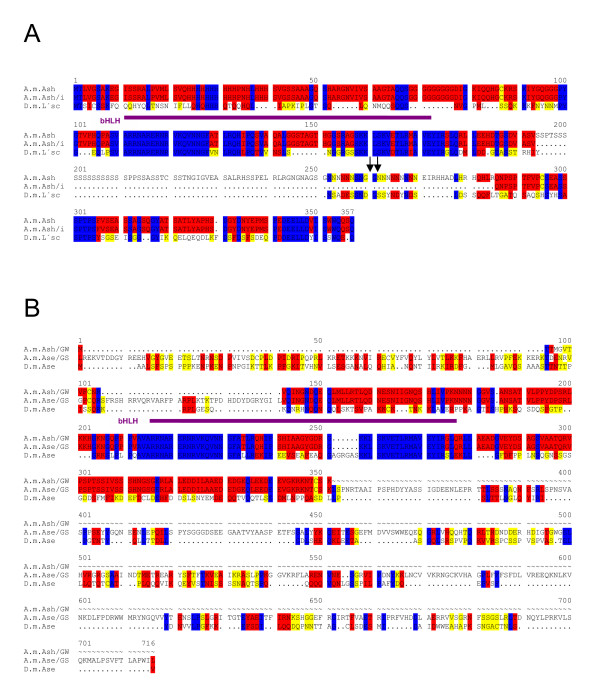
In Drosophilids both gene complexes are highly conserved, spanning roughly 40 million years of evolution. However, in species more diverged like Anopheles or Apis we find dramatic differences. Here, the E(spl)-C consists of one bHLH (mbeta) and one Brd family member (malpha) in a head to head arrangement. Interestingly in Apis but not in Anopheles, there are two more E(spl) bHLH like genes within 250 kb, which may reflect duplication events in the honeybee that occurred independently of that in Diptera. The AS-C may have arisen from a single sc/l'sc like gene which is well conserved in Apis and Anopheles and a second ase like gene that is highly diverged, however, located within 50 kb.
E(spl)-C and AS-C presumably evolved by gene duplication to the nowadays complex composition in Drosophilids in order to govern the accurate expression patterns typical for these highly evolved insects. The ancestral ur-complexes, however, consisted most likely of just two genes: E(spl)-C contains one bHLH member of mbeta type and one Brd family member of malpha type and AS-C contains one sc/l'sc and a highly diverged ase like gene.
在黑腹果蝇中,分裂增强子复合体[E(spl)-C]由七个高度相关的基因组成,这些基因编码碱性螺旋-环-螺旋(bHLH)阻遏蛋白,并且与四个属于须状蛋白(Brd)家族的基因相互交织。这两类基因都是Notch信号通路的靶点。achaete-scute复合体[AS-C]由四个编码bHLH激活蛋白的基因组成。问题是,在以双翅目和膜翅目蜜蜂为重点的昆虫进化过程中,这些复合体在基因数量方面是如何进化的。
在果蝇科中,这两个基因复合体高度保守,跨越了大约4000万年的进化历程。然而,在分歧较大的物种如按蚊或蜜蜂中,我们发现了显著差异。在这里,E(spl)-C由一个bHLH(mbeta)和一个Brd家族成员(malpha)以头对头的排列方式组成。有趣的是,在蜜蜂中而非按蚊中,在250 kb范围内还有另外两个类似E(spl) bHLH的基因,这可能反映了蜜蜂中独立于双翅目发生的复制事件。AS-C可能起源于一个在蜜蜂和按蚊中都高度保守的单一sc/l'sc样基因,以及另一个高度分化但位于50 kb范围内的ase样基因。
E(spl)-C和AS-C可能通过基因复制进化到如今果蝇科中复杂的组成形式,以便控制这些高度进化昆虫特有的精确表达模式。然而,祖先的原始复合体很可能仅由两个基因组成:E(spl)-C包含一个mbeta型的bHLH成员和一个malpha型的Brd家族成员,AS-C包含一个sc/l'sc和一个高度分化的ase样基因。