Malysheva-Otto Lyudmyla V, Ganal Martin W, Röder Marion S
Institute of Plant Genetics and Crop Plant Research (IPK), Corrensstr. 3, 06466 Gatersleben, Germany.
BMC Genet. 2006 Jan 24;7:6. doi: 10.1186/1471-2156-7-6.
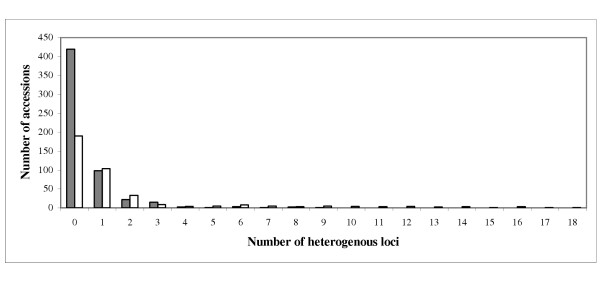
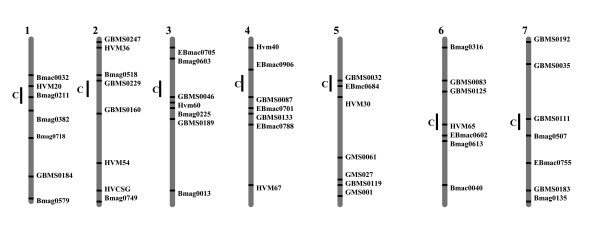
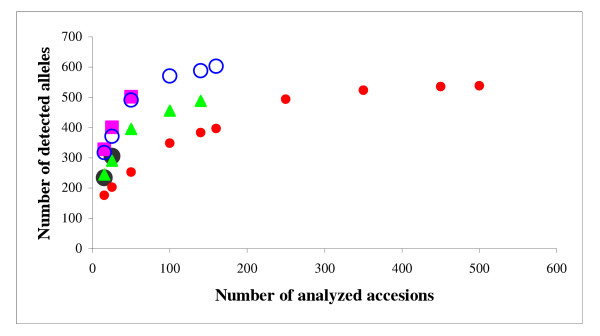
The goal of our study was a systematic survey of the molecular diversity in barley genetic resources. To this end 953 cultivated barley accessions originating from all inhabited continents except Australia were genotyped with 48 SSR markers. Molecular diversity was evaluated with routine statistics (allelic richness, gene diversity, allele frequency, heterozygosity and unique alleles), Principal Coordinate Analysis (PCoA), and analysis of genome-wide linkage disequilibrium.
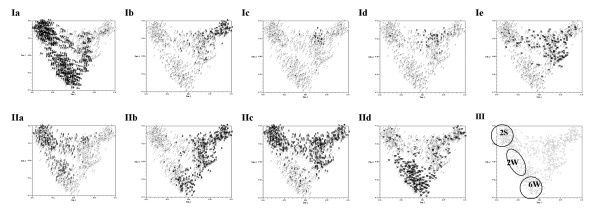
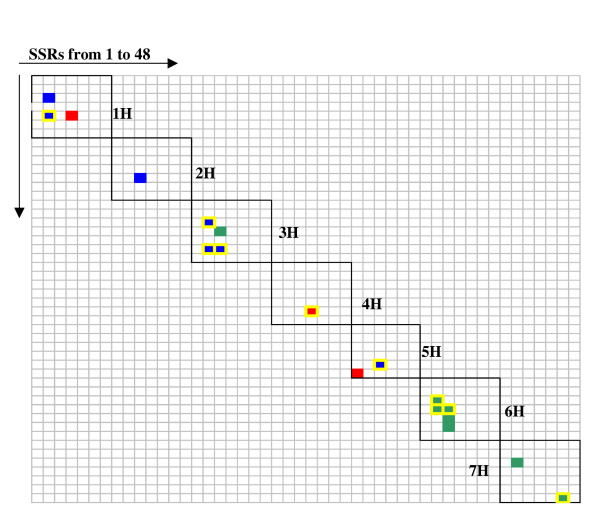
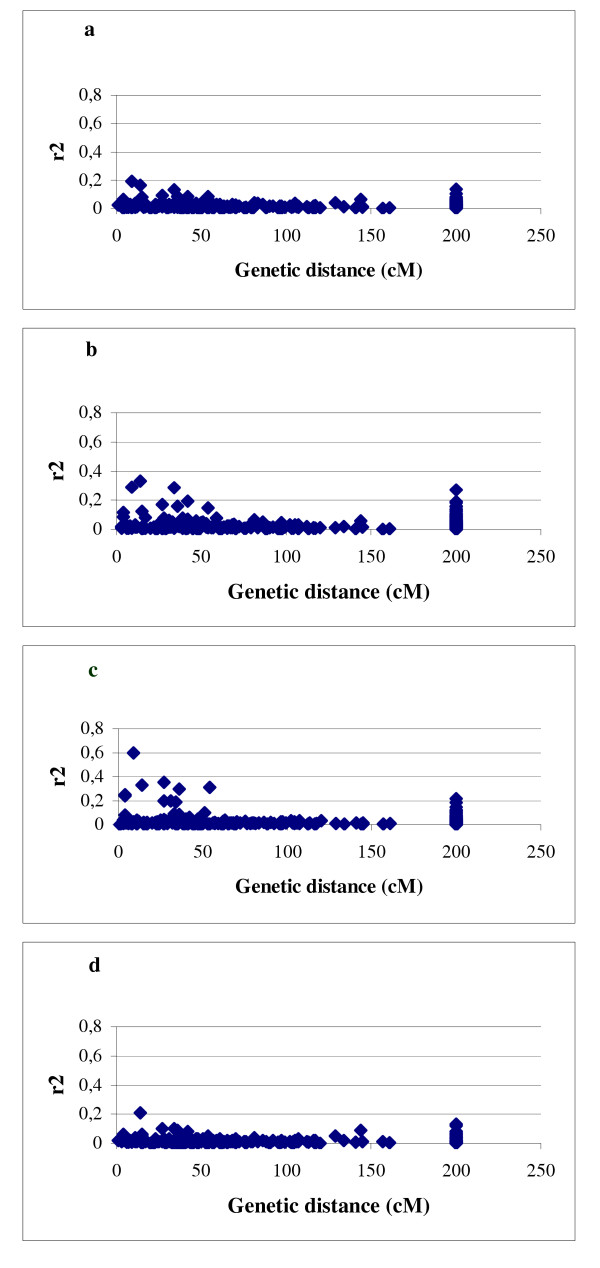
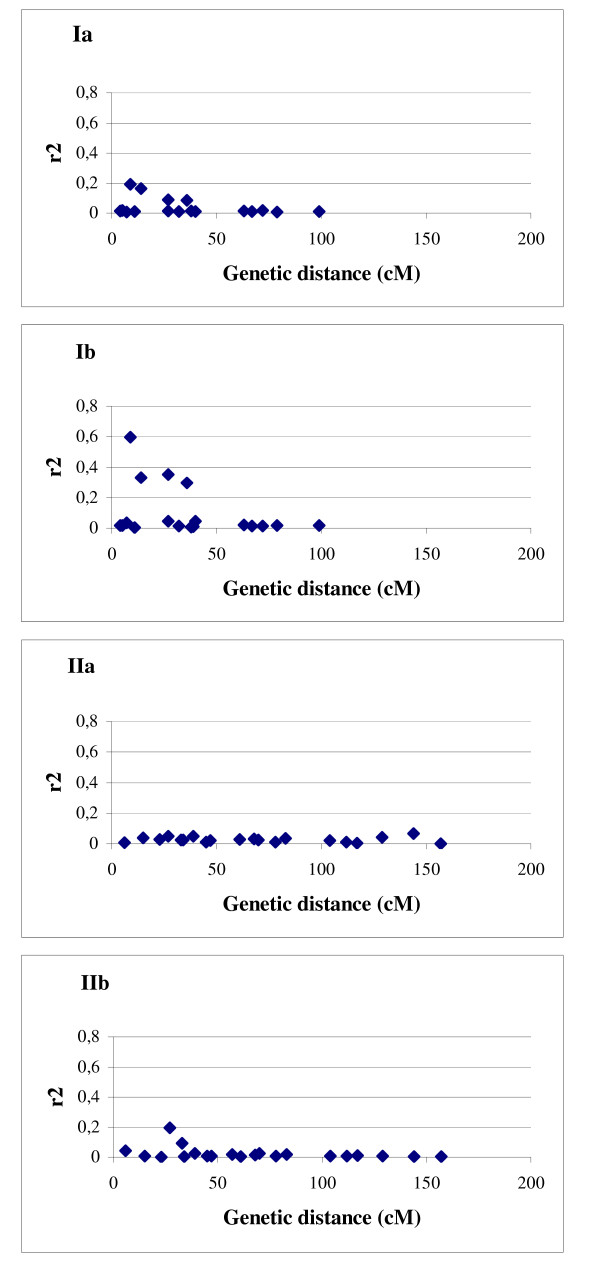
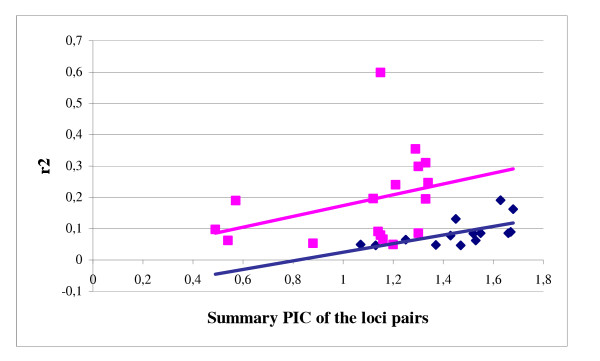
A genotyping database for 953 cultivated barley accessions profiled with 48 SSR markers was established. The PCoA revealed structuring of the barley population with regard to (i) geographical regions and (ii) agronomic traits. Geographic origin contributed most to the observed molecular diversity. Genome-wide linkage disequilibrium (LD) was estimated as squared correlation of allele frequencies (r2). The values of LD for barley were comparable to other plant species (conifers, poplar, maize). The pattern of intrachromosomal LD with distances between the genomic loci ranging from 1 to 150 cM revealed that in barley LD extended up to distances as long as 50 cM with r2 > 0.05, or up to 10 cM with r2 > 0.2. Few loci mapping to different chromosomes showed significant LD with r2 > 0.05. The number of loci in significant LD as well as the pattern of LD were clearly dependent on the population structure. The LD in the homogenous group of 207 European 2-rowed spring barleys compared to the highly structured worldwide barley population was increased in the number of loci pairs with r2 > 0.05 and had higher values of r2, although the percentage of intrachromosomal loci pairs in significant LD based on P < 0.001 was 100% in the whole set of varieties, but only 45% in the subgroup of European 2-rowed spring barleys. The value of LD also varied depending on the polymorphism of the loci selected for genotyping. The 17 most polymorphic loci (PIC > 0.80) provided higher LD values as compared to 19 low polymorphic loci (PIC < 0.73) in both structured (all accessions) and non-structured (European 2-rowed spring varieties) barley populations.
A global population of cultivated barley accessions was highly structured. Clustering highlighted the accessions with the same geographic origin, as well as accessions possessing similar agronomic characters. LD in barley extended up to 50 cM, and was strongly dependent on the population structure. The data on LD were summarized as a genome-wide LD map for barley.
我们研究的目标是对大麦遗传资源的分子多样性进行系统调查。为此,使用48个SSR标记对953份来自除澳大利亚以外所有有人居住大陆的栽培大麦种质进行了基因分型。通过常规统计方法(等位基因丰富度、基因多样性、等位基因频率、杂合度和独特等位基因)、主坐标分析(PCoA)以及全基因组连锁不平衡分析来评估分子多样性。
建立了一个包含953份栽培大麦种质、由48个SSR标记分型的基因分型数据库。PCoA揭示了大麦群体在(i)地理区域和(ii)农艺性状方面的结构。地理起源对观察到的分子多样性贡献最大。全基因组连锁不平衡(LD)以等位基因频率的平方相关性(r2)来估计。大麦的LD值与其他植物物种(针叶树、杨树、玉米)相当。基因组位点间距离从1到150 cM的染色体内LD模式表明,在大麦中,当r2 > 0.05时,LD延伸至长达50 cM的距离;当r2 > 0.2时,延伸至长达10 cM的距离。少数位于不同染色体上的位点显示出r2 > 0.05的显著LD。显著LD中的位点数以及LD模式明显依赖于群体结构。与高度结构化的全球大麦群体相比,207份欧洲二棱春大麦的同质群体中,r2 > 0.05的位点对数量增加,且r2值更高,尽管基于P < 0.001,全组品种中染色体内显著LD的位点对百分比为100%,而欧洲二棱春大麦亚组中仅为45%。LD值也因用于基因分型的位点的多态性而异。在结构化(所有种质)和非结构化(欧洲二棱春品种)大麦群体中,17个多态性最高的位点(PIC > 0.80)比19个低多态性位点(PIC < 0.73)提供了更高的LD值。
全球栽培大麦种质群体高度结构化。聚类突出了具有相同地理起源的种质以及具有相似农艺性状的种质。大麦中的LD延伸至50 cM,并且强烈依赖于群体结构。LD数据被总结为大麦的全基因组LD图谱。