Inokuchi Yuta, Shimazawa Masamitsu, Nakajima Yoshimi, Suemori Shinsuke, Mishima Satoshi, Hara Hideaki
Department of Biofunctional Molecules, Gifu Pharmaceutical University, Mitahora-Higashi, Japan.
Evid Based Complement Alternat Med. 2006 Mar;3(1):71-7. doi: 10.1093/ecam/nek005.
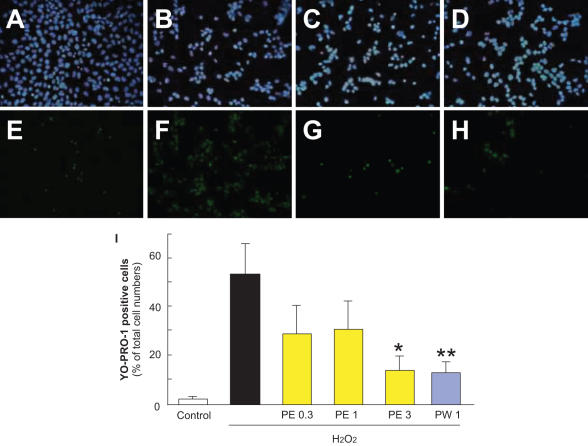
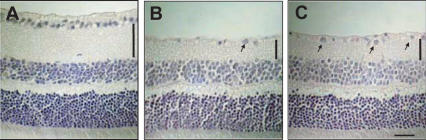
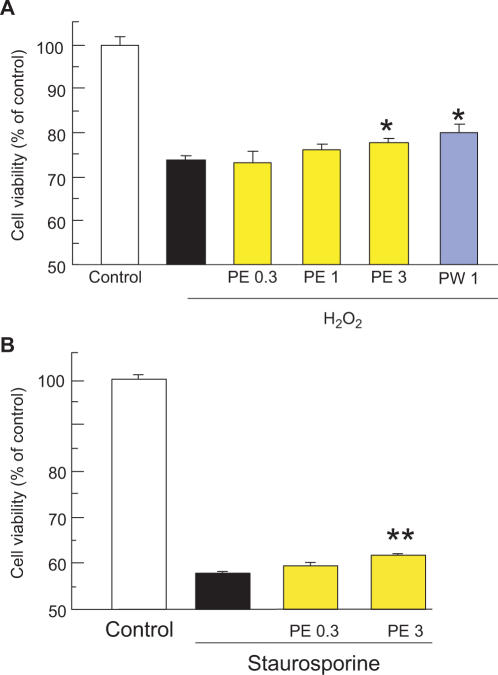
Propolis, a honeybee product, has gained popularity as a food and alternative medicine. Its constituents have been shown to exert pharmacological (anticancer, antimicrobial and anti-inflammatory) effects. We investigated whether Brazilian green propolis exerts neuroprotective effects in the retina in vitro and/or in vivo. In vitro, retinal damage was induced by 24 h hydrogen peroxide (H2O2) exposure, and cell viability was measured by Hoechst 33342 and YO-PRO-1 staining or by a resazurin-reduction assay. Propolis inhibited the neurotoxicity and apoptosis induced in cultured retinal ganglion cells (RGC-5, a rat ganglion cell line transformed using E1A virus) by 24 h H2O2 exposure. Propolis also inhibited the neurotoxicity induced in RGC-5 cultures by staurosporine. Regarding the possible underlying mechanism, in pig retina homogenates propolis protected against oxidative stress (lipid peroxidation), as also did trolox (water-soluble vitamin E). In mice in vivo, propolis (100 mg kg(-1); intraperitoneally administered four times) reduced the retinal damage (decrease in retinal ganglion cells and in thickness of inner plexiform layer) induced by intravitreal in vivo N-methyl-d-aspartate injection. These findings indicate that Brazilian green propolis has neuroprotective effects against retinal damage both in vitro and in vivo, and that a propolis-induced inhibition of oxidative stress may be partly responsible for these neuroprotective effects.
蜂胶是一种蜜蜂产品,作为食品和替代药物已受到广泛欢迎。其成分已被证明具有药理作用(抗癌、抗菌和抗炎)。我们研究了巴西绿蜂胶在体外和/或体内是否对视网膜具有神经保护作用。在体外,通过24小时暴露于过氧化氢(H2O2)诱导视网膜损伤,并通过Hoechst 33342和YO-PRO-1染色或刃天青还原试验测量细胞活力。蜂胶抑制了24小时H2O2暴露诱导的培养视网膜神经节细胞(RGC-5,一种使用E1A病毒转化的大鼠神经节细胞系)中的神经毒性和细胞凋亡。蜂胶还抑制了星形孢菌素诱导的RGC-5培养物中的神经毒性。关于可能的潜在机制,在猪视网膜匀浆中,蜂胶可防止氧化应激(脂质过氧化),托洛克斯(水溶性维生素E)也有此作用。在体内小鼠中,蜂胶(100 mg kg(-1);腹腔注射4次)减轻了玻璃体内注射N-甲基-D-天冬氨酸诱导的视网膜损伤(视网膜神经节细胞减少和内网状层厚度降低)。这些发现表明,巴西绿蜂胶在体外和体内均对视网膜损伤具有神经保护作用,且蜂胶诱导的氧化应激抑制可能部分归因于这些神经保护作用。