Akogbéto Martin C, Djouaka Rousseau F, Kindé-Gazard Dorothée A
Centre de Recherche Entomologique de Cotonou, 06 BP 2604, Bénin.
Malar J. 2006 Mar 24;5:22. doi: 10.1186/1475-2875-5-22.
The role of agricultural practices in the selection of insecticide resistance in malaria vectors has so far been hypothesized without clear evidence. Many mosquito species, Anopheles gambiae in particular, lay their eggs in breeding sites located around agricultural settings. There is a probability that, as a result of farming activities, insecticide residues may be found in soil and water, where they exercise a selection pressure on the larval stage of various populations of mosquitoes. To confirm this hypothesis, a study was conducted in the Republic of Benin to assess the environmental hazards which can be generated from massive use of pesticides in agricultural settings.
Lacking an HPLC machine for direct quantification of insecticide residues in samples, this investigation was performed using indirect bioassays focussed on the study of factors inhibiting the normal growth of mosquito larvae in breeding sites. The speed of development was monitored as well as the yield of rearing An. gambiae larvae in breeding sites reconstituted with water and soil samples collected in agricultural areas known to be under pesticide pressure. Two strains of An. gambiae were used in this indirect bioassay: the pyrethroid-susceptible Kisumu strain and the resistant Ladji strain. The key approach in this methodology is based on comparison of the growth of larvae in test and in control breeding sites, the test samples having been collected from two vegetable farms.
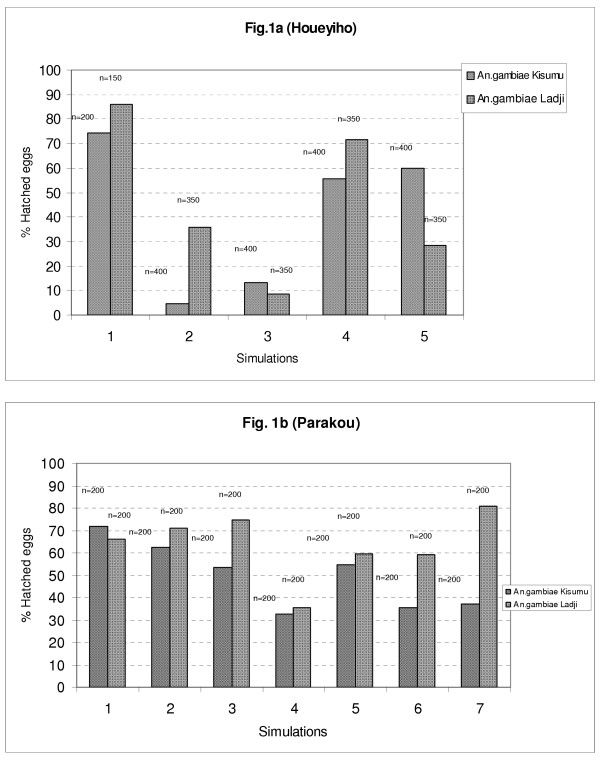
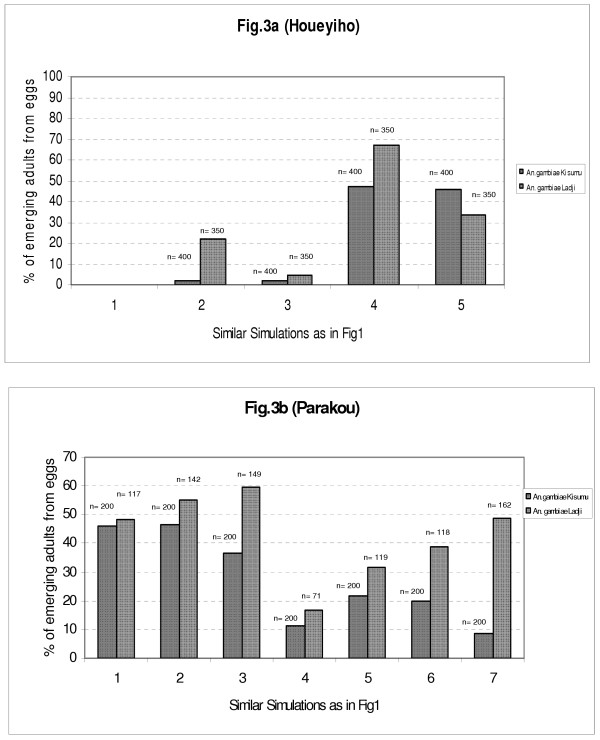
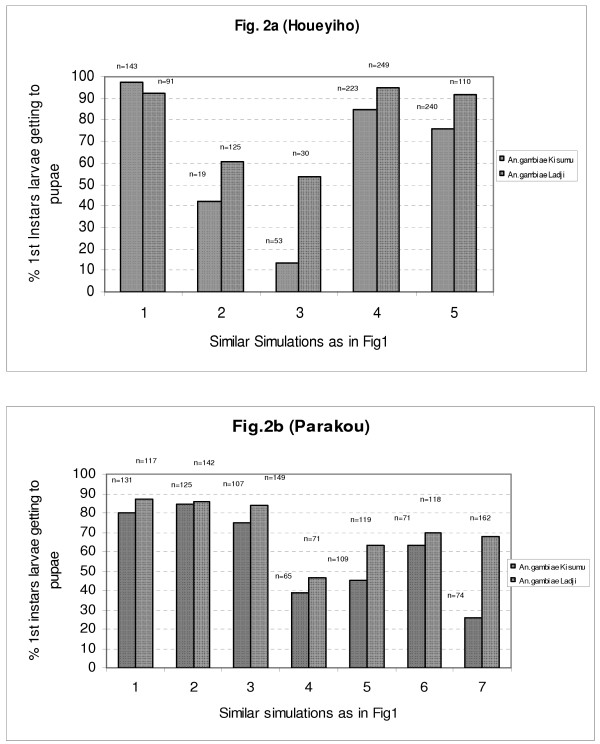
Results obtained clearly show the presence of inhibiting factors on test samples. A normal growth of larvae was observed in control samples. In breeding sites simulated by using a few grams of soil samples from the two vegetable farms under constant insecticide treatments (test samples), a poor hatching rate of Anopheles eggs coupled with a retarded growth of larvae and a low yield of adult mosquitoes from hatched eggs, was noticed.
Toxic factors inhibiting the hatching of anopheles eggs and the growth of larvae are probably pesticide residues from agricultural practices. Samples used during this indirect assay have been stored in the laboratory and will be analysed with HPLC techniques to confirm hypothesis of this study and to identify the various end products found in soil and water samples from agricultural settings under pesticide pressure.
迄今为止,农业活动在疟疾病媒抗杀虫剂选择过程中所起的作用只是一种假设,尚无明确证据。许多蚊种,尤其是冈比亚按蚊,会在农业区域周边的繁殖地产卵。由于农业活动,土壤和水中可能存在杀虫剂残留,这些残留会对不同蚊群的幼虫阶段产生选择压力。为证实这一假设,在贝宁共和国开展了一项研究,以评估农业环境中大量使用农药可能产生的环境危害。
由于缺乏用于直接定量样品中杀虫剂残留的高效液相色谱仪,本研究采用间接生物测定法,重点研究抑制繁殖地蚊幼虫正常生长的因素。监测了发育速度以及在用水和从已知受农药压力影响的农业区域采集的土壤样本重建的繁殖地中饲养冈比亚按蚊幼虫的产量。在这种间接生物测定中使用了两株冈比亚按蚊:对拟除虫菊酯敏感的基苏木株和抗性的拉吉株。该方法的关键在于比较测试繁殖地和对照繁殖地中幼虫的生长情况,测试样本取自两个蔬菜农场。
所获结果清楚显示测试样本中存在抑制因素。对照样本中幼虫生长正常。在使用来自两个蔬菜农场的几克土壤样本、在持续杀虫剂处理下模拟的繁殖地(测试样本)中,发现冈比亚按蚊卵孵化率低,幼虫生长迟缓,孵化出的卵羽化成的成年蚊子产量低。
抑制按蚊卵孵化和幼虫生长的毒性因素可能是农业活动产生的农药残留。此次间接测定中使用的样本已保存在实验室,将采用高效液相色谱技术进行分析,以证实本研究的假设,并确定在受农药压力影响的农业区域土壤和水样中发现的各种最终产物。