Aldridge K E
Infect Immun. 1975 Jul;12(1):198-204. doi: 10.1128/iai.12.1.198-204.1975.
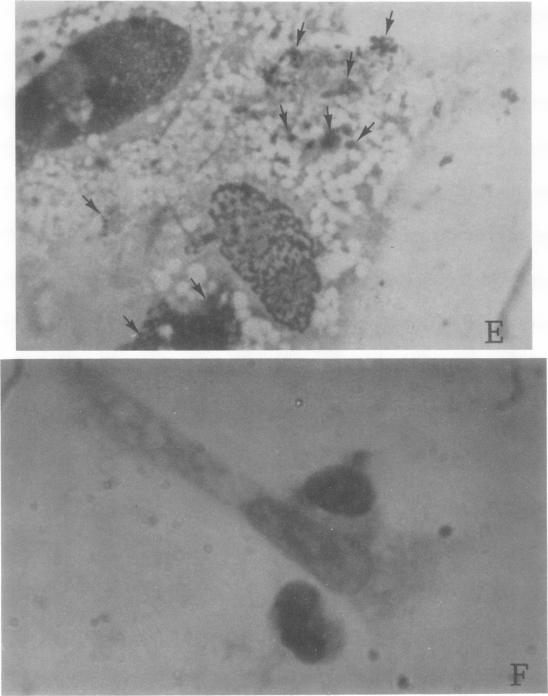
Mycoplasma synoviae was tested for its ability to grow and induce cytopathogenic changes in chicken embryo cell cultures. M. synoviae grew to high titers by day 5 in the presence of chick cells, but showed no growth in the tissue culture medium alone even though it was enriched with nicotinamide adenine dinucleotide and swine serum. Infected chick cell cultures showed a progressive cytoplasmic degeneration on successive days of examination. Early changes involved cytoplasmic granularity and mild vacuolation. On the last day of examination the cytoplasm of most cells was completely degenerated and some showed nuclear degeneration. M. synoviae was shown to be cytophilic for the chick cell membranes where the mycoplasmas reproduced and formed microcolonies which, on successive days, increased in size. The attachment site on the chick cell membrane was shown to be neuraminidase sensitive.
对鸡败血支原体在鸡胚细胞培养物中的生长能力及诱导细胞病变的能力进行了检测。在有鸡细胞存在的情况下,鸡败血支原体在第5天时生长至高效价,但即便在添加了烟酰胺腺嘌呤二核苷酸和猪血清的组织培养基中单独培养时也未生长。受感染的鸡细胞培养物在连续检查的数天中显示出进行性的细胞质变性。早期变化包括细胞质颗粒化和轻度空泡化。在检查的最后一天,大多数细胞的细胞质完全变性,一些细胞出现核变性。鸡败血支原体对鸡细胞膜具有亲嗜性,支原体在鸡细胞膜上繁殖并形成微菌落,微菌落在连续数天中不断增大。鸡细胞膜上的附着位点对神经氨酸酶敏感。