Ivanyi-Nagy Roland, Kanevsky Igor, Gabus Caroline, Lavergne Jean-Pierre, Ficheux Damien, Penin François, Fossé Philippe, Darlix Jean-Luc
LaboRetro, Unité INSERM de Virologie Humaine, Ecole Normale Supérieure de Lyon IFR, 128 Biosciences Lyon-Gerland, 69364 Lyon Cedex 07, France.
Nucleic Acids Res. 2006 May 17;34(9):2618-33. doi: 10.1093/nar/gkl240. Print 2006.
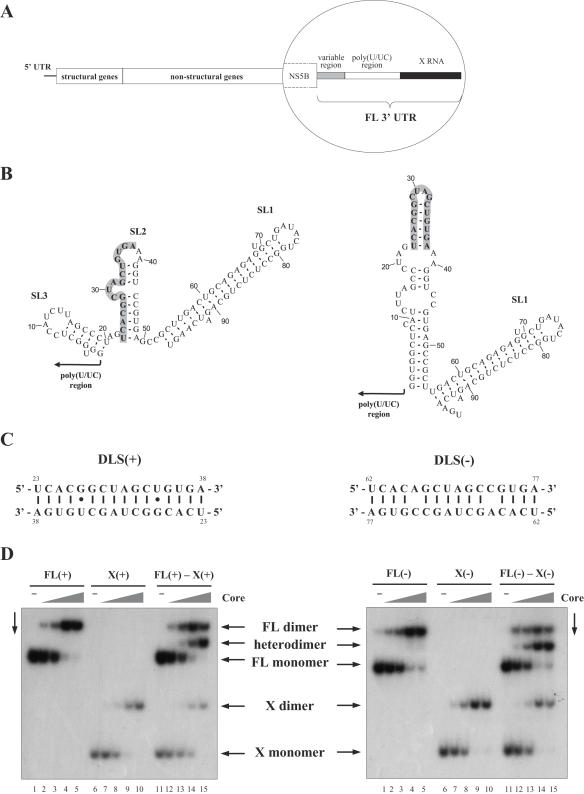
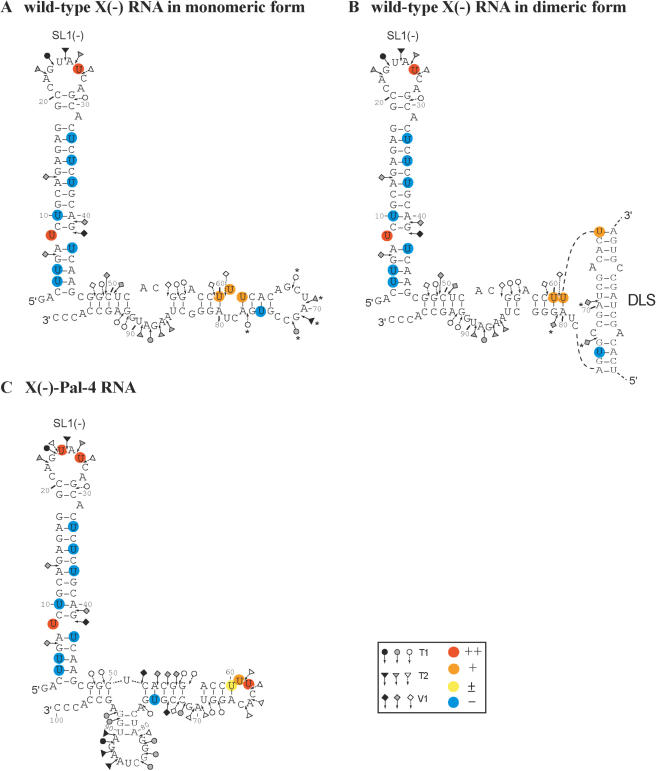
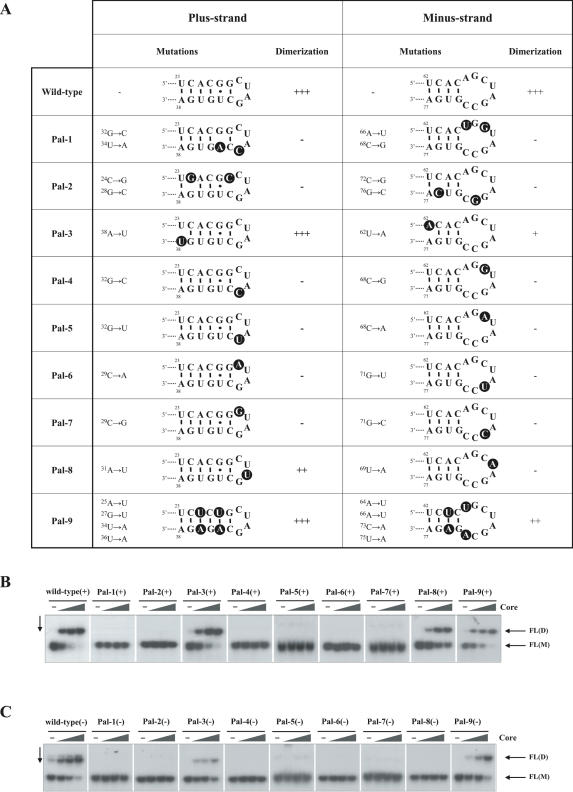
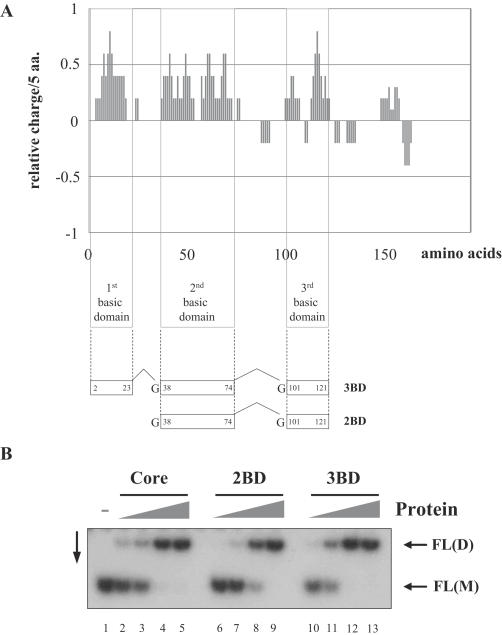
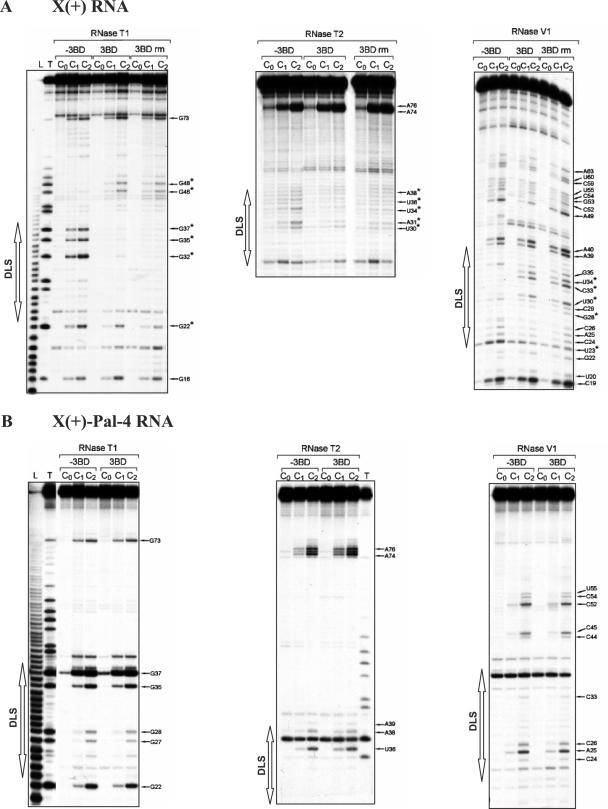
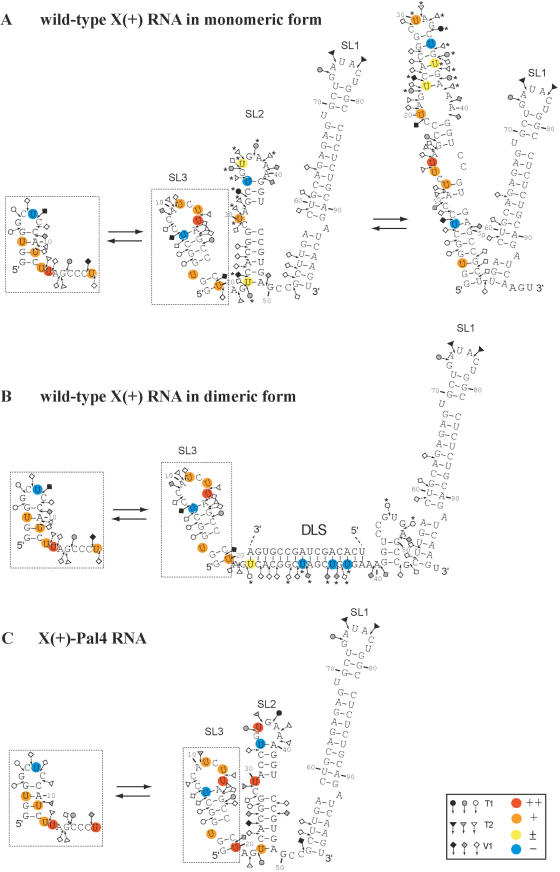
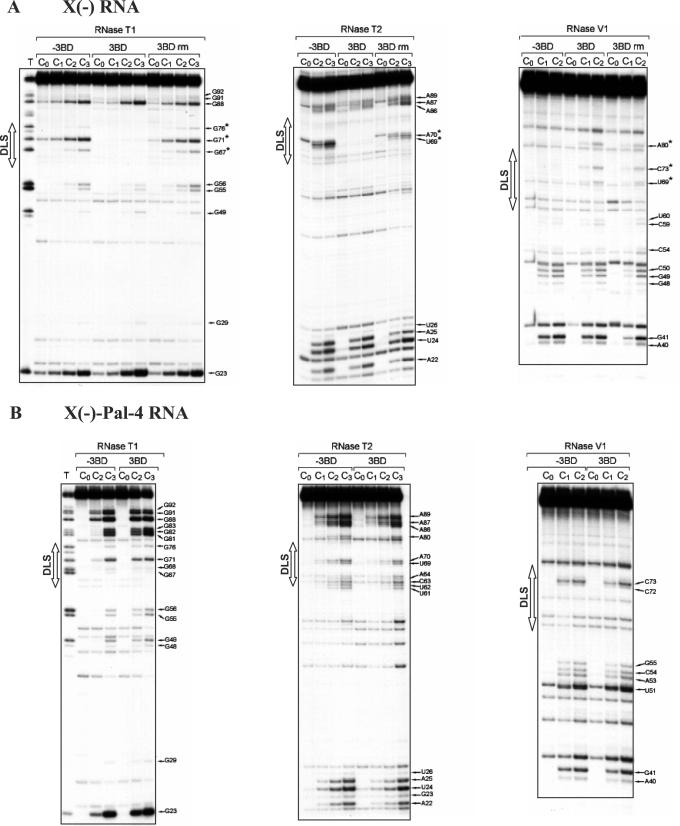
The core protein of hepatitis C virus (HCV) has been shown previously to act as a potent nucleic acid chaperone in vitro, promoting the dimerization of the 3'-untranslated region (3'-UTR) of the HCV genomic RNA, a process probably mediated by a small, highly conserved palindromic RNA motif, named DLS (dimer linkage sequence) [G. Cristofari, R. Ivanyi-Nagy, C. Gabus, S. Boulant, J. P. Lavergne, F. Penin and J. L. Darlix (2004) Nucleic Acids Res., 32, 2623-2631]. To investigate in depth HCV RNA dimerization, we generated a series of point mutations in the DLS region. We find that both the plus-strand 3'-UTR and the complementary minus-strand RNA can dimerize in the presence of core protein, while mutations in the DLS (among them a single point mutation that abolished RNA replication in a HCV subgenomic replicon system) completely abrogate dimerization. Structural probing of plus- and minus-strand RNAs, in their monomeric and dimeric forms, indicate that the DLS is the major if not the sole determinant of UTR RNA dimerization. Furthermore, the N-terminal basic amino acid clusters of core protein were found to be sufficient to induce dimerization, suggesting that they retain full RNA chaperone activity. These findings may have important consequences for understanding the HCV replicative cycle and the genetic variability of the virus.
此前研究表明,丙型肝炎病毒(HCV)的核心蛋白在体外可作为一种有效的核酸伴侣,促进HCV基因组RNA 3'非翻译区(3'-UTR)的二聚化,这一过程可能由一个小的、高度保守的回文RNA基序介导,该基序名为DLS(二聚体连接序列)[G. Cristofari, R. Ivanyi-Nagy, C. Gabus, S. Boulant, J. P. Lavergne, F. Penin和J. L. Darlix(2004年)《核酸研究》,32卷,2623 - 2631页]。为深入研究HCV RNA二聚化,我们在DLS区域产生了一系列点突变。我们发现,在核心蛋白存在的情况下,正链3'-UTR和互补的负链RNA均可二聚化,而DLS中的突变(其中一个单点突变在HCV亚基因组复制子系统中消除了RNA复制)则完全消除了二聚化。对正链和负链RNA单体及二聚体形式的结构探测表明,DLS即使不是UTR RNA二聚化的唯一决定因素,也是主要决定因素。此外还发现,核心蛋白的N端碱性氨基酸簇足以诱导二聚化,这表明它们保留了完整的RNA伴侣活性。这些发现可能对理解HCV复制周期及病毒的遗传变异性具有重要意义。