Konat Gregory W, Kielian Tammy, Marriott Ian
Department of Neurobiology and Anatomy, West Virginia University School of Medicine, Morgantown, West Virginia 26506-9128, USA.
J Neurochem. 2006 Oct;99(1):1-12. doi: 10.1111/j.1471-4159.2006.04076.x. Epub 2006 Aug 8.
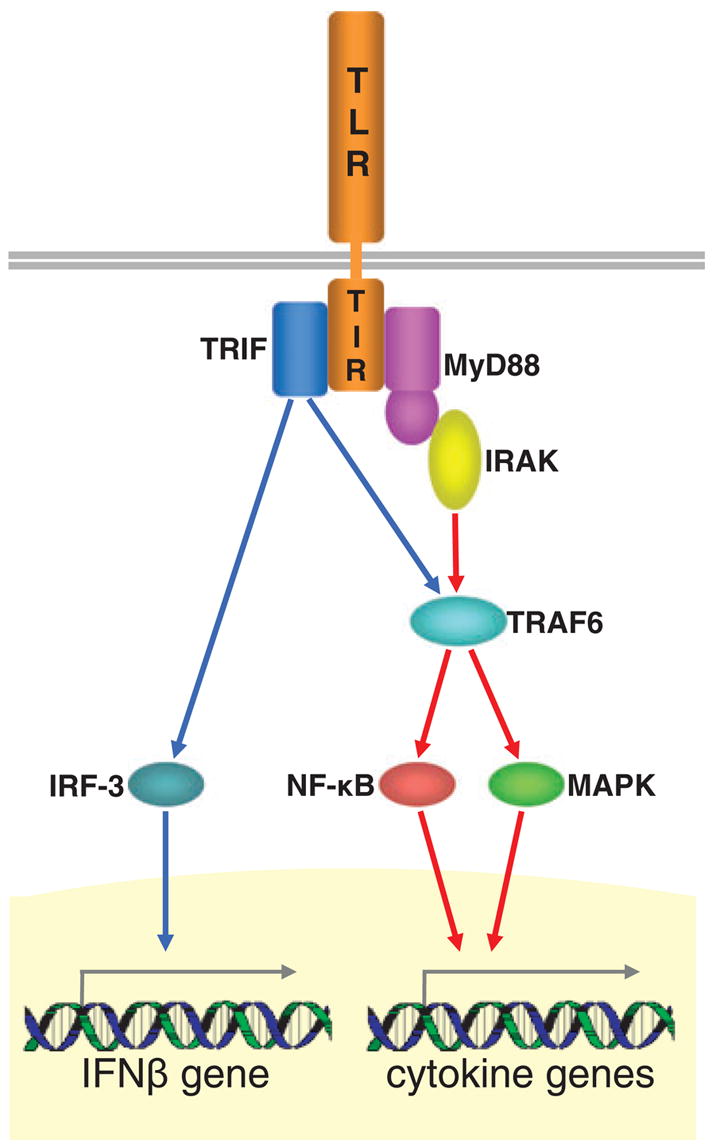
The recent discovery of the family of Toll-like receptors has vastly expanded our understanding of the mechanisms by which the innate immune system recognizes and responds to a wide variety of microbial and endogenous pathogens. Toll-like receptors are transmembrane proteins that upon ligation with their cognate ligands trigger the production of cytokines, enzymes and other inflammatory agents. In the CNS Toll-like receptors are expressed predominantly by glial cells. In particular, the vastly abundant astrocytes are likely to be the major contributors to inflammatory responses within the CNS. Studies of the murine brain abscess model revealed that Toll-like receptor 2 plays a pivotal role in the generation of immune responses to Staphylococcus aureus. Although Toll-like receptor signaling is essential in antimicrobial defense, it may also lead to bystander injury of CNS tissue.
Toll样受体家族的最新发现极大地扩展了我们对先天性免疫系统识别和应对多种微生物及内源性病原体机制的理解。Toll样受体是跨膜蛋白,与同源配体结合后会触发细胞因子、酶和其他炎症介质的产生。在中枢神经系统中,Toll样受体主要由神经胶质细胞表达。特别是数量众多的星形胶质细胞很可能是中枢神经系统内炎症反应的主要促成因素。对小鼠脑脓肿模型的研究表明,Toll样受体2在对金黄色葡萄球菌的免疫反应产生中起关键作用。尽管Toll样受体信号传导在抗菌防御中至关重要,但它也可能导致中枢神经系统组织的旁观者损伤。