Qu Shen, Su Dongming, Altomonte Jennifer, Kamagate Adama, He Jing, Perdomo German, Tse Tonia, Jiang Yu, Dong H Henry
Rangos Research Center, Children's Hospital of Pittsburgh, Pittsburgh, PA 15213, USA.
Am J Physiol Endocrinol Metab. 2007 Feb;292(2):E421-34. doi: 10.1152/ajpendo.00157.2006. Epub 2006 Sep 19.
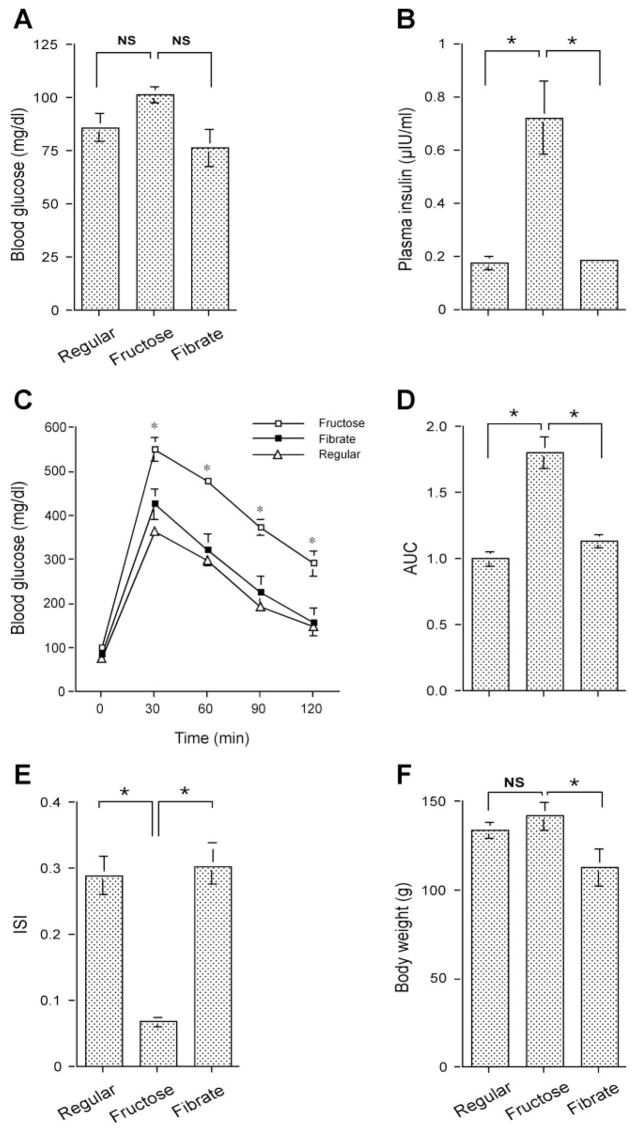
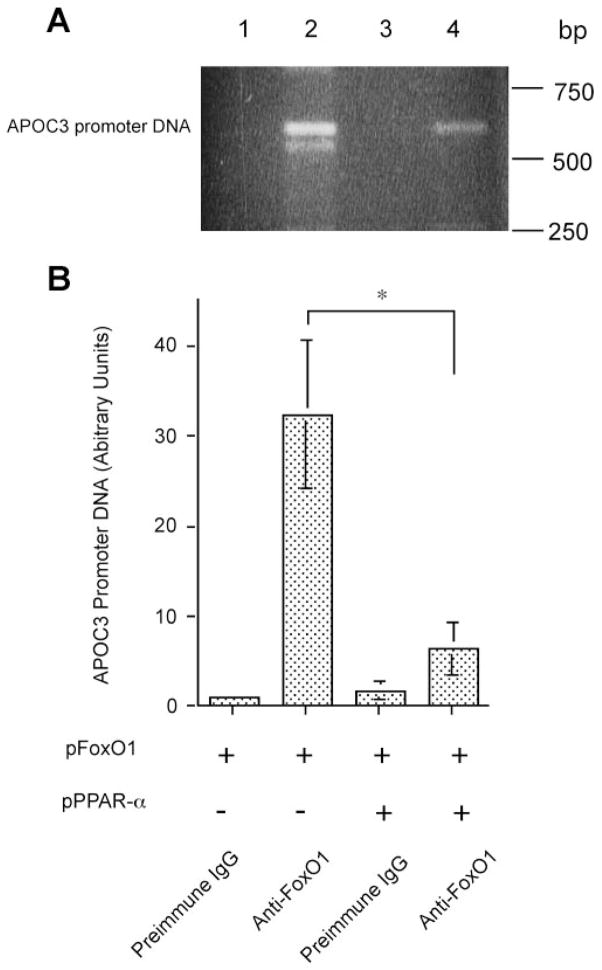
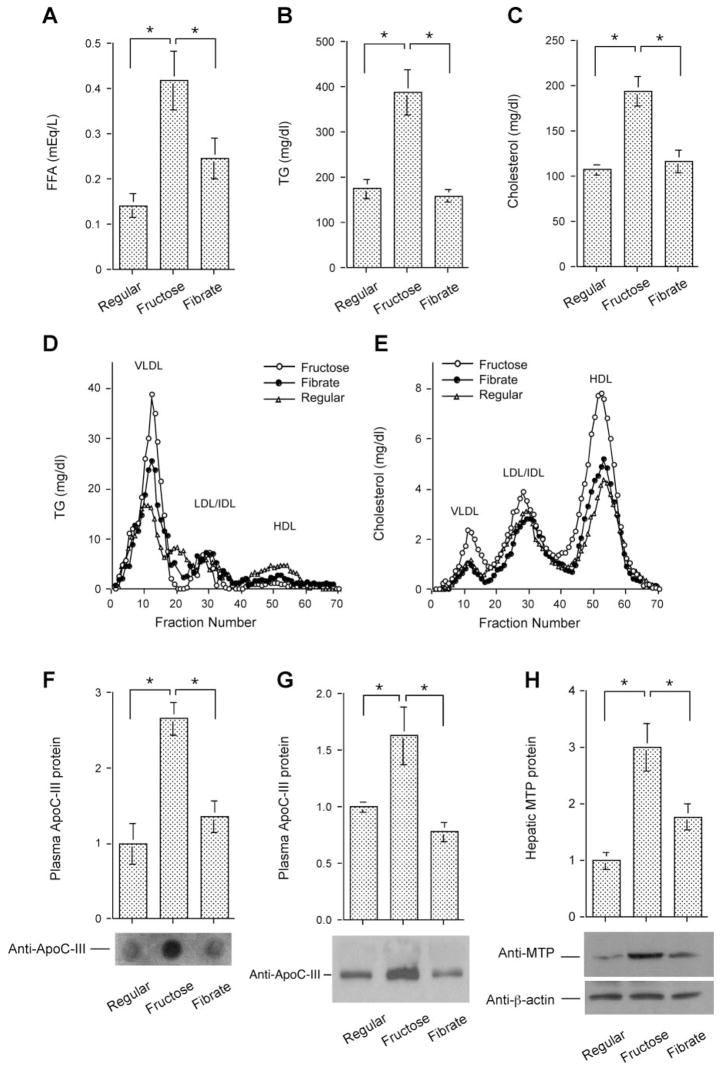
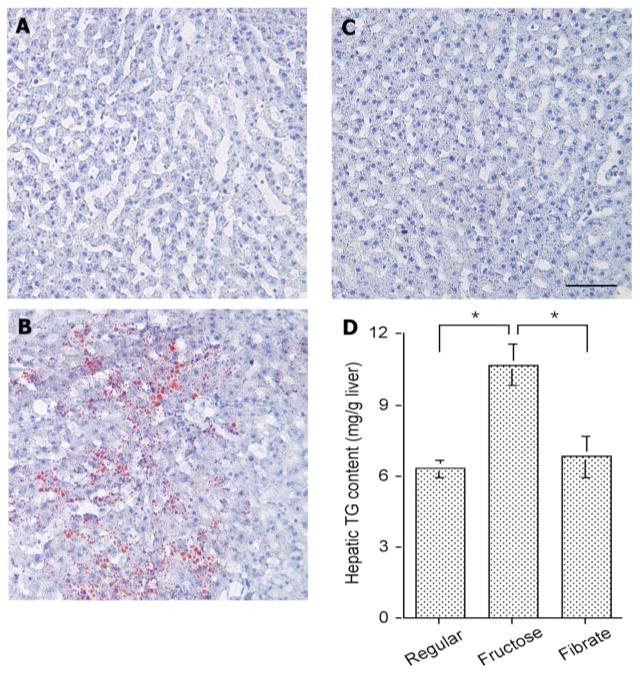
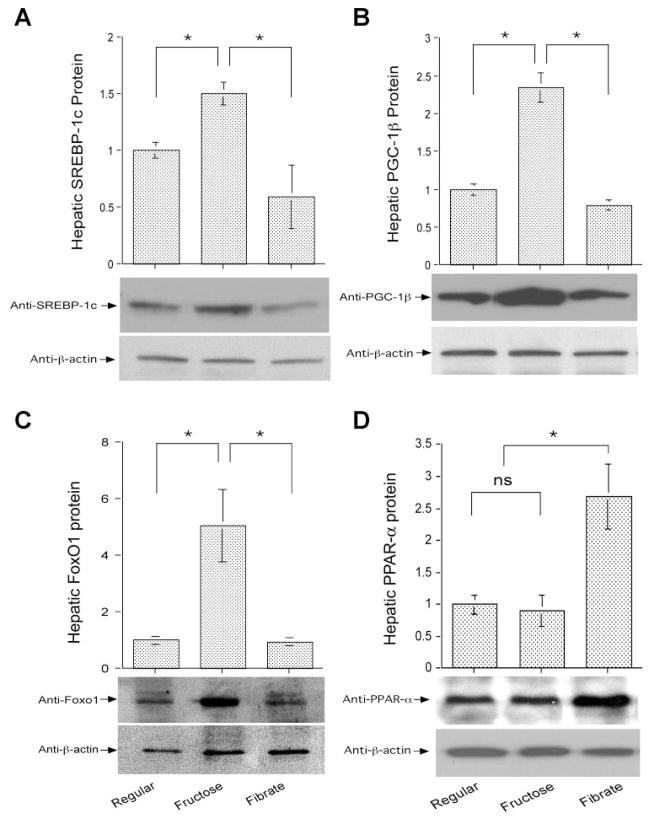
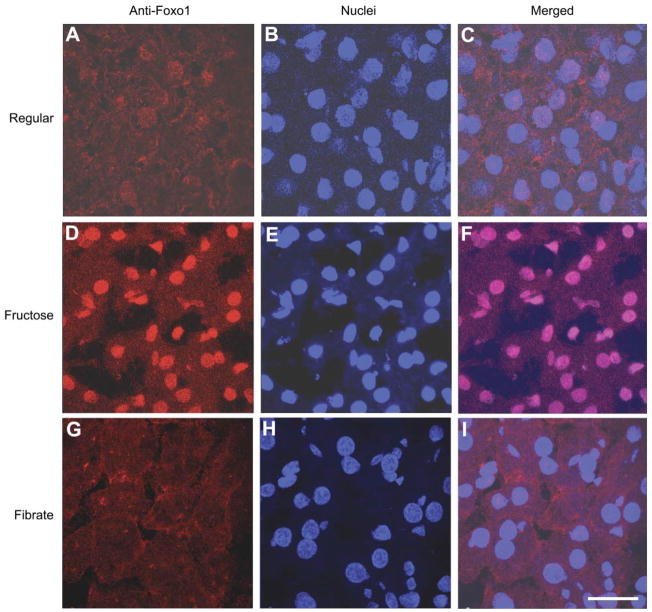
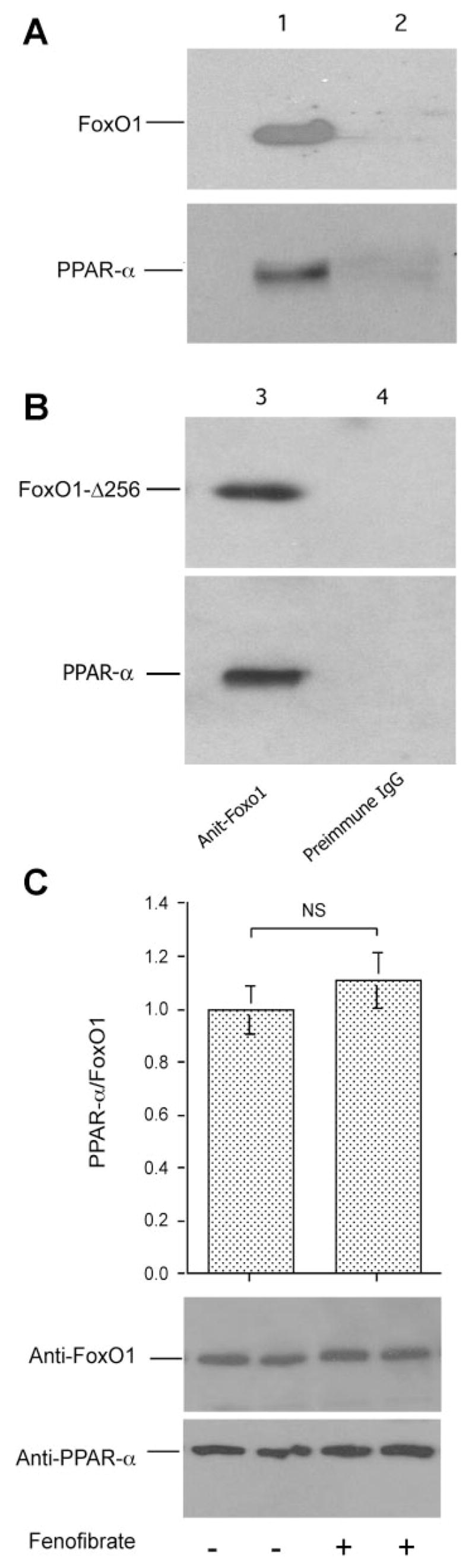
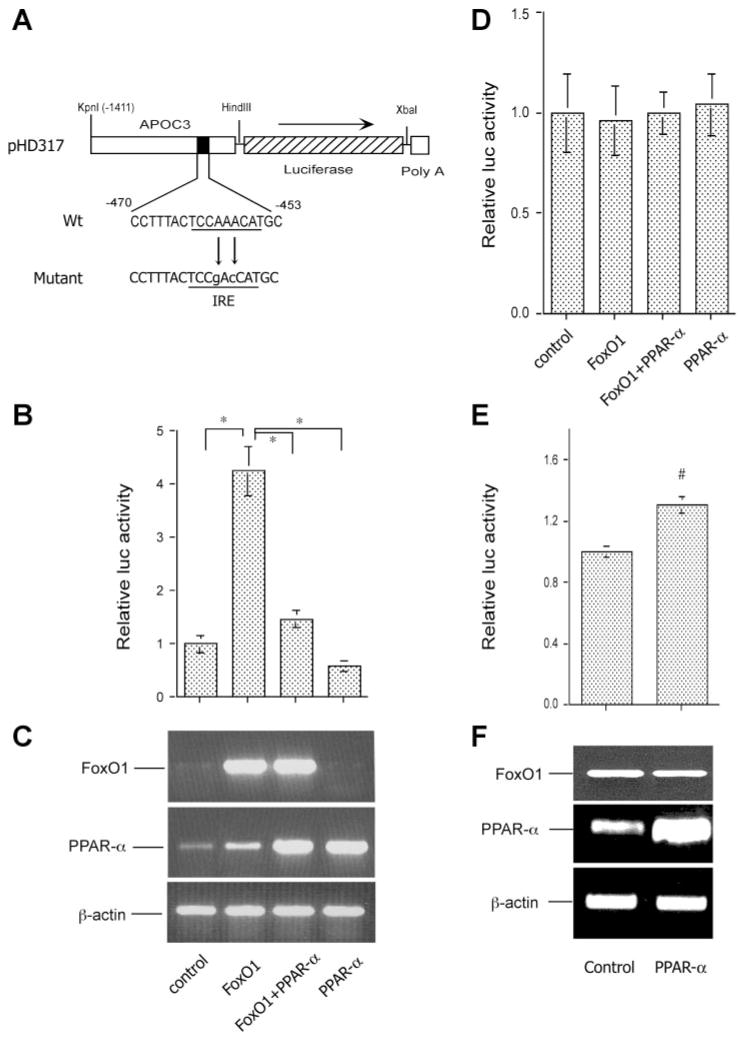
High-fructose consumption is associated with insulin resistance and diabetic dyslipidemia, but the underlying mechanism is unclear. We show in hamsters that high-fructose feeding stimulated forkhead box O1 (FoxO1) production and promoted its nuclear redistribution in liver, correlating with augmented apolipoprotein C-III (apoC-III) production and impaired triglyceride metabolism. High-fructose feeding upregulated peroxisome proliferator-activated receptor-gamma coactivator-1beta and sterol regulatory element binding protein-1c expression, accounting for increased fat infiltration in liver. High-fructose-fed hamsters developed hypertriglyceridemia, accompanied by hyperinsulinemia and glucose intolerance. These metabolic aberrations were reversible by fenofibrate, a commonly used anti-hypertriglyceridemia agent that is known to bind and activate peroxisome proliferator-activated receptor-alpha (PPARalpha). PPARalpha physically interacted with, but functionally antagonized, FoxO1 in hepatic apoC-III expression. These data underscore the importance of FoxO1 deregulation in the pathogenesis of hypertriglyceridemia in high-fructose-fed hamsters. Counterregulation of hepatic FoxO1 activity by PPARalpha constitutes an important mechanism by which fibrates act to curb apoC-III overproduction and ameliorate hypertriglyceridemia.
高果糖摄入与胰岛素抵抗和糖尿病血脂异常有关,但其潜在机制尚不清楚。我们在仓鼠实验中发现,高果糖喂养刺激了叉头框O1(FoxO1)的产生,并促进其在肝脏中的核重新分布,这与载脂蛋白C-III(apoC-III)产生增加和甘油三酯代谢受损相关。高果糖喂养上调了过氧化物酶体增殖物激活受体γ共激活因子1β和固醇调节元件结合蛋白1c的表达,这解释了肝脏中脂肪浸润增加的原因。高果糖喂养的仓鼠出现了高甘油三酯血症,伴有高胰岛素血症和葡萄糖不耐受。这些代谢异常可被非诺贝特逆转,非诺贝特是一种常用的抗高甘油三酯血症药物,已知它能结合并激活过氧化物酶体增殖物激活受体α(PPARα)。PPARα在肝脏apoC-III表达中与FoxO1发生物理相互作用,但在功能上拮抗FoxO1。这些数据强调了FoxO1失调在高果糖喂养仓鼠高甘油三酯血症发病机制中的重要性。PPARα对肝脏FoxO1活性的反向调节构成了贝特类药物抑制apoC-III过度产生和改善高甘油三酯血症的重要机制。